












Temporal patterning of the potential induced by localized corrosion of iron passivity in acid media. Growth and breakdown of the oxide film described in terms of a point defect model
文献情報
出版日
2009-07-24
DOI
10.1039/B906488E
インパクトファクター
3.676
著者
Dimitra Sazou, Maria Pavlidou, Michael Pagitsas
原文を見る
要旨
This work analyses the nature of temporal patterning of the anodic potential induced by chlorides during polarization of iron under current-controlled conditions in acid solutions. It is shown that potential oscillations emerged as a result of the local chloride attack of a thin oxide layer, which covers the iron surface in its passive state. The mechanism by which both the local oxide breakdown and the subsequent localized active dissolution (pitting) occur is explained by considering a point defect model (PDM) developed to describe the oxide growth and breakdown. According to the PDM, chlorides occupy oxygen vacancies resulting in the inhibition of oxide growth and autocatalytic generation of cation vacancies that destabilize the oxide layer. Simultaneous transformation of the outer surface of the inner oxide layer to non-adherent ferrous chloride or oxo-chloride species leads to a further thinning of the oxide layer and its lifting-on from the iron surface. The process repeats again yielding sustained oscillations of the anodic potential. Analysis of the oscillatory response obtained under current-controlled conditions as a function of either the current or the time allows the suggestion of a set of alternate diagnostic criteria, which might be used to characterize localized corrosion of iron in acid solutions.
関連文献
Triplet electron transfer and spin polarization in a palladium porphyrin–fullerene conjugate
Prashanth K. Poddutoori, Yuri E. Kandrashkin, Christopher O. Obondi, Francis D'Souza, Art van der Est
2018-10-29
Paper
DOI: 10.1039/C8CP04937H
Process-morphology scaling relations quantify self-organization in capillary densified nanofiber arrays
Ashley L. Kaiser, Itai Y. Stein, Kehang Cui, Brian L. Wardle
2018-01-02
Communication
DOI: 10.1039/C7CP06869G
Enhancing electrical energy storage capability of dielectric polymer nanocomposites via the room temperature Coulomb blockade effect of ultra-small platinum nanoparticles
Liwei Wang, Xingyi Huang, Yingke Zhu, Pingkai Jiang
2018-01-17
Paper
DOI: 10.1039/C7CP07990G
Thermodynamic evidence of flexibility in H2O and CO2 absorption of transition metal ion exchanged zeolite LTA
Xin Guo, Lili Wu, Alexandra Navrotsky
2018-01-11
Paper
DOI: 10.1039/C7CP08188J
Identification and composition of conformational isomers and their cations in crotonaldehyde by VUV-MATI spectroscopy
Sung Man Park, Hong Lae Kim, Chan Ho Kwon
2018-10-10
Paper
DOI: 10.1039/C8CP05577G
Anionic merocyanine dyes based on thiazol-2-hydrazides: reverse solvatochromism, preferential solvation and multiparametric approaches to spectral shifts
Arindam Mukhopadhyay, Krishna J. Mandal, Jarugu Narasimha Moorthy
2018-01-15
Paper
DOI: 10.1039/C7CP06766F
Directional control of charge and valley currents in a graphene-based device
M. Berdakin, J. E. Barrios Vargas, L. E. F. Foa Torres
2018-10-31
Paper
DOI: 10.1039/C8CP04878A
Phase transition-like behavior of the water monolayer close to the polarized surface of a nanotube
Li Zeng, Xiaoyan Zhou, Xiao Huang, Hangjun Lu
2018-07-17
Paper
DOI: 10.1039/C8CP03083A
こちらもおすすめ
化合物よくある質問
3-(2-オキサプロピル)ベンzoic酸はどのように合成されますか?
3-(2-オキサプロピル)ベンzoic酸は、ベンzoic酸とプロパノ酸をヒドロキシム化合物として反応させて生成します。具体的には、ベンzoic酸とプロパノ酸を反...
205927-63-53-(2-Oxopropyl)benzo...
114873-01-73-Fluoro-N-{[(2-meth...
化合物よくある質問
4-メチル-4-ピペリジニル-1-ピロリドイン甲酸の主な用途は何ですか?
4-メチル-4-ピペリジニル-1-ピロリドイン甲酸は、主に医薬品の合成材料や研究用物質として使用されます。さらに、一部の薬理学的研究にも応用されています。
885523-47-7(4-Methyl-4-piperidi...
化合物よくある質問
Biotin-PEG3-oxyamine HCl塩について、適切な化合物名称に適用される法規ガイドラインは何ですか?
Biotin-PEG3-oxyamine HCl塩は、GHS( Globally Harmonized System of Classification and...
1786206-22-1Biotin-PEG3-oxyamine...
化合物よくある質問
N-(4-イソチオシアネートフェニル)-2-メトキシアリニンはどのように合成されますか?
N-(4-イソチオシアネートフェニル)-2-メトキシアリニンは、4-イソチオシアノフェノールと2-メトキシアリニルアミンのアミニド反応を用いて合成されます。この...
915919-57-2N-(4-Isothiocyanatop...
化合物よくある質問
金粉蕨亭2'-O-葡萄糖甙の主な用途は何ですか?
金粉蕨亭2'-O-葡萄糖甙は主に薬理研究や医薬品製造に使用され、抗炎症作用や抗がん作用などがあります。また、その構造や性質から、合成化学や化学生理学の研究にも用...
76947-60-92-(7-Hydroxy-2,2,4,6...
化合物よくある質問
2-(2-ニトロフェニル)酢酸ヒドライドの物理化学的性質は何ですか?
2-(2-ニトロフェニル)酢酸ヒドライドのCAS番号は114953-81-0です。この化合物は白色結晶性粉末で、分子量は244.12です。水溶性は限られており、...
114953-81-02-(2-Nitrophenyl)ace...
化合物よくある質問
5-(ヒドロキシメチル)-2-チオキソ-2,3-ジヒドロピリミジン-4(1H)-オンを取り扱う際の実験室安全事項は何ですか?
この化合物は高活性のため、取り扱いには注意が必要です。PPE(個人保護具)としてゴーグル、ガントリー、および防滴シールドを着用することが推奨されます。ドラフトチ...
93185-31-05-(Hydroxymethyl)-2-...
化合物よくある質問
11-脱氢血栓烷 b2の市場動向や研究トレンドはどうですか?
11-脱氢血栓烷 b2は、血栓溶解・抗凝固作用に関する研究で注目を集めています。特に心血管疾患の治療法開発において、市場の需要が高まっています。研究トレンドとし...
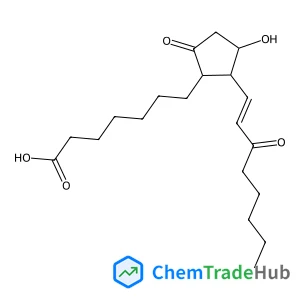
67910-12-77-{(2R,3S,4S)-4-Hydr...
化合物よくある質問
3,3-二甲基哌啶-4-酮はどのように保存すればよいですか?
3,3-二甲基哌啶-4-酮は避光、常温、乾燥した場所で保存してください。容器は密閉し、遠くから火源を離して保管することを確認してください。
150668-82-93,3-Dimethyl-4-piper...
掲載誌
Physical Chemistry Chemical Physics

CiteScore:
5.5
自己引用率:
10.3%
年間論文数:
3036
Physical Chemistry Chemical Physics (PCCP) is an international journal co-owned by 19 physical chemistry and physics societies from around the world. This journal publishes original, cutting-edge research in physical chemistry, chemical physics and biophysical chemistry. To be suitable for publication in PCCP, articles must include significant innovation and/or insight into physical chemistry; this is the most important criterion that reviewers and Editors will judge against when evaluating submissions. The journal has a broad scope and welcomes contributions spanning experiment, theory, computation and data science. Topical coverage includes spectroscopy, dynamics, kinetics, statistical mechanics, thermodynamics, electrochemistry, catalysis, surface science, quantum mechanics, quantum computing and machine learning. Interdisciplinary research areas such as polymers and soft matter, materials, nanoscience, energy, surfaces/interfaces, and biophysical chemistry are welcomed if they demonstrate significant innovation and/or insight into physical chemistry. Joined experimental/theoretical studies are particularly appreciated when complementary and based on up-to-date approaches.
おすすめ化合物
![4-[(2,4-Dihydroxyphenyl)diazenyl]-5-hydroxy-2,7-naphthalenedisulfonic acid structure](https://static.chemtradehub.com/structs/362/3627-01-8-79ac.webp "4-[(2,4-Dihydroxyphenyl)diazenyl]-5-hydroxy-2,7-naphthalenedisulfonic acid structure")
4-[(2,4-Dihydroxyphenyl)diazenyl]-5-hydroxy-2,7-naphthalenedisulfonic acid
CAS番号:
3627-01-8
分子式:
C16H12N2O9S2
おすすめサプライヤー




免責事項
このページに表示される学術雑誌情報は、参考および研究目的のみを目的としています。当社は雑誌出版社とは提携しておらず、投稿の取り扱いも行っておりません。出版に関するお問い合わせは、各雑誌出版社に直接ご連絡ください。
表示されている情報に誤りがある場合は、support@chemtradehub.com までご連絡ください。迅速に確認し、対応いたします。