












The state of absorbed hydrogen in the structure of reduced copper chromite from the vibration spectra
文献情報
出版日
2009-05-13
DOI
10.1039/B821381J
インパクトファクター
3.676
著者
Galina N. Kustova, Hervé Jobic, Tamara M. Yurieva, Georgii A. Filonenko, Lyudmila M. Plyasova
原文を見る
要旨
The reduction of copper chromite, CuCr2O4, is followed by means of thermogravimetric analysis. The reduced state is studied by means of FT IR spectroscopy, Raman spectroscopy and inelastic neutron scattering. The reduction of copper occurs in two stages: absorption of hydrogen at 250–400 °C and dehydration of the reduced state at above 450 °C. The measured vibrational spectra prove that a considerable amount of hydrogen is absorbed by the oxide structure with absorbed protons stabilized in OH and HOH-groups (geminal protons). Three groups of vibration bands are observed in the INS spectra, which can be assigned to stretching, bending and libration vibrations. An increase in the reduction temperature of copper chromite results in softening of the stretching and hardening of the bending vibrations, what can be related to the strengthening of hydrogen bonding.
関連文献
Rovibrational spectroscopic constants of the interaction between ammonia and metallo-phthalocyanines: a theoretical protocol for ammonia sensor design
Daniel F. S. Machado, Valter H. Carvalho-Silva, Leonardo G. Paterno, Heibbe Cristhian B. de Oliveira
2017-02-15
Paper
DOI: 10.1039/C6CP07900H
Electron transfer in silicon-bridged adjacent chromophores: the source for blue-green emission
Malgorzata Bayda, Gonzalo Angulo, Jerzy Karolczak, Jacek Koput, Jacek Dobkowski, Bronislaw Marciniak
2017-04-03
Paper
DOI: 10.1039/C7CP00590C
An approximate full-dimensional quantum dynamics study of the mode specificity in the dissociative chemisorption of D2O on rigid Cu(111)
Tianhui Liu, Bina Fu, Dong H. Zhang
2017-04-11
Paper
DOI: 10.1039/C7CP01770G
Exploring surface landscapes with molecules: rotationally induced diffraction of H2 on LiF(001) under fast grazing incidence conditions
M. del Cueto, A. S. Muzas, M. F. Somers, G. J. Kroes
2017-06-13
Communication
DOI: 10.1039/C7CP02904G
Increased substrate affinity in the Escherichia coli L28R dihydrofolate reductase mutant causes trimethoprim resistance
Haleh Abdizadeh, Yusuf Talha Tamer, Omer Acar, Erdal Toprak, Ali Rana Atilgan, Canan Atilgan
2017-04-03
Paper
DOI: 10.1039/C7CP01458A
Intracellular-molecular changes in plasma-irradiated budding yeast cells studied using multiplex coherent anti-Stokes Raman scattering microscopy
Ryo Furuta, Naoyuki Kurake, Kenji Ishikawa, Keigo Takeda, Hiroshi Hashizume, Hiroki Kondo, Takayuki Ohta, Masafumi Ito, Makoto Sekine, Masaru Hori
2017-04-27
Communication
DOI: 10.1039/C7CP00489C
Charge transfer quantification in a SnOx/CuPc semiconductor heterostructure: investigation of buried interface energy structure by photoelectron spectroscopies
Lucyna Grządziel, Adnan Sarfraz
2017-04-26
Paper
DOI: 10.1039/C7CP01688C
Understanding nanoparticle porosity via nanoimpacts and XPS: electro-oxidation of platinum nanoparticle aggregates
Xue Jiao, Eden E. L. Tanner, Stanislav V. Sokolov, Robert G. Palgrave, Neil P. Young, Richard G. Compton
2017-05-10
Paper
DOI: 10.1039/C7CP01737E
Molecular dynamics simulations of solvent-exfoliation and stabilization of graphene with the assistance of compressed carbon dioxide and pyrene–polyethylene glycol
Xiaodan Xu, Lu Cai, Xiaoli Zheng, Qun Xu
2017-05-31
Paper
DOI: 10.1039/C7CP01277B
こちらもおすすめ
化合物よくある質問
2-メトキシ-4-(メチルスルフィニル)アミンの主な用途は何ですか?
2-メトキシ-4-(メチルスルフィニル)アミンは、主に医薬品および農薬の製造に使用されます。また、合成化学の一部として研究用材料としても利用されます。
41608-73-52-Methoxy-4-(methyls...
118684-13-24-(Bromomethyl)-3-me...
化合物よくある質問
4,6-二氯-N-甲基ピラミジンアミンの代替品はありますか?
代替品としては、4,6-二クロロピラミジンアミンや他のピラミジン系化合物が考えられます。ただし、目的と用途によって最適な代替品は異なります。
10397-15-64,6-Dichloro-N-methy...
化合物よくある質問
6-氯-4-甲基-1H-吲哚を含む廃棄物はどのように処理すべきですか?
6-氯-4-甲基-1H-吲哚の廃棄物は、適切な容器に収集し、密閉して保管します。温度は常温、湿度は低く、直射日光を避けて保管することを推奨します。廃棄処理は専門...
885520-84-36-chloro-4-methyl-1H...
化合物よくある質問
2-フローユロ-4-(トリフルオロメチル)ベンゾイドについて「に適用される法規ガイドラインは何ですか」
2-フローユロ-4-(トリフルオロメチル)ベンゾイドのCAS番号は207974-08-1です。この化合物はGHS分類で毒性物質と有害な反応物質として分類されます...
207974-08-1[2-Fluoro-4-(trifluo...
化合物よくある質問
4-ニトロフェニルN-[(ベンゼルオキシルカーボンイル]グリシングリシングリシン酸はどのように保存すればよいですか?
4-ニトロフェニルN-[(ベンゼルオキシルカーボンイル]グリシングリシングリシン酸は、室温で暗所に保管し、乾燥した環境で保存することを推奨します。容器は密閉性の...
19811-64-44-Nitrophenyl N-[(be...
化合物よくある質問
イソデスロラタドリンの代替品はありますか?
イソデスロラタドリンの代替品としては、デスロラタドリンや他の抗ヒスタミン薬が挙げられます。具体的には、デスロラタドリン、ラセカミド、フェルタドリンなどが、症状や...
183198-49-4Iso Desloratadine
化合物よくある質問
5-甲氧基-1,2,3,4-四氢异喹啉盐酸盐はどのように合成されますか?
5-甲氧基-1,2,3,4-四氢异喹啉盐酸盐の一般的な合成方法は、メタノール中で5-メトキシ-1,2,3,4-四ヒュドロイソキシンを塩酸で塩化します。この反応で...
103030-69-95-Methoxy-1,2,3,4-te...
化合物よくある質問
4-アミノ-5-メトキシ-2-トルエンサルホニック酸についての法規ガイドラインは何ですか?
CAS番号6471-78-9の4-アミノ-5-メトキシ-2-トルエンサルホニック酸は、GHS分類では corrosive(腐食性)と識別されます。EUのREAC...
6471-78-94-Amino-5-Methoxy-2-...
化合物よくある質問
甲基孕酮を取り扱う際の実験室安全事項は何ですか?
甲基孕酮の取り扱いは、PPE(個人保護具)の使用が必要な重要な安全事項を伴います。防塵マスク、ゴーグル、手袋を着用することが推奨されます。ドラフトチャンバーを使...
204063-33-22-[(Diphenylmethyl)a...
掲載誌
Physical Chemistry Chemical Physics

CiteScore:
5.5
自己引用率:
10.3%
年間論文数:
3036
Physical Chemistry Chemical Physics (PCCP) is an international journal co-owned by 19 physical chemistry and physics societies from around the world. This journal publishes original, cutting-edge research in physical chemistry, chemical physics and biophysical chemistry. To be suitable for publication in PCCP, articles must include significant innovation and/or insight into physical chemistry; this is the most important criterion that reviewers and Editors will judge against when evaluating submissions. The journal has a broad scope and welcomes contributions spanning experiment, theory, computation and data science. Topical coverage includes spectroscopy, dynamics, kinetics, statistical mechanics, thermodynamics, electrochemistry, catalysis, surface science, quantum mechanics, quantum computing and machine learning. Interdisciplinary research areas such as polymers and soft matter, materials, nanoscience, energy, surfaces/interfaces, and biophysical chemistry are welcomed if they demonstrate significant innovation and/or insight into physical chemistry. Joined experimental/theoretical studies are particularly appreciated when complementary and based on up-to-date approaches.
おすすめ化合物
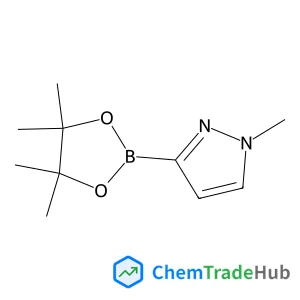
1-Methyl-3-(4,4,5,5-tetramethyl-1,3,2-dioxaborolan-2-yl)-1H-pyrazole
CAS番号:
1020174-04-2
分子式:
C10H17BN2O2
おすすめサプライヤー



免責事項
このページに表示される学術雑誌情報は、参考および研究目的のみを目的としています。当社は雑誌出版社とは提携しておらず、投稿の取り扱いも行っておりません。出版に関するお問い合わせは、各雑誌出版社に直接ご連絡ください。
表示されている情報に誤りがある場合は、support@chemtradehub.com までご連絡ください。迅速に確認し、対応いたします。