













Rovibrational spectroscopic constants of the interaction between ammonia and metallo-phthalocyanines: a theoretical protocol for ammonia sensor design
文献情報
出版日
2017-02-15
DOI
10.1039/C6CP07900H
インパクトファクター
3.676
著者
Daniel F. S. Machado, Valter H. Carvalho-Silva, Leonardo G. Paterno, Heibbe Cristhian B. de Oliveira
原文を見る
要旨
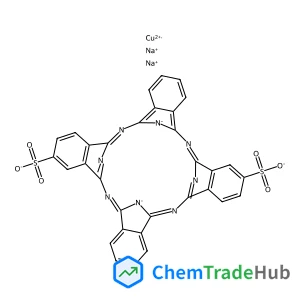
In the present contribution, we develop an adapted theoretical approach based on DFT calculations (B3LYP functional) and solution of the nuclear Schrödinger equation by using the Discrete Variable Representation method to model the interaction of ammonia with metallo-phthalocyanines (MPcs, where M = Fe2+, Co2+, Ni2+, Cu2+ or Zn2+). This approach is intended to be a general protocol for the rational design of chemical sensors. The as-obtained binding energy curves, obtained from ab initio points, permitted us to calculate rovibrational energies and spectroscopic constants, as well as to establish the relative population of rovibrational states in different types of MPc–NH3 thermodynamic systems. Simulated binding energy curves show that the binding energy in MPc–NH3 systems is dependent on the type of M central ion, decreasing in the order FePc > ZnPc > CoPc > CuPc > NiPc, with values spanning from −170 to −16 kJ mol−1. Also, MPc–NH3 systems have at least 16 rovibrational levels, which confirms that they are all bound systems (chemically or physically). Despite that, only the interaction between ammonia and FePc, CoPc or ZnPc is spontaneous within the studied temperature range (200–700 K). NiPc and CuPc show a change between spontaneous and non-spontaneous behaviours at ∼400 K and ∼500 K, respectively. Less bound systems should more efficiently guarantee the sensors' signal reset, while they are also less specific than sensors built with medium to strongly bound systems. Moreover, the intermediate energy and spontaneous binding of ammonia to NiPc and CuPc at operation temperatures, as determined with our theoretical approach, suggests that these MPcs are most promising for ammonia sensors.
関連文献
Observing reduction of 4-nitrobenzenthiol on gold nanoparticlesin situ using surface-enhanced Raman spectroscopy
Xiaoqian Ren, Tingting You, Li Jiang, Hongyan Zhang, Penggang Yin, Lin Guo
2013-06-18
Paper
DOI: 10.1039/C3CP51385H
Shape-dependent two-photon absorption in two-dimensionally extended benzoporphyrin arrays
Pyosang Kim, Sujin Ham, Juwon Oh, Hiroki Uoyama, Hajime Watanabe, Kazunari Tagawa, Hidemitsu Uno, Dongho Kim
2013-04-04
Communication
DOI: 10.1039/C3CP50166C
Temperature dependence of high field 13C dynamic nuclear polarization processes with trityl radicals below 35 Kelvin
Shamon A. Walker, Devin T. Edwards, Ting Ann Siaw, Brandon D. Armstrong
2013-07-24
Paper
DOI: 10.1039/C3CP51628H
QM/MM surface-hopping dynamics of a bridged azobenzene derivative
2013-07-08
Paper
DOI: 10.1039/C3CP50606A
The mechanistic exploration of porous activated graphene sheets-anchored SnO2nanocrystals for application in high-performance Li-ion battery anodes
Yingchang Yang, Xiaobo Ji, Fang Lu, Qiyuan Chen, Craig E. Banks
2013-08-07
Paper
DOI: 10.1039/C3CP52808A
Facile synthesis of novel Si nanoparticles–graphene composites as high-performance anode materials for Li-ion batteries
Min Zhou, Fan Pu, Zhao Wang, Tingwei Cai, Hao Chen, Haiyong Zhang, Shiyou Guan
2013-05-20
Paper
DOI: 10.1039/C3CP51276B
Miniaturized biological and electrochemical fuel cells: challenges and applications
Jie Yang, Sasan Ghobadian, Payton J. Goodrich, Reza Montazami, Nastaran Hashemi
2013-02-26
Perspective
DOI: 10.1039/C3CP50804H
Rapid self-healable poly(ethylene glycol) hydrogels formed by selective metal–phosphate interactions
Mitsuhiro Ebara, Shinji Tanaka, Taka-Aki Asoh, Akihiko Kikuchi
2013-04-03
Paper
DOI: 10.1039/C3CP50165E
こちらもおすすめ
化合物よくある質問
2-メトキシ-4-(メチルスルフィニル)アミンの主な用途は何ですか?
2-メトキシ-4-(メチルスルフィニル)アミンは、主に医薬品および農薬の製造に使用されます。また、合成化学の一部として研究用材料としても利用されます。
41608-73-52-Methoxy-4-(methyls...
118684-13-24-(Bromomethyl)-3-me...
化合物よくある質問
4,6-二氯-N-甲基ピラミジンアミンの代替品はありますか?
代替品としては、4,6-二クロロピラミジンアミンや他のピラミジン系化合物が考えられます。ただし、目的と用途によって最適な代替品は異なります。
10397-15-64,6-Dichloro-N-methy...
化合物よくある質問
6-氯-4-甲基-1H-吲哚を含む廃棄物はどのように処理すべきですか?
6-氯-4-甲基-1H-吲哚の廃棄物は、適切な容器に収集し、密閉して保管します。温度は常温、湿度は低く、直射日光を避けて保管することを推奨します。廃棄処理は専門...
885520-84-36-chloro-4-methyl-1H...
化合物よくある質問
2-フローユロ-4-(トリフルオロメチル)ベンゾイドについて「に適用される法規ガイドラインは何ですか」
2-フローユロ-4-(トリフルオロメチル)ベンゾイドのCAS番号は207974-08-1です。この化合物はGHS分類で毒性物質と有害な反応物質として分類されます...
207974-08-1[2-Fluoro-4-(trifluo...
化合物よくある質問
4-ニトロフェニルN-[(ベンゼルオキシルカーボンイル]グリシングリシングリシン酸はどのように保存すればよいですか?
4-ニトロフェニルN-[(ベンゼルオキシルカーボンイル]グリシングリシングリシン酸は、室温で暗所に保管し、乾燥した環境で保存することを推奨します。容器は密閉性の...
19811-64-44-Nitrophenyl N-[(be...
化合物よくある質問
イソデスロラタドリンの代替品はありますか?
イソデスロラタドリンの代替品としては、デスロラタドリンや他の抗ヒスタミン薬が挙げられます。具体的には、デスロラタドリン、ラセカミド、フェルタドリンなどが、症状や...
183198-49-4Iso Desloratadine
化合物よくある質問
5-甲氧基-1,2,3,4-四氢异喹啉盐酸盐はどのように合成されますか?
5-甲氧基-1,2,3,4-四氢异喹啉盐酸盐の一般的な合成方法は、メタノール中で5-メトキシ-1,2,3,4-四ヒュドロイソキシンを塩酸で塩化します。この反応で...
103030-69-95-Methoxy-1,2,3,4-te...
化合物よくある質問
4-アミノ-5-メトキシ-2-トルエンサルホニック酸についての法規ガイドラインは何ですか?
CAS番号6471-78-9の4-アミノ-5-メトキシ-2-トルエンサルホニック酸は、GHS分類では corrosive(腐食性)と識別されます。EUのREAC...
6471-78-94-Amino-5-Methoxy-2-...
化合物よくある質問
甲基孕酮を取り扱う際の実験室安全事項は何ですか?
甲基孕酮の取り扱いは、PPE(個人保護具)の使用が必要な重要な安全事項を伴います。防塵マスク、ゴーグル、手袋を着用することが推奨されます。ドラフトチャンバーを使...
204063-33-22-[(Diphenylmethyl)a...
掲載誌
Physical Chemistry Chemical Physics

CiteScore:
5.5
自己引用率:
10.3%
年間論文数:
3036
Physical Chemistry Chemical Physics (PCCP) is an international journal co-owned by 19 physical chemistry and physics societies from around the world. This journal publishes original, cutting-edge research in physical chemistry, chemical physics and biophysical chemistry. To be suitable for publication in PCCP, articles must include significant innovation and/or insight into physical chemistry; this is the most important criterion that reviewers and Editors will judge against when evaluating submissions. The journal has a broad scope and welcomes contributions spanning experiment, theory, computation and data science. Topical coverage includes spectroscopy, dynamics, kinetics, statistical mechanics, thermodynamics, electrochemistry, catalysis, surface science, quantum mechanics, quantum computing and machine learning. Interdisciplinary research areas such as polymers and soft matter, materials, nanoscience, energy, surfaces/interfaces, and biophysical chemistry are welcomed if they demonstrate significant innovation and/or insight into physical chemistry. Joined experimental/theoretical studies are particularly appreciated when complementary and based on up-to-date approaches.
おすすめ化合物
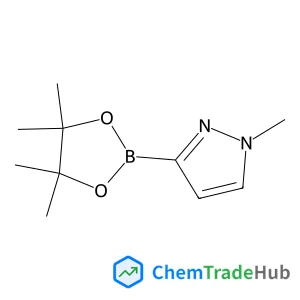
1-Methyl-3-(4,4,5,5-tetramethyl-1,3,2-dioxaborolan-2-yl)-1H-pyrazole
CAS番号:
1020174-04-2
分子式:
C10H17BN2O2

![1-Naphthalenesulfonic acid, 2-[(2-hydroxy-1-naphthalenyl)azo]-, bariumsalt (2:1) structure](https://static.chemtradehub.com/structs/110/1103-38-4-0b33.webp "1-Naphthalenesulfonic acid, 2-[(2-hydroxy-1-naphthalenyl)azo]-, bariumsalt (2:1) structure")
1-Naphthalenesulfonic acid, 2-[(2-hydroxy-1-naphthalenyl)azo]-, bariumsalt (2:1)
CAS番号:
1103-38-4
分子式:
C20H14BaN2O4S
おすすめサプライヤー





免責事項
このページに表示される学術雑誌情報は、参考および研究目的のみを目的としています。当社は雑誌出版社とは提携しておらず、投稿の取り扱いも行っておりません。出版に関するお問い合わせは、各雑誌出版社に直接ご連絡ください。
表示されている情報に誤りがある場合は、support@chemtradehub.com までご連絡ください。迅速に確認し、対応いたします。