


Molecular dynamics study of zinc binding to cysteines in a peptide mimic of the alcohol dehydrogenase structural zinc site
文献情報
出版日
2008-12-12
DOI
10.1039/B815482A
インパクトファクター
3.676
著者
Erik G. Brandt, Mikko Hellgren, Tore Brinck, Tomas Bergman, Olle Edholm
原文を見る
要旨
The binding of zinc (Zn) ions to proteins is important for many cellular events. The theoretical and computational description of this binding (as well as that of other transition metals) is a challenging task. In this paper the binding of the Zn ion to four cysteine residues in the structural site of horse liver alcohol dehydrogenase (HLADH) is studied using a synthetic peptide mimic of this site. The study includes experimental measurements of binding constants, classical free energy calculations from molecular dynamics (MD) simulations and quantum mechanical (QM) electron structure calculations. The classical MD results account for interactions at the molecular level and reproduce the absolute binding energy and the hydration free energy of the Zn ion with an accuracy of about 10%. This is insufficient to obtain correct free energy differences. QM correction terms were calculated from density functional theory (DFT) on small clusters of atoms to include electronic polarisation of the closest waters and covalent contributions to the Zn–S coordination bond. This results in reasonably good agreement with the experimentally measured binding constants and Zn ion hydration free energies in agreement with published experimental values. The study also includes the replacement of one cysteine residue to an alanine. Simulations as well as experiments showed only a small effect of this upon the binding free energy. A detailed analysis indicate that the sulfur is replaced by three water molecules, thereby changing the coordination number of Zn from four (as in the original peptide) to six (as in water).
おすすめジャーナル

Kinetics and Catalysis

Journal of Heterocyclic Chemistry

Russian Chemical Reviews

Nature

Journal of Catalysis

European Journal of Wood and Wood Products

Journal of Organometallic Chemistry

Proceedings of the National Academy of Sciences of the United States of America

Journal of Physics and Chemistry of Solids

Journal of Medicinal Chemistry
関連文献
Well-defined (co)polypeptides bearing pendant alkyne groups
Yves Gnanou
2016-03-18
Communication
DOI: 10.1039/C6PY00365F
Di-magnesium and zinc catalysts for the copolymerization of phthalic anhydride and cyclohexene oxide
Prabhjot K. Saini, Charles Romain, Yunqing Zhu, Charlotte K. Williams
2014-07-15
Paper
DOI: 10.1039/C4PY00748D
Reactive polymeric micelles with disulfide groups in the coronae
Lichao Sun, Jinchuan Liu, Hanying Zhao
2014-07-29
Paper
DOI: 10.1039/C4PY00938J
Facile RAFT synthesis of side-chain amino acids containing pH-responsive hyperbranched and star architectures
Saswati Ghosh Roy, Priyadarsi De
2014-07-21
Paper
DOI: 10.1039/C4PY00766B
A novel method to prepare water-soluble core microcapsules with controlled burst release
Mingming Zuo, Tianqing Liu, Jingjing Han
2014-06-30
Paper
DOI: 10.1039/C4PY00616J
Synthesis and characterization of supramolecular cross-linkers containing cyclodextrin dimer and trimer
Keisuke Iijima, Daisuke Aoki, Hiromitsu Sogawa, Shigeo Asai, Toshikazu Takata
2016-04-13
Communication
DOI: 10.1039/C6PY00367B
Enhanced drug toxicity by conjugation of platinum drugs to polymers with guanidine containing zwitterionic functional groups that mimic cell-penetrating peptides
Robert H. Utama, Hongxu Lu, Martina H. Stenzel
2014-08-07
Paper
DOI: 10.1039/C4PY00802B
A coacervate-forming biodegradable polyester with elevated LCST based on bis-(2-methoxyethyl)amine
J. P. Swanson, M. R. Martinez, M. A. Cruz, S. G. Mankoci, P. J. Costanzo, A. Joy
2016-06-01
Paper
DOI: 10.1039/C6PY00814C
こちらもおすすめ
化合物よくある質問
6- bromo-1-cyclopropyl-1H-benzimidazoleの市場動向や研究トレンドはどうですか?
6- bromo-1-cyclopropyl-1H-benzimidazoleは、抗炎症、抗ウイルス作用を持つことが報告されており、新薬開発の研究対象として注目...
1416713-53-56-Bromo-1-cyclopropy...
化合物よくある質問
環氧プロpanol-d5を取り扱う際の実験室安全事項は何ですか?
取り扱う際には、防護眼鏡と手袋を使用し、ドラフトチャンバー内で操作することを推奨します。漏洩時には適切な手順で処理し、安全データシートを常に参照してください。
1246819-20-4Glycidol-d5
化合物よくある質問
2,2’-ジメチル-3,3’-ビピリジンはどのように合成されますか?
2,2’-ジメチル-3,3’-ビピリジンは、ピリジンと2-メチルアクリルアミドを有機合成反応で合成します。この反応では、ピリジンと2-メチルアクリルアミドを含有...
86156-55-02,2’-Dimethyl-3,3’-b...
化合物よくある質問
6-甲基ピリジン-2-ボリック酸の主な用途は何ですか?
6-甲基ピリジン-2-ボリック酸は、合成化学、医薬品合成、以及研究用途などに広く使用され、特に組換えDNA技術や分子生物学の研究において重要な役割を果たします。
372963-50-3(6-Methyl-2-pyridiny...
化合物よくある質問
(R)-3-(1-甲基-2-氧環己基)プロpano酸メチルは安全ですか?
(R)-3-(1-甲基-2-氧環己基)プロpano酸メチルは一定の安全性がありますが、直接的な皮膚接触や吸入は避けるべきです。使用する際は適切な個々の安全データ...
94089-47-1methyl 3-[(1R)-1-met...
化合物よくある質問
ketorolacはどのように保存すればよいですか?
ketorolacは、密封して遮光容器に保管し、直射日光や高温を避けて保存してください。温度は常温で保存し、湿度をなるべく低く保つことが推奨されます。
74103-06-3rac Ketorolac
化合物よくある質問
L-2,3-二氨基丙酸二盐酸盐を取り扱う際の実験室安全事項は何ですか?
L-2,3-二氨基丙酸二盐酸盐は腐食性が強く、皮膚や粘膜に刺激を与える可能性があります。取り扱う際は、防塵マスク、ゴーグル、手袋を使用し、適切な排気設備を使用し...
19777-68-5(S)-2,3-Diaminopropa...
化合物よくある質問
2-(4-溴ピリジン-2-基)乙腈の物理化学的性質は何ですか?
2-(4-溴ピリジン-2-基)乙腈のCAS番号は312325-73-8です。主に結晶形態で存在し、分子量は159.01 g/molです。この化合物は水に溶けやす...
312325-73-8(4-Bromo-2-pyridinyl...
化合物よくある質問
3-フローロ-[1,1-ベンジレン]-3,4-ジカルボン酸を取り扱う際の実験室安全事項は何ですか?
この化合物は毒性は低いですが、直接的な接触や吸入に注意が必要です。PPE(個人防護具)を着用し、ドラフトチャンバーを使用して操作することを推奨します。また、漏洩...
1261915-32-53'-Fluoro-[1,1'-biph...
化合物よくある質問
3-(1-氧代-1,3-二氢-2H-2-异吲哚)丙酸の主な用途は何ですか?
3-(1-氧代-1,3-二氢-2H-2-异吲哚)丙酸は、薬理学研究や医薬品製造において広く用いられる化合物です。また、工業的な用途でも一部の化学反応の触媒や助剤...
83747-30-23-(1-Oxo-1,3-dihydro...
掲載誌
Physical Chemistry Chemical Physics

CiteScore:
5.5
自己引用率:
10.3%
年間論文数:
3036
Physical Chemistry Chemical Physics (PCCP) is an international journal co-owned by 19 physical chemistry and physics societies from around the world. This journal publishes original, cutting-edge research in physical chemistry, chemical physics and biophysical chemistry. To be suitable for publication in PCCP, articles must include significant innovation and/or insight into physical chemistry; this is the most important criterion that reviewers and Editors will judge against when evaluating submissions. The journal has a broad scope and welcomes contributions spanning experiment, theory, computation and data science. Topical coverage includes spectroscopy, dynamics, kinetics, statistical mechanics, thermodynamics, electrochemistry, catalysis, surface science, quantum mechanics, quantum computing and machine learning. Interdisciplinary research areas such as polymers and soft matter, materials, nanoscience, energy, surfaces/interfaces, and biophysical chemistry are welcomed if they demonstrate significant innovation and/or insight into physical chemistry. Joined experimental/theoretical studies are particularly appreciated when complementary and based on up-to-date approaches.
おすすめ化合物
![2-{[(1R,2S)-2-Aminocyclohexyl]amino}-4-{[3-(2H-1,2,3-triazol-2-yl)phenyl]amino}-5-pyrimidinecarboxamide structure](https://static.chemtradehub.com/structs/137/1370261-96-3-40df.webp "2-{[(1R,2S)-2-Aminocyclohexyl]amino}-4-{[3-(2H-1,2,3-triazol-2-yl)phenyl]amino}-5-pyrimidinecarboxamide structure")
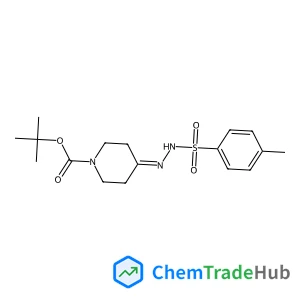
tert-Butyl 4-(2-(p-Tolylsulfonyl)hydrazono)piperidine-1-carboxylate
CAS番号:
1046478-89-0
分子式:
C17H25N3O4S
おすすめサプライヤー




免責事項
このページに表示される学術雑誌情報は、参考および研究目的のみを目的としています。当社は雑誌出版社とは提携しておらず、投稿の取り扱いも行っておりません。出版に関するお問い合わせは、各雑誌出版社に直接ご連絡ください。
表示されている情報に誤りがある場合は、support@chemtradehub.com までご連絡ください。迅速に確認し、対応いたします。