












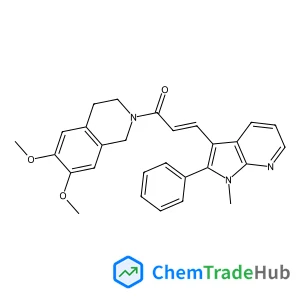
A novel type of N-formylation and related reactions of aminesviacyanides and esters as formylating agents
文献情報
出版日
2008-09-16
DOI
10.1039/B810086A
インパクトファクター
6.222
著者
Kai Bao, Weige Zhang, Xiujuan Bu, Zhichun Song, Liang Zhang, Maosheng Cheng
原文を見る
要旨
A novel N-formylation and related reactions proceed from cyanides promoted by esters.
関連文献
Pressure-dependent kinetics of methyl formate reactions with OH at combustion, atmospheric and interstellar temperatures
Junjun Wu, Liuhao Ma
2018-09-24
Paper
DOI: 10.1039/C8CP04114H
Site-selective bond scission of methylbenzoate following core excitation
Osamu Takahashi, Hanna Myllynen, Joakim Laksman, Elisabeth Rachlew, Edwin Kukk
2018-03-06
Paper
DOI: 10.1039/C7CP08428E
Modelling molecular adsorption on charged or polarized surfaces: a critical flaw in common approaches
Kristof M. Bal, Erik C. Neyts
2018-03-12
Communication
DOI: 10.1039/C7CP08209F
Exploring non-adiabatic approximations to the exchange–correlation functional of TDDFT
Johanna I. Fuks, Lionel Lacombe, Søren E. B. Nielsen, Neepa T. Maitra
2018-10-02
Paper
DOI: 10.1039/C8CP03957G
Central substitution of azacalixphyrins: a strategy towards acidochromic NIR dyes
Cloé Azarias, Simon Pascal, Olivier Siri, Denis Jacquemin
2018-07-11
Paper
DOI: 10.1039/C8CP03789B
Visible light-triggered fluorescence and pH modulation using metastable-state photoacids and BODIPY
Parth K. Patel, Juan E. Arias, Renan S. Gongora, Aurélien Moncomble, Stéphane Aloïse, Karin Y. Chumbimuni-Torres
2018-08-08
Communication
DOI: 10.1039/C8CP03977A
Does Rashba splitting in CH3NH3PbBr3 arise from 2 × 2 surface reconstruction?
Boubacar Traore, Claudine Katan, Mikaël Kepenekian, Jacky Even
2018-03-08
Paper
DOI: 10.1039/C8CP00745D
Mechanisms ruling the partition of solutes in ionic-liquid-based aqueous biphasic systems – the multiple effects of ionic liquids
Helena Passos, Teresa B. V. Dinis, Emanuel V. Capela, Maria V. Quental, Joana Gomes, Judite Resende, Pedro P. Madeira, Mara G. Freire, João A. P. Coutinho
2018-02-22
Perspective
DOI: 10.1039/C8CP00383A
Theoretical study of radiative and nonradiative decay rates for Cu(i) complexes with double heteroleptic ligands
Yuannan Chen, Aimin Ren, Zhongyue Yang, Tengfei He, Xiaoli Ding, Hongxing Zhang, Luyi Zou
2018-03-07
Paper
DOI: 10.1039/C8CP00525G
Evidence of homo-FRET in quantum dot–dye heterostructured assembly
Samyabrata Saha, Debashis Majhi, Kalishankar Bhattacharyya, Naupada Preeyanka, Ayan Datta, Moloy Sarkar
2018-03-08
Paper
DOI: 10.1039/C7CP07233C
こちらもおすすめ
化合物よくある質問
2-ヒドロキシ-5-ニトロベンジンブロモイドの代替品はありますか?
2-ヒドロキシ-5-ニトロベンジンブロモイドは特定の化学反応に適しているため、代替品は限られています。しかし、同様の構造を持つ2-ヒドロキシ-4-ニトロベンジン...
772-33-82-(Bromomethyl)-4-ni...
化合物よくある質問
N-(2-ブロモフェニル)-1-チロール-3-オキソ-3-(ピペリジニル)プロペン-2-イル)ベンゼンアミドを取り扱う際の実験室安全事項は何ですか?
N-(2-ブロモフェニル)-1-チロール-3-オキソ-3-(ピペリジニル)プロペン-2-イル)ベンゼンアミドは有毒で、皮膚や粘膜に刺激を与える可能性があります。...
1800044-77-2N-[(1Z)-1-(2-Bromoph...
化合物よくある質問
1,3プロパンジオール,2-[2-(2アミノ-6クロロ-9Hピリミジン-9-イル)エチル-1,1,2,2-D4]-2,3-ジアセタートの市場動向や研究トレンドはどうですか?
この化合物は、新規治療薬の開発に注目されています。市場では、その有効性と安全性が評価され、研究分野では、分子生物学と医薬化学の新たな発見が期待されています。
1020718-81-31,3-Propanediol, 2-[...
579-44-2Ethanone, 2-hydroxy-...
化合物よくある質問
Succinimidyl-alanyl-phenylalanyl-prolyl-phenylalanine 4-nitroanilide はどの業界で使用されていますか?
Succinimidyl-alanyl-phenylalanyl-prolyl-phenylalanine 4-nitroanilide は主に医薬品開発やポ...
128802-73-3succinimidyl-alanyl-...
化合物よくある質問
メチル6-アミノ-5-クロロピリジン-2-カーボイル酸について、適用される法規ガイドラインは何ですか?
メチル6-アミノ-5-クロロピリジン-2-カーボイル酸(CAS番号: 1256794-05-4)の使用には、GHS( Globally Harmonized S...
1256794-05-4Methyl 6-amino-5-chl...
化合物よくある質問
エチル4-(シクロ Pentagonyl)アミノ-2-メチル硫化基ピリミジン-5-カルボキシレートを取り扱う際の実験室安全事項は何ですか?
取り扱いには、耐薬品性の容器を使用し、通気性の良い場所で操作することを推奨します。漏れ時は、SDS(安全データシート)を参照して適切な措置を取ること。手洗いと洗...
211245-62-4ethyl 4-(cyclopentyl...
化合物よくある質問
(S)-3-ベンZYルピペリジン塩酸塩とは何ですか?
(S)-3-ベンZYルピペリジン塩酸塩は、CAS番号1258940-00-9で表される化合物です。これは、(S)-3-苯基哌啶的盐酸盐であり、主に医薬品の原料と...
1258940-00-9(S)-3-Phenylpiperidi...
化合物よくある質問
3,5-二甲基金剛胺の主な用途は何ですか?
3,5-二甲基金剛胺は、主に医薬品の原料として使用され、また抗うつ薬や抗アルツハイマー薬の開発に利用されます。さらに、化粧品や食品添加物の製造でも重要な役割を果...
19988-45-52-(2,3-Dihydroxyphen...
化合物よくある質問
ビス(4-メチル-2-ペンチル)フェニルカルボン酸エステルの代替品はありますか?
ビス(4-メチル-2-ペンチル)フェニルカルボン酸エステル (CAS番号: 1398066-13-1) の代替品には、ビス(2-エチルヘキシル)フェノールカルボ...
1398066-13-1Bis(4-methyl-2-penty...
掲載誌
Chemical Communications

CiteScore:
8.6
自己引用率:
4.7%
年間論文数:
2458
ChemComm publishes urgent research which is of outstanding significance and interest to experts in the field, while also appealing to the journal’s broad chemistry readership. Our communication format is ideally suited to short, urgent studies that are of such importance that they require accelerated publication. Our scope covers all topics in chemistry, and research at the interface of chemistry and other disciplines (such as materials science, nanoscience, physics, engineering and biology) where there is a significant novelty in the chemistry aspects. Major topic areas covered include: Analytical Chemistry Catalysis Chemical Biology and medicinal chemistry Computational Chemistry and Machine Learning Energy and sustainable chemistry Environmental Chemistry Green Chemistry Inorganic Chemistry Materials Chemistry Nanoscience Organic Chemistry Physical Chemistry Polymer Chemistry Supramolecular Chemistry
おすすめ化合物
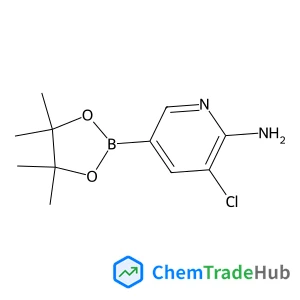
3-Chloro-5-(4,4,5,5-tetramethyl-1,3,2-dioxaborolan-2-yl)-2-pyridinamine
CAS番号:
1032758-99-8
分子式:
C11H16BClN2O2
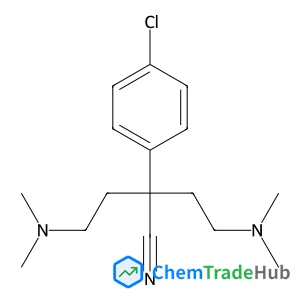
2-(4-Chlorophenyl)-4-(dimethylamino)-2-(2-(dimethylamino)ethyl)butanenitrile
CAS番号:
1246816-57-8
分子式:
C16H24ClN3
おすすめサプライヤー






免責事項
このページに表示される学術雑誌情報は、参考および研究目的のみを目的としています。当社は雑誌出版社とは提携しておらず、投稿の取り扱いも行っておりません。出版に関するお問い合わせは、各雑誌出版社に直接ご連絡ください。
表示されている情報に誤りがある場合は、support@chemtradehub.com までご連絡ください。迅速に確認し、対応いたします。