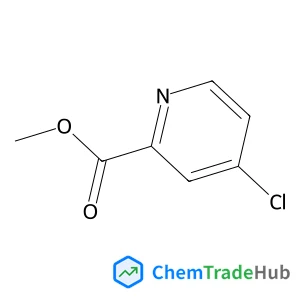
Tris(2-ethylhexyl) 4,4',4''-(1,3,5-triazine-2,4,6-triyltriimino)tribenzoate
CAS番号:
88122-99-0
分子式:
C48H66N6O6
Ive Hermans, Eric Breynaert, Hilde Poelman, Roger De Gryse, Duoduo Liang, Gustaaf Van Tendeloo, André Maes, Jozef Peeters, Pierre Jacobs
In this contribution, the formation and immobilisation of chromium(III) hydroxyoxide colloids is investigated. Nano-sized Cr(III) colloids are generated in situ upon reduction of Cr(VI), dosed to a stirred reactor. The growth of the elementary colloids by the consumption of solved Cr is kinetically unfavorable compared to their aggregation to larger secondary particles, the size of which depends on the concentration of the building block colloids. This aggregation process can be steered by simple process parameters such as dosing rate and concentration of the Cr(VI). The Cr(III) colloids are immobilised in situ on a support material via precipitation chromatography. Upon drying, the initially amorphose hydroxyoxides are gradually transformed into crystalline Cr2O3 nanoparticles, mainly located at the external surface of the support. This approach opens new opportunities for the synthesis of supported metal oxide catalysts.
Ming-Chung Tseng, Chi-Yu Lai, Yu-Wan Chu, Yen-Ho Chu
DOI: 10.1039/B813880J
Kiyofumi Inamoto, Yukari Arai, Kou Hiroya, Takayuki Doi
DOI: 10.1039/B811362A
Mark E. Smith, Emma L. Flynn, Mark A. Fox, Alexandre Trottier, Eckart Wrede, Dmitri S. Yufit, Judith A. K. Howard, Kate L. Ronayne, Michael Towrie, Anthony W. Parker, František Hartl, Paul J. Low
DOI: 10.1039/B811357B
Sharath Kirumakki, Sandani Samarajeewa, Robert Harwell, Atashi Mukherjee, Rolfe H. Herber, Abraham Clearfield
DOI: 10.1039/B807938B
Amanda L. Garner, Kazunori Koide
DOI: 10.1039/B817220J
Franck Paté, Hélène Gérard, Hassan Oulyadi, Aurélien de la Lande, Anne Harrison-Marchand, Olivier Parisel, Jacques Maddaluno
DOI: 10.1039/B814961E
Jian Zhang, Jan Mizera, Frank Girgsdies, Ning Wang, Sharifah Bee Abd Hamid, Robert Schlögl, Dang Sheng Su
DOI: 10.1039/B815335C
Peng Cui, Yaofeng Chen, Xin Xu, Jie Sun
DOI: 10.1039/B813075B
Chi-Hui Chen, Chi-Fen Chen, Gene-Hsiang Lee
DOI: 10.1039/B817032K
Fu-Chuan Fang, Cheng-Che Chu, Chih-Hao Huang, Guillaume Raffy, André Del Guerzo, Ken-Tsung Wong, Dario M. Bassani
DOI: 10.1039/B813704H
この化合物はCAS番号1142209-81-1であり、GHS分類では corrosive (腐食性物質) と classified (分類物質) として指定され...
2,2-二氟-1,3-ベンゾジオキサン-5-カルボキシlic酸は、CAS番号656-46-2の化合物で、化学式はC8H4F2O4です。この化合物は白色の結晶性粉...
8-氯-4-色原酮(CAS番号: 49701-11-3)の代替品には、他の色原酮類似物や、構造が似ている化合物があります。例えば、8-メチル-4-色原酮や、他の...
エチル6,6-ジメチル-4,5,6,7-テトラヒドロ-1H-インドアゼー-3-カルボキシレートは、CAS番号1233243-56-5を有する化合物です。これは有...
4-叔丁基-6-氯-嘧啶はCAS番号3435-24-3で、GHS分類では毒性物質とみなし、GHSの危険性分類が適用されます。REACH規則では登録が必要で、Eu...
維库溴铵杂质Bは、アンドロステンデンから始まり、一連の合成反応、包括的な選択性と高い収率で合成されます。具体的には、ブロミド化、酸化、ジマーゼ反応、アミド化など...
CAS番号350017-04-8の2-(4-氟苄基)-吡咯烷は、結晶性の白色粉末です。分子量は199.17 g/molで、水に溶けにくいです。化学反応では比較的...
3-喹啉甲醛(2-チロール-8-エチル)は一定の毒性を持つため、取扱には注意が必要です。使用する際は適切な防護具を着用し、密閉容器で保管・搬送し、直接的な接触を...
エチル3-(ヒドロキシメチル)-1H-ピロール-2-カルボキシレートは、室温(25℃)以下で保存し、直射日光を避け、乾燥した環境で保管することが推奨されます。ま...

Physical Chemistry Chemical Physics (PCCP) is an international journal co-owned by 19 physical chemistry and physics societies from around the world. This journal publishes original, cutting-edge research in physical chemistry, chemical physics and biophysical chemistry. To be suitable for publication in PCCP, articles must include significant innovation and/or insight into physical chemistry; this is the most important criterion that reviewers and Editors will judge against when evaluating submissions. The journal has a broad scope and welcomes contributions spanning experiment, theory, computation and data science. Topical coverage includes spectroscopy, dynamics, kinetics, statistical mechanics, thermodynamics, electrochemistry, catalysis, surface science, quantum mechanics, quantum computing and machine learning. Interdisciplinary research areas such as polymers and soft matter, materials, nanoscience, energy, surfaces/interfaces, and biophysical chemistry are welcomed if they demonstrate significant innovation and/or insight into physical chemistry. Joined experimental/theoretical studies are particularly appreciated when complementary and based on up-to-date approaches.