



Miniaturizing chemistry and biology in microdroplets
文献情報
出版日
2007-02-23
DOI
10.1039/B616252E
インパクトファクター
6.222
著者
Bernard T. Kelly, Jean-Christophe Baret, Andrew D. Griffiths
原文を見る
要旨
By compartmentalizing reactions in aqueous microdroplets of water-in-oil emulsions, reaction volumes can be reduced by factors of up to 109 compared to conventional microtitre-plate based systems. This allows massively parallel processing of as many as 1010 reactions in a total volume of only 1 ml of emulsion. This review describes the use of emulsions for directed evolution of proteins and RNAs, and for performing polymerase chain reactions (PCRs). To illustrate these applications we describe certain specific experiments, each of which exemplifies a different facet of the technique, in some detail. These examples include directed evolution of Diels–Alderase and RNA ligase ribozymes and several classes of protein enzymes, including DNA polymerases, phosphotriesterases, β-galactosidases and thiolactonases. We also describe the application of emulsion PCR to screen for rare mutations and for new ultra-high throughput sequencing technologies. Finally, we discuss the recent development of microfluidic tools for making and manipulating microdroplets and their likely impact on the future development of the field.
おすすめジャーナル

Journal of Chemical Sciences

Acta Metallurgica Sinica-English Letters

Biocatalysis and Biotransformation

Main Group Chemistry

Chinese Journal of Chemistry

Bioorganic & Medicinal Chemistry

NDT & E International

Bioorganic & Medicinal Chemistry Letters

Journal of Asian Natural Products Research

Polycyclic Aromatic Compounds
関連文献
An electrochemical study of lithium insertion into Cr5−yTiySe8 (y = 1, 2, 3, 4, 4.5) beyond the intercalation limit
Joseph Wontcheu, Wolfgang Bensch
2009-03-12
Paper
DOI: 10.1039/B822397A
Anomalous length and voltage dependence of single molecule conductance
Wolfgang Haiss, Santiago Martin, Lisa E. Scullion, Laurent Bouffier, Simon J. Higgins, Richard J. Nichols
2009-10-02
Paper
DOI: 10.1039/B910194B
Melting of a tetrahedral network model of silica
R. Cabriolu, M. G. Del Pópolo, P. Ballone
2009-09-25
Communication
DOI: 10.1039/B913358E
Spectroscopical properties of organic/metal nanohybrids
Giovanna Dellepiane, Carla Cuniberti, Marina Alloisio, Anna Demartini
2010-02-03
Paper
DOI: 10.1039/B912921A
Chirality transition in the epoxidation of (−)-α-pinene and successive hydrolysis studied by Raman optical activity and DFT
Zhaochi Feng, Can Li
2010-02-09
Paper
DOI: 10.1039/B919993D
Electromotive force measurements in the combustion wave front during layer-by-layer surface laser sintering of exothermic powder compositions
Igor V. Shishkovskiy, Yury G. Morozov, Maxim V. Kuznetsov, Ivan P. Parkin
2009-03-06
Paper
DOI: 10.1039/B819810A
An investigation of slow charge separation in a Tyrosine M210 to Tryptophan mutant of the Rhodobacter sphaeroidesreaction center by femtosecond mid-infrared spectroscopy
Natalia P. Pawlowicz, Ivo H. M. van Stokkum, Jacques Breton, Rienk van Grondelle, Michael R. Jones
2010-01-28
Paper
DOI: 10.1039/B905934B
Parameterizations for ice nucleation in biological and atmospheric systems
Thomas Koop
2009-09-30
Paper
DOI: 10.1039/B914289D
こちらもおすすめ
化合物よくある質問
2-氟-4-イオドベンzo酸エチルエステルを取り扱う際の実験室安全事項は何ですか?
2-氟-4-イオドベンzo酸エチルエステルは有機溶媒を用いた反応であり、ドラフトチャンバーでの操作が必要です。漏洩時にはSDS参照の安全措置を講じ、PPE(防護...
205750-82-9Benzoic acid, 2-fluo...
化合物よくある質問
血根碱の主な用途は何ですか?
血根碱は主に医薬分野で利用され、抗炎症や抗がん剤としての潜在的な効果が研究されています。また、化学研究や薬物開発において、新しい薬剤設計の参考となる化合物として...
2447-54-313-Methyl[1,3]benzod...
化合物よくある質問
Methyl 3-methoxythiophene-2-carboxylateの主な用途は何ですか?
Methyl 3-メトキシスチフェン-2-カルボン酸メチルエステルは、薬品合成、染料製造、以及合成中間体としての用途が広がっています。
62353-75-7Methyl 3-methoxythio...
化合物よくある質問
丹磺酰-L-亮氨酸はどのように保存すればよいですか?
丹磺酰-L-亮氨酸は乾燥した場所で、直射日光から保護し、低温(室温以下)で保存してください。密閉容器に入れて保管することをおすすめします。
1100-22-7N-{[5-(Dimethylamino...
化合物よくある質問
5-(苄氧基)ピラミジン-4-アミンの代替品はありますか?
5-(苄氧基)ピラミジン-4-アミンの代替品として、6-メトキシピラミジンや5-フェニルピラミジンなどが挙げられます。これらの化合物は、5-(苄氧基)ピラミジン...
92289-50-45-benzyloxypyrimidin...
化合物よくある質問
8-ヒドロキシノルデコペントアセートの物理化学的性質は何ですか?
8-ヒドロキシノルデコペントアセートはCAS番号84807-87-4の化合物で、分子量は750.02 uです。これは油溶性で、水に溶けにくい特徴があります。反応...
84807-87-4(5Z,8Z,11Z,13E,15S)-...
化合物よくある質問
tert-ブチル(エス)-1-ヒドロキシペンタ-4-エン-2-イルカルバamateの主な用途は何ですか?
tert-ブチル(エス)-1-ヒドロキシペンタ-4-エン-2-イルカルバamateは主に医薬品の合成材料や分析化学の試薬として使用されます。
116613-81-12-Methyl-2-propanyl ...
化合物よくある質問
ブコール-L-2-フローヨルブリンについて適切な法規ガイドラインは何ですか?
ブコール-L-2-フローヨルブリン(CAS番号: 1196107-73-9)は、GHS(グローバルハザードアサessmentシステム)に基づく危害分類と表示が求...
1196107-73-92-Bromo-13,13-dimeth...
化合物よくある質問
6-ブロモ-N-環丙基-2-ピリジニニメタンの市場動向や研究トレンドはどうですか
6-ブロモ-N-環丙基-2-ピリジニニメタンは、薬理学研究や合成化学に使用される化合物であり、特に抗ウイルス薬や抗がん薬の開発に注目されています。市場では、薬物...
959237-20-86-Bromo-N-cyclopropy...
化合物よくある質問
RS-AMPÀはどのように保存すればよいですか?
RS-AMPÀは、遮光容器に保存し、室温(15〜25℃)で保管することが推奨されます。高湿や熱は物質を劣化させるため、湿度は50%以下に保つことが重要です。また...
74341-63-2(RS)-AMPA
掲載誌
Chemical Communications

CiteScore:
8.6
自己引用率:
4.7%
年間論文数:
2458
ChemComm publishes urgent research which is of outstanding significance and interest to experts in the field, while also appealing to the journal’s broad chemistry readership. Our communication format is ideally suited to short, urgent studies that are of such importance that they require accelerated publication. Our scope covers all topics in chemistry, and research at the interface of chemistry and other disciplines (such as materials science, nanoscience, physics, engineering and biology) where there is a significant novelty in the chemistry aspects. Major topic areas covered include: Analytical Chemistry Catalysis Chemical Biology and medicinal chemistry Computational Chemistry and Machine Learning Energy and sustainable chemistry Environmental Chemistry Green Chemistry Inorganic Chemistry Materials Chemistry Nanoscience Organic Chemistry Physical Chemistry Polymer Chemistry Supramolecular Chemistry
おすすめ化合物
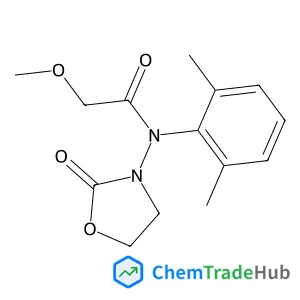
N-(2,6-Dimethylphenyl)-2-methoxy-N-(2-oxo-1,3-oxazolidin-3-yl)acetamide
CAS番号:
77732-09-3
分子式:
C14H18N2O4
おすすめサプライヤー




免責事項
このページに表示される学術雑誌情報は、参考および研究目的のみを目的としています。当社は雑誌出版社とは提携しておらず、投稿の取り扱いも行っておりません。出版に関するお問い合わせは、各雑誌出版社に直接ご連絡ください。
表示されている情報に誤りがある場合は、support@chemtradehub.com までご連絡ください。迅速に確認し、対応いたします。