












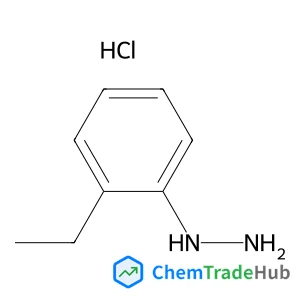
Melting of a tetrahedral network model of silica
文献情報
出版日
2009-09-25
DOI
10.1039/B913358E
インパクトファクター
3.676
著者
R. Cabriolu, M. G. Del Pópolo, P. Ballone
原文を見る
要旨
Thermal properties of an idealised tetrahedral network model of silica are investigated by Monte Carlo simulations. The interatomic potential consists of anharmonic stretching and bending terms, plus a short range repulsion. The model includes a bond interchange rule similar to the well known Wooten, Winer and Weaire (WWW) algorithm (see Phys. Rev. Lett., 1985, 54, 1392). Simulations reveal an apparent first order melting transition at T = 2200 K. The computed changes in the local coordination upon melting are consistent with experimental and ab initio data.
関連文献
Covalent capture of supramolecular species in an aqueous solution of water-miscible small organic molecules
Yongchao Yao, Chuanqi Li, Fangqin Liu, Pengxiang Zhao
2019-04-23
Paper
DOI: 10.1039/C9CP01427F
Predicting aromatic exciplex fluorescence emission energies
Rachel A. Krueger, Guillaume Blanquart
2019-05-03
Paper
DOI: 10.1039/C9CP02027F
Understanding the structural and chemical changes in vertical graphene nanowalls upon plasma nitrogen ion implantation
P. A. Manojkumar, Nanda Gopala Krishna, G. Mangamma, S. K. Albert
2019-04-29
Paper
DOI: 10.1039/C9CP02165E
Photodissociation dynamics of CH3I probed via multiphoton ionisation photoelectron spectroscopy
Emily M. Warne, Briony Downes-Ward, Joanne Woodhouse, Michael A. Parkes, Darren Bellshaw, Emma Springate, Paulina Majchrzak, Yu Zhang, Gabriel Karras, Adam S. Wyatt, Richard T. Chapman, Adam Kirrander, Russell S. Minns
2019-05-10
Paper
DOI: 10.1039/C9CP01477B
Understanding the size effects on the electronic structure of ThO2 nanoparticles
Tatiana V. Plakhova, Anna Yu. Romanchuk, Stephan Weiss, Anna Efimenko, Christoph J. Sahle, Sergei M. Butorin, Stepan N. Kalmykov
2019-04-29
Paper
DOI: 10.1039/C9CP01283D
Evaluation of the effect of nickel clusters on the formation of incipient soot particles from polycyclic aromatic hydrocarbons via ReaxFF molecular dynamics simulations
Sharmin Shabnam, Qian Mao, Adri C. T. van Duin
2019-04-16
Paper
DOI: 10.1039/C9CP00354A
Response of adhesive polymer interfaces to repeated mechanical loading and the spatial variation of diffusion coefficient and stresses in a deforming polymer film
Jeeno Jose, Narasimhan Swaminathan
2019-04-29
Paper
DOI: 10.1039/C9CP00576E
Density functional approach to the description of the structure of dimer nanoparticles at liquid–liquid interfaces
Stefan Sokołowski, Orest Pizio
2019-05-09
Paper
DOI: 10.1039/C9CP01087D
DEER distance measurements on trityl/trityl and Gd(iii)/trityl labelled proteins
Angeliki Giannoulis, Yin Yang, Yan-Jun Gong, Xiaoli Tan, Akiva Feintuch, Raanan Carmieli, Thorsten Bahrenberg, Yangping Liu, Xun-Cheng Su, Daniella Goldfarb
2019-02-27
Paper
DOI: 10.1039/C8CP07249C
Synergetic light trapping effects in organic solar cells with a patterned semi-transparent electrode
2019-05-09
Paper
DOI: 10.1039/C9CP00581A
こちらもおすすめ
化合物よくある質問
2-氟-4-イオドベンzo酸エチルエステルを取り扱う際の実験室安全事項は何ですか?
2-氟-4-イオドベンzo酸エチルエステルは有機溶媒を用いた反応であり、ドラフトチャンバーでの操作が必要です。漏洩時にはSDS参照の安全措置を講じ、PPE(防護...
205750-82-9Benzoic acid, 2-fluo...
化合物よくある質問
血根碱の主な用途は何ですか?
血根碱は主に医薬分野で利用され、抗炎症や抗がん剤としての潜在的な効果が研究されています。また、化学研究や薬物開発において、新しい薬剤設計の参考となる化合物として...
2447-54-313-Methyl[1,3]benzod...
化合物よくある質問
Methyl 3-methoxythiophene-2-carboxylateの主な用途は何ですか?
Methyl 3-メトキシスチフェン-2-カルボン酸メチルエステルは、薬品合成、染料製造、以及合成中間体としての用途が広がっています。
62353-75-7Methyl 3-methoxythio...
化合物よくある質問
丹磺酰-L-亮氨酸はどのように保存すればよいですか?
丹磺酰-L-亮氨酸は乾燥した場所で、直射日光から保護し、低温(室温以下)で保存してください。密閉容器に入れて保管することをおすすめします。
1100-22-7N-{[5-(Dimethylamino...
化合物よくある質問
5-(苄氧基)ピラミジン-4-アミンの代替品はありますか?
5-(苄氧基)ピラミジン-4-アミンの代替品として、6-メトキシピラミジンや5-フェニルピラミジンなどが挙げられます。これらの化合物は、5-(苄氧基)ピラミジン...
92289-50-45-benzyloxypyrimidin...
化合物よくある質問
8-ヒドロキシノルデコペントアセートの物理化学的性質は何ですか?
8-ヒドロキシノルデコペントアセートはCAS番号84807-87-4の化合物で、分子量は750.02 uです。これは油溶性で、水に溶けにくい特徴があります。反応...
84807-87-4(5Z,8Z,11Z,13E,15S)-...
化合物よくある質問
tert-ブチル(エス)-1-ヒドロキシペンタ-4-エン-2-イルカルバamateの主な用途は何ですか?
tert-ブチル(エス)-1-ヒドロキシペンタ-4-エン-2-イルカルバamateは主に医薬品の合成材料や分析化学の試薬として使用されます。
116613-81-12-Methyl-2-propanyl ...
化合物よくある質問
ブコール-L-2-フローヨルブリンについて適切な法規ガイドラインは何ですか?
ブコール-L-2-フローヨルブリン(CAS番号: 1196107-73-9)は、GHS(グローバルハザードアサessmentシステム)に基づく危害分類と表示が求...
1196107-73-92-Bromo-13,13-dimeth...
化合物よくある質問
6-ブロモ-N-環丙基-2-ピリジニニメタンの市場動向や研究トレンドはどうですか
6-ブロモ-N-環丙基-2-ピリジニニメタンは、薬理学研究や合成化学に使用される化合物であり、特に抗ウイルス薬や抗がん薬の開発に注目されています。市場では、薬物...
959237-20-86-Bromo-N-cyclopropy...
化合物よくある質問
RS-AMPÀはどのように保存すればよいですか?
RS-AMPÀは、遮光容器に保存し、室温(15〜25℃)で保管することが推奨されます。高湿や熱は物質を劣化させるため、湿度は50%以下に保つことが重要です。また...
74341-63-2(RS)-AMPA
掲載誌
Physical Chemistry Chemical Physics

CiteScore:
5.5
自己引用率:
10.3%
年間論文数:
3036
Physical Chemistry Chemical Physics (PCCP) is an international journal co-owned by 19 physical chemistry and physics societies from around the world. This journal publishes original, cutting-edge research in physical chemistry, chemical physics and biophysical chemistry. To be suitable for publication in PCCP, articles must include significant innovation and/or insight into physical chemistry; this is the most important criterion that reviewers and Editors will judge against when evaluating submissions. The journal has a broad scope and welcomes contributions spanning experiment, theory, computation and data science. Topical coverage includes spectroscopy, dynamics, kinetics, statistical mechanics, thermodynamics, electrochemistry, catalysis, surface science, quantum mechanics, quantum computing and machine learning. Interdisciplinary research areas such as polymers and soft matter, materials, nanoscience, energy, surfaces/interfaces, and biophysical chemistry are welcomed if they demonstrate significant innovation and/or insight into physical chemistry. Joined experimental/theoretical studies are particularly appreciated when complementary and based on up-to-date approaches.
おすすめ化合物
おすすめサプライヤー






免責事項
このページに表示される学術雑誌情報は、参考および研究目的のみを目的としています。当社は雑誌出版社とは提携しておらず、投稿の取り扱いも行っておりません。出版に関するお問い合わせは、各雑誌出版社に直接ご連絡ください。
表示されている情報に誤りがある場合は、support@chemtradehub.com までご連絡ください。迅速に確認し、対応いたします。