












Elucidation of the local structure of active titanium(iv) sites on silica-based phase-boundary catalysts for alkeneepoxidation with aqueous hydrogen peroxide
文献情報
出版日
2004-03-26
DOI
10.1039/B316818B
インパクトファクター
3.676
著者
Keita Ikeue, Atsushi Watanabe, Bunsho Ohtani
原文を見る
要旨
Structural and functional aspects of active titanium sites for phase boundary catalytic (PBC) epoxidation of 1-octene with hydrogen peroxide (H2O2) were investigated in detail using X-ray absorption fine structure (XAFS) analysis and ultraviolet and visible-light diffuse reflectance (UV-Vis-DR) spectroscopy. By analysis of the Ti K-edge X-ray absorption near edge fine structure (XANES) spectra of several titanium-loaded silica catalysts, the ratio of the amount of 4-coordinated titanium oxide (Ttet) to that of a 6-coordinated one (Toct) was determined. Monotonic increments of catalytic activity for epoxide production and efficiency of H2O2 utilization with the ratio Ttet/(Ttet + Toct) revealed that the highly active catalysts mainly include Ttet but not Toct. UV-Vis-DR spectra of samples with external surfaces partially covered with alkylsilyl groups indicated that there are at least two kinds of Ttet sites with different ligands. One site anchors an acidic hydroxyl (Ttet(OH)), giving absorption centered at the wavelength of ca. 230 nm and the other, exhibiting an absorption peak at the wavelength of ca. 210 nm, is directly attached to an alkylsilyl group (Ttet(OSiR)) formed via reaction of an acidic hydroxy of Ttet(OH) with an alkylsilane reagent. Since the catalysts have both an alkylsilyl-grafted hydrophobic surface and a hydroxy-terminated hydrophilic surface, it is postulated that the former is located on both hydrophilic (Ttet(OH,w)) and hydrophobic (Ttet(OH,o)) surfaces and the latter, Ttet(OSiR), exists only on the hydrophobic surface. From analyses of catalytic activities of several catalysts with different distributions of these Ttet sites, both Ttet(OH,o) and Ttet(OSiR) sites on the hydrophobic surface were proved to be active, while Ttet(OH,w) on the hydrophilic surface did not work for the present PBC system. Among the sites on the hydrophobic surface, moreover, it was found that a Ttet(OSiR) site acted as a more effective site for selective epoxidation when compared with Ttet(OH,o), which induced ring-opening of epoxide to give a by-product, 1,2-octanediol.
関連文献
The design of Fe, N-doped hierarchically porous carbons as highly active and durable electrocatalysts for a Zn–air battery
Mingjie Wu, Qiaowei Tang, Fang Dong, Yongzhen Wang, Donghui Li, Qinping Guo, Yuyu Liu
2016-06-17
Communication
DOI: 10.1039/C6CP02785G
A model for ultra-fast charge transport in membrane proteins
Sheh-Yi Sheu, Edward W. Schlag, Dah-Yen Yang
2015-08-07
Paper
DOI: 10.1039/C5CP01442E
A quantum chemistry study of curvature effects on boron nitride nanotubes/nanosheets for gas adsorption
Haoyan Sha, Roland Faller
2016-07-04
Paper
DOI: 10.1039/C6CP02540D
In quest of cathode materials for Ca ion batteries: the CaMO3 perovskites (M = Mo, Cr, Mn, Fe, Co, and Ni)
M. E. Arroyo-de Dompablo, C. Krich, J. Nava-Avendaño, M. R. Palacín, F. Bardé
2016-07-01
Paper
DOI: 10.1039/C6CP03381D
Tip-enhanced Raman spectroscopy of bradykinin and its B2 receptor antagonists adsorbed onto colloidal suspended Ag nanowires
D. Święch, I. Tanabe, S. Vantasin, D. Sobolewski, Y. Ozaki, A. Prahl, E. Proniewicz
2015-08-05
Paper
DOI: 10.1039/C5CP03438H
Interaction between ionic liquid cation and water: infrared predissociation study of [bmim]+·(H2O)n clusters
Jonathan M. Voss, Brett M. Marsh, Jia Zhou, Etienne Garand
2016-06-29
Paper
DOI: 10.1039/C6CP02730J
Phase separation and crystallization in sodium lanthanum phosphate glasses induced by electrochemical substitution of sodium ions with protons
Keiga Kawaguchi, Takuya Yamaguchi, Takahisa Omata, Toshiharu Yamashita, Hiroshi Kawazoe, Junji Nishii
2015-08-06
Paper
DOI: 10.1039/C5CP04132E
Solubility and solvation of monosaccharides in ionic liquids
Ana Rita R. Teles, Teresa B. V. Dinis, Emanuel V. Capela, Luís M. N. B. F. Santos, Simão P. Pinho, Mara G. Freire, João A. P. Coutinho
2016-06-17
Paper
DOI: 10.1039/C6CP03495K
An efficient top-down approach for the fabrication of large-aspect-ratio g-C3N4 nanosheets with enhanced photocatalytic activities
Jincheng Tong, Li Zhang, Fei Li, Mingming Li, Shaokui Cao
2015-08-14
Paper
DOI: 10.1039/C5CP04057D
Hydrogen-bonding interactions of uric acid complexes with water/melamine by mid-infrared spectroscopy
Hiroyuki Saigusa, Daisuke Nakamura, Shu-hei Urashima
2015-07-31
Paper
DOI: 10.1039/C5CP03494A
こちらもおすすめ
化合物よくある質問
2-ブロモ-9,9-ジフェニル-9H-フルオレンの主な用途は何ですか?
2-溴-9,9-二苯基芴は、医薬品、工業材料、有機合成の研究分野で応用されます。特に、レーザー材料や機能性ポリマーの合成に使用されることがあります。また、蛍光色...
474918-32-62-Bromo-9,9-diphenyl...
化合物よくある質問
四氯化铱の市場動向や研究トレンドはどうですか?
四氯化铱の市場は研究開発分野で注目されており、特にナノ技術や金属有機框架(MOFs)の分野での需要が増加傾向にあります。価格は安定しており、中国や韓国での生産が...
207399-11-9Tetrachloroiridium h...
882-06-44-Nitrocinnamic acid
化合物よくある質問
1-(4-溴-3-氟苯基)-2-氯乙酮を含む廃棄物はどのように処理すべきですか?
1-(4-溴-3-氟苯基)-2-氯乙酮 (CAS番号: 1260857-14-4) の廃棄物は専門的な廃棄処理が必要です。まず、廃棄物は密閉された容器に収集し、...
1260857-14-41-(4-Bromo-3-fluorop...
化合物よくある質問
苦参酚Kとは何ですか?
苦参酚Kは、CAS番号101236-49-1を持つ化合物で、主に天然由来の生薬から抽出されます。この化合物は、抗炎症作用や抗癌作用を持つことが報告されています。
101236-49-1Kushenol K
化合物よくある質問
POTASSIUM (1-(TERTBUTOXYCARBONYL)AZETIDIN-3-YL)TRIFLUOROBORATE を含む廃棄物はどのように処理すべきですか?
POTASSIUM (1-(TERTBUTOXYCARBONYL)AZETIDIN-3-YL)TRIFLUOROBORATE を含む廃棄物は、まず安全なエント...
1430219-73-0Potassium (1-(tert-b...
化合物よくある質問
4-庚基-4’-联苯羧酸の市場動向や研究トレンドはどうですか?
4-庚基-4’-聯苯羧酸は、特殊化学品や合成化学の分野で用いられる化学物質ですが、市場動向としては、研究開発の進展とともに需要が増加しています。また、環境配慮型...
58573-94-74'-Heptyl-4-biphenyl...
化合物よくある質問
6-ブロモ-3-メトキシ-1-フェニル-1H-インドゾールを含む廃棄物はどのように処理すべきですか?
6-ブロモ-3-メトキシ-1-フェニル-1H-インドゾールを含む廃棄物は、適切な化学廃棄処理が必要です。通常、廃棄物は密閉容器に収集され、専門の廃棄処理業者に引...
1332527-03-36-Bromo-3-methoxy-1-...
化合物よくある質問
4,4-二甲基-2-吡咯烷酮はどの業界で使用されていますか?
4,4-二甲基-2-吡咯烷酮は医薬、ポリマー、センサー、半導体などの業界で広く使用されています。特に溶媒としての性能が高く評価されています。
66899-02-34,4-dimethylpyrrolid...
51312-42-6Sodium Phosphotungst...
掲載誌
Physical Chemistry Chemical Physics

CiteScore:
5.5
自己引用率:
10.3%
年間論文数:
3036
Physical Chemistry Chemical Physics (PCCP) is an international journal co-owned by 19 physical chemistry and physics societies from around the world. This journal publishes original, cutting-edge research in physical chemistry, chemical physics and biophysical chemistry. To be suitable for publication in PCCP, articles must include significant innovation and/or insight into physical chemistry; this is the most important criterion that reviewers and Editors will judge against when evaluating submissions. The journal has a broad scope and welcomes contributions spanning experiment, theory, computation and data science. Topical coverage includes spectroscopy, dynamics, kinetics, statistical mechanics, thermodynamics, electrochemistry, catalysis, surface science, quantum mechanics, quantum computing and machine learning. Interdisciplinary research areas such as polymers and soft matter, materials, nanoscience, energy, surfaces/interfaces, and biophysical chemistry are welcomed if they demonstrate significant innovation and/or insight into physical chemistry. Joined experimental/theoretical studies are particularly appreciated when complementary and based on up-to-date approaches.
おすすめ化合物
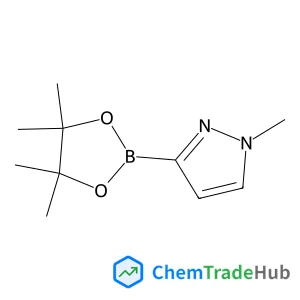
1-Methyl-3-(4,4,5,5-tetramethyl-1,3,2-dioxaborolan-2-yl)-1H-pyrazole
CAS番号:
1020174-04-2
分子式:
C10H17BN2O2
おすすめサプライヤー






免責事項
このページに表示される学術雑誌情報は、参考および研究目的のみを目的としています。当社は雑誌出版社とは提携しておらず、投稿の取り扱いも行っておりません。出版に関するお問い合わせは、各雑誌出版社に直接ご連絡ください。
表示されている情報に誤りがある場合は、support@chemtradehub.com までご連絡ください。迅速に確認し、対応いたします。