












Charge localization in complex oxides: Classical and quantum mechanical concepts
文献情報
出版日
2003-05-01
DOI
10.1039/B300172P
インパクトファクター
3.676
著者
原文を見る
要旨
In this contribution, we present a brief overview of the classical and quantum mechanical theory of charge localization in solids with application to the nonstoichiometric oxides SrFeO3−x and WO3−x. The cubic high-temperature phase of SrFeO3−x has been studied applying a Monte Carlo procedure with flexible classical charges. Oxygen vacancies exhibit a linear Fe(III)–vacancy–Fe(III) arrangement, a defect that can be described as a quadrupolaron considering its lowest nonvanishing multipole moment. This defect helps to rationalize the broad range of stability of the perovskite and the absence of polaron hopping. From a quantum mechanical perspective, we apply a nonperturbative molecular orbital approach to small polaron formation and hopping in WO3−x. A tight-binding Hamiltonian is extended by a nonretarded reaction field to account for the dielectric polarizability of the solid. The model can be solved self-consistently, leading to a localized excess charge distribution. The resulting energy barrier for polaron hopping and the impact of dynamic delocalization effects are discussed.
関連文献
Galvanic deposition of Rh and Ru on randomly structured Ti felts for the electrochemical NH3 synthesis
Kurt Kugler, Mareike Luhn, Jean André Schramm, Khosrow Rahimi
2014-12-16
Paper
DOI: 10.1039/C4CP05501B
Pressure-induced molten globule state of human acetylcholinesterase: structural and dynamical changes monitored by neutron scattering
R. Schweins
2014-12-11
Paper
DOI: 10.1039/C4CP02992E
Quantification of protein–materials interaction by soft colloidal probe spectroscopy
Steve Martin, Hanqing Wang, Laura Hartmann, Tilo Pompe, Stephan Schmidt
2014-12-23
Communication
DOI: 10.1039/C4CP05484A
Phosphine and phosphine oxide groups in metal–organic frameworks detected by P K-edge XAS
F. L. Morel, S. Pin, T. Huthwelker, M. Ranocchiari
2014-12-19
Paper
DOI: 10.1039/C4CP05151C
Chemistry in one dimension
Pierre-François Loos, Caleb J. Ball, Peter M. W. Gill
2014-12-11
Paper
DOI: 10.1039/C4CP03571B
Predicting crystal structures and properties of matter under extreme conditions via quantum mechanics: the pressure is on
Eva Zurek, Wojciech Grochala
2014-11-27
Perspective
DOI: 10.1039/C4CP04445B
Universality in surface mixing rule of adsorption strength for small adsorbates on binary transition metal alloys
Jeonghyun Ko, Hyunguk Kwon, Hyejin Kang, Byung-Kook Kim, Jeong Woo Han
2014-12-04
Paper
DOI: 10.1039/C4CP04770B
Effect of the borax mass and pre-spray medium temperature on droplet size and velocity vector distributions of intermittently sprayed starchy solutions
Muhammad Yasin Naz, Shaharin Anwar Sulaiman, Bambang Ariwahjoedi
2014-12-18
Paper
DOI: 10.1039/C4CP04378B
Nonidentical intracellular drug release rates in Raman and fluorescence spectroscopic determination
Erdene-Ochir Ganbold, Jinha Yoon, Doseok Kim, Sang-Woo Joo
2014-11-24
Paper
DOI: 10.1039/C4CP04235B
Alternative alcohol-soluble conjugated small molecule electrolytes for high-efficiency inverted polymer solar cells
Yueqin Shi
2014-12-09
Paper
DOI: 10.1039/C4CP04295F
こちらもおすすめ
化合物よくある質問
2-ブロモ-9,9-ジフェニル-9H-フルオレンの主な用途は何ですか?
2-溴-9,9-二苯基芴は、医薬品、工業材料、有機合成の研究分野で応用されます。特に、レーザー材料や機能性ポリマーの合成に使用されることがあります。また、蛍光色...
474918-32-62-Bromo-9,9-diphenyl...
化合物よくある質問
四氯化铱の市場動向や研究トレンドはどうですか?
四氯化铱の市場は研究開発分野で注目されており、特にナノ技術や金属有機框架(MOFs)の分野での需要が増加傾向にあります。価格は安定しており、中国や韓国での生産が...
207399-11-9Tetrachloroiridium h...
882-06-44-Nitrocinnamic acid
化合物よくある質問
1-(4-溴-3-氟苯基)-2-氯乙酮を含む廃棄物はどのように処理すべきですか?
1-(4-溴-3-氟苯基)-2-氯乙酮 (CAS番号: 1260857-14-4) の廃棄物は専門的な廃棄処理が必要です。まず、廃棄物は密閉された容器に収集し、...
1260857-14-41-(4-Bromo-3-fluorop...
化合物よくある質問
苦参酚Kとは何ですか?
苦参酚Kは、CAS番号101236-49-1を持つ化合物で、主に天然由来の生薬から抽出されます。この化合物は、抗炎症作用や抗癌作用を持つことが報告されています。
101236-49-1Kushenol K
化合物よくある質問
POTASSIUM (1-(TERTBUTOXYCARBONYL)AZETIDIN-3-YL)TRIFLUOROBORATE を含む廃棄物はどのように処理すべきですか?
POTASSIUM (1-(TERTBUTOXYCARBONYL)AZETIDIN-3-YL)TRIFLUOROBORATE を含む廃棄物は、まず安全なエント...
1430219-73-0Potassium (1-(tert-b...
化合物よくある質問
4-庚基-4’-联苯羧酸の市場動向や研究トレンドはどうですか?
4-庚基-4’-聯苯羧酸は、特殊化学品や合成化学の分野で用いられる化学物質ですが、市場動向としては、研究開発の進展とともに需要が増加しています。また、環境配慮型...
58573-94-74'-Heptyl-4-biphenyl...
化合物よくある質問
6-ブロモ-3-メトキシ-1-フェニル-1H-インドゾールを含む廃棄物はどのように処理すべきですか?
6-ブロモ-3-メトキシ-1-フェニル-1H-インドゾールを含む廃棄物は、適切な化学廃棄処理が必要です。通常、廃棄物は密閉容器に収集され、専門の廃棄処理業者に引...
1332527-03-36-Bromo-3-methoxy-1-...
化合物よくある質問
4,4-二甲基-2-吡咯烷酮はどの業界で使用されていますか?
4,4-二甲基-2-吡咯烷酮は医薬、ポリマー、センサー、半導体などの業界で広く使用されています。特に溶媒としての性能が高く評価されています。
66899-02-34,4-dimethylpyrrolid...
51312-42-6Sodium Phosphotungst...
掲載誌
Physical Chemistry Chemical Physics

CiteScore:
5.5
自己引用率:
10.3%
年間論文数:
3036
Physical Chemistry Chemical Physics (PCCP) is an international journal co-owned by 19 physical chemistry and physics societies from around the world. This journal publishes original, cutting-edge research in physical chemistry, chemical physics and biophysical chemistry. To be suitable for publication in PCCP, articles must include significant innovation and/or insight into physical chemistry; this is the most important criterion that reviewers and Editors will judge against when evaluating submissions. The journal has a broad scope and welcomes contributions spanning experiment, theory, computation and data science. Topical coverage includes spectroscopy, dynamics, kinetics, statistical mechanics, thermodynamics, electrochemistry, catalysis, surface science, quantum mechanics, quantum computing and machine learning. Interdisciplinary research areas such as polymers and soft matter, materials, nanoscience, energy, surfaces/interfaces, and biophysical chemistry are welcomed if they demonstrate significant innovation and/or insight into physical chemistry. Joined experimental/theoretical studies are particularly appreciated when complementary and based on up-to-date approaches.
おすすめ化合物
![[4-(Heptyloxy)phenyl]boronic acid structure](https://static.chemtradehub.com/structs/136/136370-19-9-ad33.webp "[4-(Heptyloxy)phenyl]boronic acid structure")
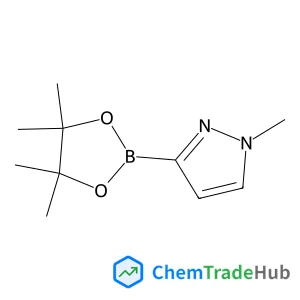
1-Methyl-3-(4,4,5,5-tetramethyl-1,3,2-dioxaborolan-2-yl)-1H-pyrazole
CAS番号:
1020174-04-2
分子式:
C10H17BN2O2
![[4-Amino-2-(methylsulfanyl)-5-pyrimidinyl]methanol structure](https://static.chemtradehub.com/structs/588/588-36-3-fc73.webp "[4-Amino-2-(methylsulfanyl)-5-pyrimidinyl]methanol structure")
おすすめサプライヤー



免責事項
このページに表示される学術雑誌情報は、参考および研究目的のみを目的としています。当社は雑誌出版社とは提携しておらず、投稿の取り扱いも行っておりません。出版に関するお問い合わせは、各雑誌出版社に直接ご連絡ください。
表示されている情報に誤りがある場合は、support@chemtradehub.com までご連絡ください。迅速に確認し、対応いたします。