












![1,2-Diphenyl-4-[2-(phenylsulfinyl)ethyl]-3,5-pyrazolidinedione structure](https://static.chemtradehub.com/structs/57-/57-96-5-efcc.webp "1,2-Diphenyl-4-[2-(phenylsulfinyl)ethyl]-3,5-pyrazolidinedione structure")
Stabilization of planar lipid membranes: A stratified layer approach
文献情報
出版日
2000-09-15
DOI
10.1039/B004073H
インパクトファクター
3.676
著者
Wolfgang Meier, Alexandra Graff, Anke Diederich, Mathias Winterhalter
原文を見る
要旨
Here we briefly summarize our recent efforts in stabilization of giant planar lipid membranes and provide the first promising results achieved with a new technique. A water-soluble polymer can be coupled to lipid membranes either electrostatically or ia a hydrophobic linker. Such coated membranes are significantly destabilized and the rupture process is slowed down. In contrast, partitioning of hydrophobic styrene monomer into the lipid membrane and its polymerization lead to an increase in stability. A short electric field pulse under controlled conditions was applied to quantify the stability. Voltages above 1.2 V are required to induce an electrical discharge. Within less than 100 μs these defects reseal. However, after resealing, the stability of this particular lipid membrane corresponds to that of a lipid membrane without a 2-D polymer network. We suggest the use of this technique to stabilize self-assembled lipid membrane structures.
関連文献
Anionic triazacyclononanes: new supporting ligands in main group and transition metal organometallic chemistry
Joseph A. R. Schmidt, Garth R. Giesbrecht, Chunming Cui, John Arnold
2002-11-28
Feature Article
DOI: 10.1039/B208525A
Remarkable effects of counter ions on scandium ion-promoted electron transfer reactions
Junpei Yuasa, Tomoyoshi Suenobu, Kei Ohkubo, Shunichi Fukuzumi
2003-04-02
Communication
DOI: 10.1039/B300543G
Transfer hydrogenation using recyclable polyurea-encapsulated palladium: efficient and chemoselective reduction of aryl ketones
Jin-Quan Yu, Hai-Chen Wu, Chandrashekar Ramarao, Jonathan B. Spencer, Steven V. Ley
2003-02-12
Communication
DOI: 10.1039/B300074P
Stereoselective fluorescence quenching by photoinduced electron transfer in naphthalene-amine dyads
Sergio Abad, Miguel A. Miranda
2003-04-02
Communication
DOI: 10.1039/B301414B
Reductive cleavage of the C–O bond of acetals and orthoesters: reduction by silane in the presence of a Rh–PPh3 complex
Tetsuo Ohta, Tsugumi Michibata, Kazuyuki Yamada, Ryohei Omori, Isao Furukawa
2003-04-17
Communication
DOI: 10.1039/B302124F
Effect of water on the catalytic behaviour of VPO in the selective oxidation of propane to acrylic acid
G. Landi, L. Lisi, J. C. Volta
2003-01-23
Communication
DOI: 10.1039/B211619G
A novel dry route to ortho-functionalized triarylbismuthanes that are difficult to access by conventional wet routes
Mika Urano, Shinobu Wada, Hitomi Suzuki
2003-04-22
Communication
DOI: 10.1039/B301983G
Cationic benzyl zirconium heteroscorpionates: synthesis and characterization of a novel ethylene polymerisation catalyst showing an unusual temperature dependent polymerisation mechanism
Stefano Milione, Cosimo Montefusco, Tomas Cuenca, Alfonso Grassi
2003-04-16
Communication
DOI: 10.1039/B301997G
Preparation of ZnO nanocrystalsvia ultrasonic irradiation
Dong Qian, J.Z. Jiang, Poul Lenvig Hansen
2003-03-28
Communication
DOI: 10.1039/B301504A
8-(1,4,7,10-Tetraoxa-13-azacyclopentadec-13-ylmethyl)quinolin-7-ol: synthesis and application as a highly sensitive metal cation probe
Kun-Chan Wu, Moawia O. Ahmed, Chun-Yan Chen, Guo-Wei Huang, Yung-Son Hon, Pi-Tai Chou
2003-03-10
Communication
DOI: 10.1039/B300941F
こちらもおすすめ
化合物よくある質問
2-ブロモ-9,9-ジフェニル-9H-フルオレンの主な用途は何ですか?
2-溴-9,9-二苯基芴は、医薬品、工業材料、有機合成の研究分野で応用されます。特に、レーザー材料や機能性ポリマーの合成に使用されることがあります。また、蛍光色...
474918-32-62-Bromo-9,9-diphenyl...
化合物よくある質問
四氯化铱の市場動向や研究トレンドはどうですか?
四氯化铱の市場は研究開発分野で注目されており、特にナノ技術や金属有機框架(MOFs)の分野での需要が増加傾向にあります。価格は安定しており、中国や韓国での生産が...
207399-11-9Tetrachloroiridium h...
882-06-44-Nitrocinnamic acid
化合物よくある質問
1-(4-溴-3-氟苯基)-2-氯乙酮を含む廃棄物はどのように処理すべきですか?
1-(4-溴-3-氟苯基)-2-氯乙酮 (CAS番号: 1260857-14-4) の廃棄物は専門的な廃棄処理が必要です。まず、廃棄物は密閉された容器に収集し、...
1260857-14-41-(4-Bromo-3-fluorop...
化合物よくある質問
苦参酚Kとは何ですか?
苦参酚Kは、CAS番号101236-49-1を持つ化合物で、主に天然由来の生薬から抽出されます。この化合物は、抗炎症作用や抗癌作用を持つことが報告されています。
101236-49-1Kushenol K
化合物よくある質問
POTASSIUM (1-(TERTBUTOXYCARBONYL)AZETIDIN-3-YL)TRIFLUOROBORATE を含む廃棄物はどのように処理すべきですか?
POTASSIUM (1-(TERTBUTOXYCARBONYL)AZETIDIN-3-YL)TRIFLUOROBORATE を含む廃棄物は、まず安全なエント...
1430219-73-0Potassium (1-(tert-b...
化合物よくある質問
4-庚基-4’-联苯羧酸の市場動向や研究トレンドはどうですか?
4-庚基-4’-聯苯羧酸は、特殊化学品や合成化学の分野で用いられる化学物質ですが、市場動向としては、研究開発の進展とともに需要が増加しています。また、環境配慮型...
58573-94-74'-Heptyl-4-biphenyl...
化合物よくある質問
6-ブロモ-3-メトキシ-1-フェニル-1H-インドゾールを含む廃棄物はどのように処理すべきですか?
6-ブロモ-3-メトキシ-1-フェニル-1H-インドゾールを含む廃棄物は、適切な化学廃棄処理が必要です。通常、廃棄物は密閉容器に収集され、専門の廃棄処理業者に引...
1332527-03-36-Bromo-3-methoxy-1-...
化合物よくある質問
4,4-二甲基-2-吡咯烷酮はどの業界で使用されていますか?
4,4-二甲基-2-吡咯烷酮は医薬、ポリマー、センサー、半導体などの業界で広く使用されています。特に溶媒としての性能が高く評価されています。
66899-02-34,4-dimethylpyrrolid...
51312-42-6Sodium Phosphotungst...
掲載誌
Physical Chemistry Chemical Physics

CiteScore:
5.5
自己引用率:
10.3%
年間論文数:
3036
Physical Chemistry Chemical Physics (PCCP) is an international journal co-owned by 19 physical chemistry and physics societies from around the world. This journal publishes original, cutting-edge research in physical chemistry, chemical physics and biophysical chemistry. To be suitable for publication in PCCP, articles must include significant innovation and/or insight into physical chemistry; this is the most important criterion that reviewers and Editors will judge against when evaluating submissions. The journal has a broad scope and welcomes contributions spanning experiment, theory, computation and data science. Topical coverage includes spectroscopy, dynamics, kinetics, statistical mechanics, thermodynamics, electrochemistry, catalysis, surface science, quantum mechanics, quantum computing and machine learning. Interdisciplinary research areas such as polymers and soft matter, materials, nanoscience, energy, surfaces/interfaces, and biophysical chemistry are welcomed if they demonstrate significant innovation and/or insight into physical chemistry. Joined experimental/theoretical studies are particularly appreciated when complementary and based on up-to-date approaches.
おすすめ化合物
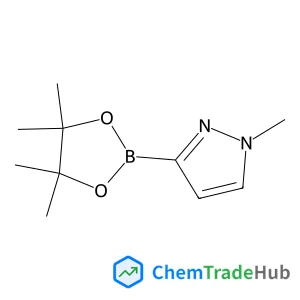
1-Methyl-3-(4,4,5,5-tetramethyl-1,3,2-dioxaborolan-2-yl)-1H-pyrazole
CAS番号:
1020174-04-2
分子式:
C10H17BN2O2
![1-Naphthalenesulfonic acid, 2-[(2-hydroxy-1-naphthalenyl)azo]-, bariumsalt (2:1) structure](https://static.chemtradehub.com/structs/110/1103-38-4-0b33.webp "1-Naphthalenesulfonic acid, 2-[(2-hydroxy-1-naphthalenyl)azo]-, bariumsalt (2:1) structure")
1-Naphthalenesulfonic acid, 2-[(2-hydroxy-1-naphthalenyl)azo]-, bariumsalt (2:1)
CAS番号:
1103-38-4
分子式:
C20H14BaN2O4S

おすすめサプライヤー





免責事項
このページに表示される学術雑誌情報は、参考および研究目的のみを目的としています。当社は雑誌出版社とは提携しておらず、投稿の取り扱いも行っておりません。出版に関するお問い合わせは、各雑誌出版社に直接ご連絡ください。
表示されている情報に誤りがある場合は、support@chemtradehub.com までご連絡ください。迅速に確認し、対応いたします。