












![(3R)-3-(3-Fluorophenyl)-3-({[(2-methyl-2-propanyl)oxy]carbonyl}amino)propanoic acid structure](https://static.chemtradehub.com/structs/500/500789-04-8-20dd.webp "(3R)-3-(3-Fluorophenyl)-3-({[(2-methyl-2-propanyl)oxy]carbonyl}amino)propanoic acid structure")
Solvation structure and bromo complexation of neodymium(III) and yttrium(III) ions in solvent mixtures of N,N-dimethylformamide and N,N-dimethylacetamide
文献情報
出版日
DOI
10.1039/A901225G
インパクトファクター
3.676
著者
原文を見る
要旨
Bromo complexation of neodymium(III) and yttrium(III) in solvent mixtures of N,N-dimethylformamide (DMF) and N,N-dimethylacetamide (DMA) has been studied by precise titration calorimetry, 89Y NMR and extended X-ray absorption fine structure (EXAFS). With regard to neodymium(III), calorimetric data in the mixture of DMA content x are explained satisfactorily in terms of formation of mononuclear NdBrn(3-n)+(n=1, 2 at x=0.5 and n=1, 2, 3 at x=0.6, 0.75, 0.85). With yttrium(III), calorimetric data are also explained well in terms of formation of mononuclear YBrn(3-n)+(n=1, 2 at x=0.25, 0.5, 0.6 and n=1, 2, 3 at x=0.65, 0.75, 0.85). Formation enthalpy and entropy values of the monobromo complex remain practically unchanged up to x≈0.5, and then significantly increase with increasing x. It is thus suggested in both metal(III) systems that outer-sphere bromo complexes are formed in the DMF-rich mixture, while inner-sphere bromo complexes are formed in the DMA-rich mixture in equilibrium with the outer-sphere ones, and the formation of inner-sphere complexes becomes more favorable with increasing DMA content. The marked difference in the complexation in DMF and DMA may be ascribed to the solvation steric effect. The solvation steric effect is enhanced with increasing DMA content leading to an enhanced complexation and a simultaneous geometry transition from outer- to inner-sphere coordination of the bromide ion. Evidence of the geometry transition has been obtained by EXAFS for neodymium(III), and by 89Y NMR for yttrium(III). Interestingly, although ionic radii of neodymium(III) and yttrium(III) ions are significantly different, no appreciable metal-ion dependence is found with the geometry transition from outer- to inner-sphere bromo complex. This indicates that the geometry transition of the metal(III) solvate ion from eight- to seven-coordination is not always the necessary condition for the transition from outer- to inner-sphere complexation.
関連文献
Ex situ gas generation for lab scale organic synthesis
Joachim Demaerel, Cedrick Veryser, Wim M. De Borggraeve
2020-02-28
Review Article
DOI: 10.1039/C9RE00497A
Continuous flow synthesis of ordered porous materials: from zeolites to metal–organic frameworks and mesoporous silica
Zhendong Liu, Jie Zhu, Ce Peng, Toru Wakihara, Tatsuya Okubo
2019-06-17
Review Article
DOI: 10.1039/C9RE00142E
The logic of translating chemical knowledge into machine-processable forms: a modern playground for physical-organic chemistry
Karol Molga, Ewa P. Gajewska, Sara Szymkuć
2019-06-11
Perspective
DOI: 10.1039/C9RE00076C
Flow mediated metal-free PET-RAFT polymerisation for upscaled and consistent polymer production
Leonid Zhernakov, Muhammad Hazim Hashim
2019-03-20
Paper
DOI: 10.1039/C9RE00014C
Integrated continuous flow/batch protocol for the photoreduction of ortho-methyl phenyl ketones using water as the hydrogen source
Dnyaneshwar Aand, Bhushan Mahajan, Srihari Pabbaraja, Ajay K. Singh
2019-04-01
Communication
DOI: 10.1039/C9RE00110G
Kinetic study of TBD catalyzed δ-valerolactone polymerization using a gas-driven droplet flow reactor
Shiyao Lu, Kai Wang
2019-03-12
Paper
DOI: 10.1039/C9RE00046A
Operation range extension via hot-spot control for catalytic CO2 methanation reactors
Jens Bremer
2019-04-10
Paper
DOI: 10.1039/C9RE00147F
Batch–flow hybrid synthesis of the antipsychotic clozapine
N. C. Neyt, D. L. Riley
2017-11-22
Paper
DOI: 10.1039/C7RE00146K
Reaction induced diffusio-phoresis of ordinary catalytic particles
Aura Visan, Rob G. H. Lammertink
2019-05-14
Paper
DOI: 10.1039/C9RE00103D
こちらもおすすめ
化合物よくある質問
間溴苯甲酰腈の市場動向や研究トレンドはどうですか?
間 brom 苯甲酰腈は、合成化学や薬物化学において重要な Intermediate として使用されています。市場動向としては、その合成性と機能性により、研究開...
24999-51-7(3-Bromophenyl)(oxo)...
287966-62-5Desulfo Glucoraphani...
化合物よくある質問
Methyl 2-amino-5-(trifluoromethyl)benzoateに適用される法規ガイドラインは何ですか?
CAS番号117324-58-0の塩酸メチル2アミノ-5-トリフルオロメチルベンゼートは、GHS分類により腐食性物質と判定されます。REACH規則では、製造、販...
117324-58-0Methyl 2-amino-5-(tr...
化合物よくある質問
3-ブロモ-1,3,4,5-四水化-2H-1-ベンザアゼピン-2-オンは安全ですか?
毒性があるため、適切な安全対策が必須です。皮膚や粘膜への刺激性が強く、吸入や誤飲により健康被害を引き起こす可能性があります。取扱時にはガスマスクや手袋、眼鏡を使...
86499-96-93-Bromo-1,3,4,5-tetr...
化合物よくある質問
三氟甲基ピリジン-2-甲アミン塩酸塩は安全ですか?
三氟甲基ピリジン-2-甲アミン塩酸塩は安全性に注意が必要です。毒性は低レベルですが、直接的接触や吸入は避けるべきです。適切な手袋や防塵マスクを着用し、密閉された...
871826-12-9(5-(Trifluoromethyl)...
化合物よくある質問
1-エチル-4-(4-硝基フェニル)ピペリジンは安全ですか?
1-エチル-4-(4-硝基フェニル)ピペリジンは有毒であり、取扱には注意が必要です。保管や作業中に手袋を着用し、目や皮膚に接触しないように注意する必要があります...
115619-00-61-Ethyl-4-(4-nitroph...
化合物よくある質問
1,1-ジメトキシプロパン-2-オンは安全ですか?
1,1-ジメトキシプロパン-2-オンは一般的に低毒性ですが、皮膚や目への刺激性があるため、取扱いには注意が必要です。蒸気や液体の吸入には有害な可能性があり、適切...
6342-56-91,1-dimethoxypropan-...
化合物よくある質問
コバルト(II) 3,3'-{[(1S,2S)-1,2-ジメチルフENCYCLICALE-1,2-エチエンジイル]ビス[ニトロリルメチルイリデン]}ビス[4-オキソ-2-ペンテン-2-olate]について「に適用される法規ガイドラインは何ですか?
この化合物はCAS番号259259-80-8に対応しています。GHS分類では、毒性、燃焼性、反応性、炎症性を考慮に入れ、適切な危険性分類が行われます。REACH...
259259-80-8Cobalt(2+) (2E,2'E)-...
化合物よくある質問
「カーバミル酸, N-[8-[[2-[[2-(2,6-ジオキソ-3-ピペリジニル)-2,3-ジオキソ-1,3-ジヒドロ-1H-イソイソインドール-4-イルオキシ]アセチル]アミノ]オクチル]-1,1-ジメチレチルエステル」はどのように保存すればよいですか?
この化合物は、冷却庫で-20℃の温度、乾燥した容器に保管し、直日光から保護する必要があります。湿度の高い環境や高温は避けてください。
1950635-34-32-Methyl-2-propanyl ...
1433975-21-3FMoc-D-4-Aph(tBu-CbM...
掲載誌
Physical Chemistry Chemical Physics

CiteScore:
5.5
自己引用率:
10.3%
年間論文数:
3036
Physical Chemistry Chemical Physics (PCCP) is an international journal co-owned by 19 physical chemistry and physics societies from around the world. This journal publishes original, cutting-edge research in physical chemistry, chemical physics and biophysical chemistry. To be suitable for publication in PCCP, articles must include significant innovation and/or insight into physical chemistry; this is the most important criterion that reviewers and Editors will judge against when evaluating submissions. The journal has a broad scope and welcomes contributions spanning experiment, theory, computation and data science. Topical coverage includes spectroscopy, dynamics, kinetics, statistical mechanics, thermodynamics, electrochemistry, catalysis, surface science, quantum mechanics, quantum computing and machine learning. Interdisciplinary research areas such as polymers and soft matter, materials, nanoscience, energy, surfaces/interfaces, and biophysical chemistry are welcomed if they demonstrate significant innovation and/or insight into physical chemistry. Joined experimental/theoretical studies are particularly appreciated when complementary and based on up-to-date approaches.
おすすめ化合物
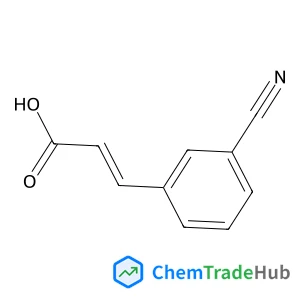
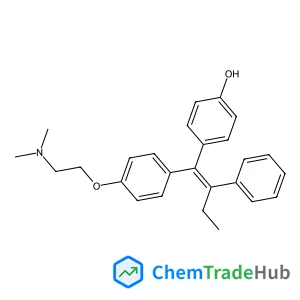
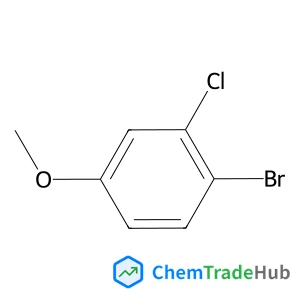
![trans,trans-4-n-Propyl-4-[4-(trifluoromethoxy)phenyl]bicyclohexyl structure](https://static.chemtradehub.com/structs/133/133937-72-1-25ef.webp "trans,trans-4-n-Propyl-4-[4-(trifluoromethoxy)phenyl]bicyclohexyl structure")
おすすめサプライヤー





免責事項
このページに表示される学術雑誌情報は、参考および研究目的のみを目的としています。当社は雑誌出版社とは提携しておらず、投稿の取り扱いも行っておりません。出版に関するお問い合わせは、各雑誌出版社に直接ご連絡ください。
表示されている情報に誤りがある場合は、support@chemtradehub.com までご連絡ください。迅速に確認し、対応いたします。