


Aerosol deposition-carbon furnace atomisation for simultaneous multi-element atomic absorption spectrometry
文献情報
出版日
DOI
10.1039/JA9860100287
インパクトファクター
4.023
著者
原文を見る
要旨
A commercially available aerosol deposition-carbon furnace atomiser was used with a simultaneous multi-element atomic absorption continuum source (SIMAAC) spectrometer. The optimum deposition temperature was 120 ± 20 °C. Within this temperature range, no difference was observed for the behaviour of standards in 0.5 and 5% nitric acid. The analytical signal was linear with respect to the aerosol deposition time. The analytical signals (both peak height and area) of all 16 elements were independent of the atomisation temperature above a threshold temperature (characteristic of each element). The compromise atomisation temperature was dictated by the least volatile element. Detection limits and characteristic concentrations were dependent on the deposition time. Simultaneous determination of nine elements in NBS SRM 1643a, acidified water, and in well-characterised fruit juices yielded accurate results.
おすすめジャーナル

Planta Medica

Journal of Physics and Chemistry of Solids

Science Progress

Proceedings of the National Academy of Sciences of the United States of America

European Journal of Wood and Wood Products

Journal of Organometallic Chemistry

Nature

Journal of Heterocyclic Chemistry

Journal of Medicinal Chemistry

Pure and Applied Chemistry
関連文献
Using two photonmicroscopy to quantify enzymatic reaction rates on polymer beads
Annie Y. Bosma, Gail McConnell, John Girkin, Peter J. Halling, Sabine L. Flitsch
2003-10-13
Communication
DOI: 10.1039/B308078A
Room temperature borylation of arenes and heteroarenes using stoichiometric amounts of pinacolborane catalyzed by iridium complexes in an inert solvent
Tatsuo Ishiyama, Yusuke Nobuta, John F. Hartwig, Norio Miyaura
2003-10-22
Communication
DOI: 10.1039/B311103B
Synthesis of a quinone-functionalized macrocyclic ligand and the intense fluorescence of its zinc complex
Michael Ruf, William S. Durfee, Cortlandt G. Pierpont
2004-03-23
Communication
DOI: 10.1039/B401334D
Efficient electrophilic catalysis of 1,5-anhydrocellobiitol hydrolysis by AlIII; implications for the conservation of “rosin-alum” sized paper
John Baty, Michael L. Sinnott
2004-02-27
Communication
DOI: 10.1039/B316417A
Total synthesis of the thiopeptide amythiamicin D
Rachael A. Hughes, Stewart P. Thompson, Lilian Alcaraz, Christopher J. Moody
2004-03-16
Communication
DOI: 10.1039/B401580K
Significant promotional effect of CCl4 on fullerene yield in the graphite arc-discharge reaction
Fei Gao, Su-Yuan Xie, Rong-Bin Huang, Lan-Sun Zheng
2003-09-24
Communication
DOI: 10.1039/B306921B
A new class of C1-symmetric monosulfoximine ligands for enantioselective hetero Diels–Alder reactions
Carsten Bolm, Marinella Verrucci, Oliver Simic, Pier Giorgio Cozzi, Gerhard Raabe, Hiroaki Okamura
2003-10-13
Communication
DOI: 10.1039/B309556H
High efficiency photocurrent generation by two-dimensional mixed J-aggregates of cyanine dyes
Mitsuo Kawasaki, Satoshi Aoyama
2004-03-19
Communication
DOI: 10.1039/B400071D
Synthesis of the stable UO2I2, the last of the uranyl dihalides. X-Ray crystal structure of [UO2I2(py)3]
Jean-Claude Berthet, Martine Nierlich, Michel Ephritikhine
2004-02-27
Communication
DOI: 10.1039/B400717D
Competitive electron transfers from a tyrosyl side-chain and peptide bond in the photodegradation of N-tosyl α-aminomethylamides: an insight into photosynthesis and photodamage in the biological oxidation of water?
Roger R. Hill, Sharon A. Moore, David R. Roberts
2003-10-09
Communication
DOI: 10.1039/B308525B
こちらもおすすめ
化合物よくある質問
3-イチチルビフェニルはどのように合成されますか?
3-イチチルビフェニルは、ビフェニルとイチプロピオニトリルを回収率約90%で反応させて合成されます。触媒は通常、亜リチウムホウ素を用います。
5668-93-93-Ethylbiphenyl
化合物よくある質問
8-溴-5-三氟甲基喹啉はどのように合成されますか?
8-溴-5-三氟甲基喹啉は、5-トリフルオロメチル-2-メチル-1,3-ベンゼンジオールをブロモエタノールと反応させて生成します。この反応は塩基性条件下で行われ...
917251-92-48-Bromo-5-(trifluoro...
化合物よくある質問
ジメチル4-(4,4,5,5-テトラメチル-1,3,2-ドioxaborolan-2-基)-2,6-ピリジンジカルボイル酸フェニルアミニドの代替品はありますか?
ジメチル4-(4,4,5,5-テトラメチル-1,3,2-ドioxaborolan-2-基)-2,6-ピリジンジカルボイル酸フェニルアミニドの代替品としては、4-...
741709-66-0Dimethyl 4-(4,4,5,5-...
化合物よくある質問
N-(3,5-ヘキサクロロ-4-ピリドインイル)-8-メチオキシ-5-キノリンカーボン酸の市場動向や研究トレンドはどのようなものでしょうか?
N-(3,5-ヘキサクロロ-4-ピリドインイル)-8-メチオキシ-5-キノリンカーボン酸の市場動向は、主に産業用途での需要により影響を受けます。研究トレンドとし...
199871-63-1N-(3,5-Dichloro-4-py...
化合物よくある質問
イソステアロイルグリセリルは安全ですか?
イソステアロイルグリセリルは一般的に安全性が高いとされていますが、過度な使用や個人差により皮�owsん炎などの反応が起こる可能性があります。使用前に医師に相談す...
222723-55-92-[(5Z,8Z,11Z,14Z)-5...
化合物よくある質問
1-(二苯甲基)-3,3-二氟-氮杂环丁烷の市場動向や研究トレンドはどうですか?
1-(二苯甲基)-3,3-二氟-氮杂环丁烷の市場動向は、医薬品や合成化学の研究分野で注目を集めています。新興研究は、該当化合物の合成改良と生体内での作用メカニズ...
288315-02-61-Benzhydryl-3,3-dif...
化合物よくある質問
3-チオフェンスチオールの物理化学的性質は何ですか?
3-チオフェンスチオールのCAS番号は7774-73-4です。結晶性の白色粉末で、分子量は122.17です。この化合物は水に微溶解し、エタノールやジクロロメタン...
7774-73-43-Thiophenethiol
化合物よくある質問
2-Methyl-2-propanyl (2S)-2-(aminomethyl)-1-piperidinecarboxylateは安全ですか?
2-Methyl-2-propanyl (2S)-2-(aminomethyl)-1-piperidinecarboxylateは一定の安全性基準を満たしていま...
475105-35-22-Methyl-2-propanyl ...
化合物よくある質問
CAS番号1316822-90-8の化合物は安全ですか?
CAS番号1316822-90-8の化合物は安全性に関しては評価が不足していますが、一般的には生物学的に活性な物質であり、取り扱いには適切な安全防護措置が必要で...
1316822-90-8Gal beta(1-3)[Neu5Ac...
化合物よくある質問
Tert-butyl 2-(2-羟基乙基)哌嗪-1-羧酸はどのように保存すればよいですか?
Tert-butyl 2-(2-羟基乙基)哌嗪-1-羧酸は、冷暗所で保存し、直射日光から遠ざけてください。容器は密閉し、高湿度や高温を避けて保管してください。
517866-79-4Tert-butyl 2-(2-hydr...
掲載誌
Journal of Analytical Atomic Spectrometry

CiteScore:
6.2
自己引用率:
25.8%
年間論文数:
254
The Journal of Analytical Atomic Spectrometry (JAAS) is the central journal for publishing innovative research on fundamentals, instrumentation, and methods in the determination, speciation and isotopic analysis of (trace) elements within all fields of application. This includes, but is not restricted to, the most recent progress, developments and achievements in all forms of atomic and elemental detection, isotope ratio determination, molecular analysis, plasma-based analysis and X-ray techniques. The journal welcomes full papers, communications, technical notes, critical and tutorial review articles, editorials, and comments, in addition to the Atomic Spectrometry Updates (ASU) literature reviews that are prepared by an expert panel. Submissions are welcome in the following areas, but note this list reflects the current scope and authors are strongly encouraged to contact the Editorial team if they believe that their work offers potentially new and emerging research relevant to the journal remit: Fundamental studies in the following. New and existing sources for atomic emission, absorption, fluorescence and mass spectrometry and those that provide both atomic and molecular information Sample introduction techniques for solids, liquids, gases Improvements in sensitivity, selectivity, precision, accuracy and/or robustness Isotope ratio measurements, including techniques for improving precision and mass bias correction Single channel and multichannel simultaneous detection systems Chemometrics, statistics, calibration techniques and internal standardisation Theoretical and numerical modelling of fundamental processes related to all of the above methodologies Novel or improved methodologies in areas of application including, but not limited to the following. Biosciences, including elemental, speciation and isotopic analysis in biological systems, immunoassays based on metal-labeled antibodies, bio-imaging, and nanoparticle toxicology Geochemistry Environmental science Materials science, including engineered nanoparticles and quantum dots Metrology, including reference materials Forensic analysis Food and agricultural sciences Energy Archaeometry Molecular analysis. Molecular sources for elemental and isotopic analysis Atomic sources for molecular analysis Atomic and molecular techniques simultaneously used for complementary chemical information All contributions are judged on originality and quality of scientific content, and appropriateness of length to content of new science.
おすすめ化合物
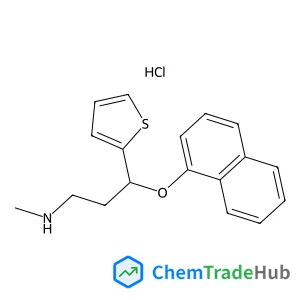
N-Methyl-3-(1-naphthyloxy)-3-(2-thienyl)-1-propanamine hydrochloride (1:1)
CAS番号:
1188266-11-6
分子式:
C18H20ClNOS
![1-oxaspiro[4.4]nonan-6-one structure](https://static.chemtradehub.com/structs/134/134179-01-4-e051.webp "1-oxaspiro[4.4]nonan-6-one structure")
おすすめサプライヤー






免責事項
このページに表示される学術雑誌情報は、参考および研究目的のみを目的としています。当社は雑誌出版社とは提携しておらず、投稿の取り扱いも行っておりません。出版に関するお問い合わせは、各雑誌出版社に直接ご連絡ください。
表示されている情報に誤りがある場合は、support@chemtradehub.com までご連絡ください。迅速に確認し、対応いたします。