












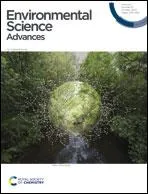

Mechanochemical destruction of per- and polyfluoroalkyl substances in aqueous film-forming foams and contaminated soil
文献情報
出版日
2023-06-05
DOI
10.1039/D3VA00099K
インパクトファクター
0
著者
Erin Shields, Andrew Whitehill
原文を見る
要旨
Per- and polyfluoroalkyl substances (PFASs) are a class of synthetic chemicals of concern that exhibit extreme persistence within the environment and possess physicochemical properties that are resistant to targeted degradation. Comprising substantial concentrations of PFASs, aqueous film-forming foams (AFFFs) present a major exposure pathway to the environment having been applied to land at firefighting-training sites globally for decades. This has led to significant contamination of environmental media. Herein, we demonstrate that mechanochemical destruction (MCD) is an effective method for the destruction of PFASs in an AFFF concentrate and an authentic sample of PFAS-contaminated soil derived from a decommissioned firefighting training facility. Both targeted analysis and non-targeted analysis were used in this study to evaluate the degradation of PFASs in complex substrates during MCD treatment. Destruction efficiencies of target PFAS subgroups ranged from 99.88% to 100%. The only additive employed for MCD treatment was quartz sand, which was used only for the liquid AFFF sample, with no additives required for the destruction of PFASs in the contaminated soil. This confirms the viability of MCD for both the remediation of PFAS-contaminated land and the destruction of stockpiled AFFFs.
関連文献
Micropore engineering of carbonized porous aromatic framework (PAF-1) for supercapacitors application
Yanqiang Li, Soumyajit Roy, Teng Ben, Shixian Xu, Shilun Qiu
2014-04-10
Paper
DOI: 10.1039/C4CP00550C
Electronic surface states and dielectric self-energy profiles in colloidal nanoscale platelets of CdSe
Jacky Even, Laurent Pedesseau, Mikaël Kepenekian
2014-10-14
Paper
DOI: 10.1039/C4CP03267E
Unexpected effects of the alteration of structure and stability of myoglobin and hemoglobin in ammonium-based ionic liquids
Indrani Jha, Pankaj Attri, Pannuru Venkatesu
2013-12-17
Paper
DOI: 10.1039/C3CP54398F
Ab initio calculations on the 1O2 quenching mechanism by trans-resveratrol
Gloria Mazzone, Marta E. Alberto, Nino Russo, Emilia Sicilia
2014-05-06
Paper
DOI: 10.1039/C4CP00754A
Analytical tools for single-molecule fluorescence imaging in cellulo
2014-03-14
Perspective
DOI: 10.1039/C4CP00219A
Tin doping speeds up hole transfer during light-driven water oxidation at hematite photoanodes
Halina K. Dunn, Johann M. Feckl, Alexander Müller, Dina Fattakhova-Rohlfing, Samuel G. Morehead, Julian Roos, Laurence M. Peter, Christina Scheu, Thomas Bein
2014-10-03
Paper
DOI: 10.1039/C4CP03946G
The effect of pressure-induced structural transition on exchange interaction function and electronic structure in Gd-element
A. Yazdani, S. A. Ketabi
2014-10-21
Paper
DOI: 10.1039/C4CP04242E
Entropy and enthalpy contributions to the kinetics of proton coupled electron transfer to the Mn4O4(O2PPh2)6 cubane
Thomas G. Carrell, Paul F. Smith, Joseph Dennes, G. Charles Dismukes
2014-03-05
Communication
DOI: 10.1039/C3CP55200D
Molecular interactions in aqueous biphasic systems composed of polyethylene glycol and crystalline vs. liquid cholinium-based salts
Kiki A. Kurnia, O. Andreea Cojocaru, Gabriela Gurau, Luís Paulo N. Rebelo, Robin D. Rogers, João A. P. Coutinho
2014-01-28
Paper
DOI: 10.1039/C3CP54907K
こちらもおすすめ
化合物よくある質問
1-{3-[5-(エチルカルボンイル)-2,4-ジメチル-1H-ピロロール-3-基]プロパニル}ピペリジン-4-カルボン酸について、適用される法規ガイドラインは何ですか?
この化合物はCAS番号1142209-81-1であり、GHS分類では corrosive (腐食性物質) と classified (分類物質) として指定され...
1142209-81-11-{3-[5-(Ethoxycarbo...
化合物よくある質問
2,2-二氟-1,3-ベンゾジオキサン-5-カルボキシlic酸とは何ですか?
2,2-二氟-1,3-ベンゾジオキサン-5-カルボキシlic酸は、CAS番号656-46-2の化合物で、化学式はC8H4F2O4です。この化合物は白色の結晶性粉...
656-46-22,2-Difluoro-1,3-ben...
化合物よくある質問
8-氯-4-色原酮の代替品はありますか?
8-氯-4-色原酮(CAS番号: 49701-11-3)の代替品には、他の色原酮類似物や、構造が似ている化合物があります。例えば、8-メチル-4-色原酮や、他の...
49701-11-38-Chloro-2,3-dihydro...
化合物よくある質問
エチル6,6-ジメチル-4,5,6,7-テトラヒドロ-1H-インドアゼー-3-カルボキシレートとは何ですか?
エチル6,6-ジメチル-4,5,6,7-テトラヒドロ-1H-インドアゼー-3-カルボキシレートは、CAS番号1233243-56-5を有する化合物です。これは有...
1233243-56-5Ethyl 6,6-dimethyl-4...
化合物よくある質問
4-叔丁基-6-氯-嘧啶に適用される法規ガイドラインは何ですか?
4-叔丁基-6-氯-嘧啶はCAS番号3435-24-3で、GHS分類では毒性物質とみなし、GHSの危険性分類が適用されます。REACH規則では登録が必要で、Eu...
3435-24-34-Tert-butyl-6-chlor...
化合物よくある質問
維库溴铵杂质Bはどのように合成されますか?
維库溴铵杂质Bは、アンドロステンデンから始まり、一連の合成反応、包括的な選択性と高い収率で合成されます。具体的には、ブロミド化、酸化、ジマーゼ反応、アミド化など...
50587-95-6(2beta,3alpha,5alpha...
化合物よくある質問
2-(4-氟苄基)-吡咯烷の物理化学的性質は何ですか?
CAS番号350017-04-8の2-(4-氟苄基)-吡咯烷は、結晶性の白色粉末です。分子量は199.17 g/molで、水に溶けにくいです。化学反応では比較的...
350017-04-82-(4-Fluorobenzyl)py...
化合物よくある質問
3-喹啉甲醛(2-チロール-8-エチル)は安全ですか?
3-喹啉甲醛(2-チロール-8-エチル)は一定の毒性を持つため、取扱には注意が必要です。使用する際は適切な防護具を着用し、密閉容器で保管・搬送し、直接的な接触を...
335196-05-92-Chloro-8-ethyl-3-q...
化合物よくある質問
エチル3-(ヒドロキシメチル)-1H-ピロール-2-カルボキシレートはどのように保存すればよいですか?
エチル3-(ヒドロキシメチル)-1H-ピロール-2-カルボキシレートは、室温(25℃)以下で保存し、直射日光を避け、乾燥した環境で保管することが推奨されます。ま...
75448-69-0Ethyl 3-(hydroxymeth...
119410-05-88-Chloro-11-(4-piper...
掲載誌
おすすめ化合物


おすすめサプライヤー






免責事項
このページに表示される学術雑誌情報は、参考および研究目的のみを目的としています。当社は雑誌出版社とは提携しておらず、投稿の取り扱いも行っておりません。出版に関するお問い合わせは、各雑誌出版社に直接ご連絡ください。
表示されている情報に誤りがある場合は、support@chemtradehub.com までご連絡ください。迅速に確認し、対応いたします。