


![2,2'-[(Abieta-8,11,13-trien-18-ylimino)bis(2,1-ethanediyloxy)]diethanol structure](https://static.chemtradehub.com/structs/513/51344-62-8-8518.webp "2,2'-[(Abieta-8,11,13-trien-18-ylimino)bis(2,1-ethanediyloxy)]diethanol structure")
2,2'-[(Abieta-8,11,13-trien-18-ylimino)bis(2,1-ethanediyloxy)]diethanol
CAS番号:
51344-62-8
分子式:
C28H47NO4
Zhen Wang, Zhengxing Peng, Nrup Balar, Harald Ade
Chemical degradation and morphology failure of ink-processed organic solar cells are now extensively studied. In contrast, the general problem that inks prepared via thermal and mechanical agitation degrade and age rapidly at room temperature has yet to be delineated as a commercialization bottleneck and resolved. This study unveils the intrinsic aging of common polymer:nonfullerene acceptor (NFA) binary inks and the impact of electro-optically active component additives on ink shelf life. As a result, we developed an effective approach to slow down the ink aging by employing an additive (i.e. PCBM variants) with high miscibility with the polymer and NFA. It is inferred that the PCBMs in the inks acts as a co-solvent and slows down the polymer and possibly the NFA pre-aggregation, preventing the formation of large domains in the films. At the same time, the PCBMs dissolved in the polymer-rich phase of the devices can maintain the electron percolations and hence benefit charge creation and collection. The method of introducing a hyper-miscible third component, that is, with concentration above the percolation threshold, to improve ink shelf life and maintain the percolation is delineated for the first time. It represents a synergistic approach to promote the scale-up of ink-processed organic solar cells.

Faraday Discussions

CrystEngComm

Physical Chemistry Chemical Physics

Foundations of Chemistry

Current Pharmaceutical Biotechnology

Photochemical & Photobiological Sciences

Journal of Enzyme inhibition and Medicinal Chemistry

European Journal of Organic Chemistry

Coloration Technology

Angewandte Chemie International Edition
David R. Allan, Alexander J. Blake, Deguang Huang, Timothy J. Prior, Martin Schröder
DOI: 10.1039/B606736K
Leyong Wang, Takanori Shima, Frank Hampel, J. A. Gladysz
DOI: 10.1039/B606728J
Na Tian, Zhi-You Zhou, Shi-Gang Sun, Li Cui, Bin Ren, Zhong-Qun Tian
DOI: 10.1039/B609164D
Richard S. Herrick, Tim J. Brunker, Caroline Maus, Kerianne Crandall, Anil Cetin, Christopher J. Ziegler
DOI: 10.1039/B608683G
Carl Henrik Görbitz
DOI: 10.1039/B603080G
DOI: 10.1039/B710650E
Guoxin Tian, Linfeng Rao, Allen Oliver
DOI: 10.1039/B706825E
Atsutoshi Yokoyama, Takahiko Kojima, Kei Ohkubo, Shunichi Fukuzumi
DOI: 10.1039/B704994C
DOI: 10.1039/B608150A
CAS番号66981-77-9の噻奈普汀乙酯は、結晶性白色粉末であり、分子量は476.9 g/molです。この化合物は水に溶けにくく、一般的には有機溶媒で溶解し...
アミピシリン不純物Fは、CAS番号124774-48-7の化合物です。これは、抗生物質アミピシリンの生産過程で生成される不純物の一つであり、(4S)-2-({[...
イリジウム(I)ヘキサフルオロフォスファートの代替品として、他の有機金属化合物や非有機金属化合物が使用されることがあります。具体的には、ダイゾニウム塩や他の金属...
含有3-(苯氧基甲基)苯硼酸频那醇酯の廃棄物は、安全な方法で処理する必要があります。まず、廃棄物を適切な容器に収集し、避けて保管します。次に、専門の廃棄処理業者...
取り扱う際は、密閉のゴーグルと手袋を着用することが推奨されます。ドラフトチャンバーを使用し、漏洩時には速やかに取り扱いを中止し、適切な排気設備を使用してください...
3α-アセトキノイドコレステロールエステルは、常温から低温(0-5℃)の暗所で保存し、密閉容器に入れることで安定性を保つことが推奨されます。また、湿気や酸素から...
2-ぶンジロキシ-4-(トリフルオロメチル)フェノルビノン酸は、化学合成の触媒としての使用や、医薬品の合成材料としての役割があります。また、特定の合成路線で使用...
(2S,3R)-2-氨基-3-甲基丁二酸は、2-ヒドロキシ-3-メチル丁酸とアミノ化反応を行うことで合成されます。触媒としてジクロロメタンが使用され、選択性と収...
この化合物は常温で避けてください。直射日光を避け、密閉容器で保存し、湿気を防水の容器に入れて保管してください。

Journal of Materials Chemistry A, B & C cover high quality studies across all fields of materials chemistry. The journals focus on those theoretical or experimental studies that report new understanding, applications, properties and synthesis of materials. The journals have a strong history of publishing quality reports of interest to interdisciplinary communities and providing an efficient and rigorous service through peer review and publication. The journals are led by an international team of Editors-in-Chief and Associate Editors who are all active researchers in their fields. Journal of Materials Chemistry A, B & C are separated by the intended application of the material studied. Broadly, applications in energy and sustainability are of interest to Journal of Materials Chemistry A, applications in biology and medicine are of interest to Journal of Materials Chemistry B, and applications in optical, magnetic and electronic devices are of interest to Journal of Materials Chemistry C. More than one Journal of Materials Chemistry journal may be suitable for certain fields and researchers are encouraged to submit their paper to the journal that they feel best fits for their particular article. Example topic areas within the scope of Journal of Materials Chemistry A are listed below. This list is neither exhaustive nor exclusive. Artificial photosynthesis Batteries Carbon dioxide conversion Catalysis Fuel cells Gas capture/separation/storage Green/sustainable materials Hydrogen generation Hydrogen storage Photocatalysis Photovoltaics Self-cleaning materials Self-healing materials Sensors Supercapacitors Thermoelectrics Water splitting Water treatment
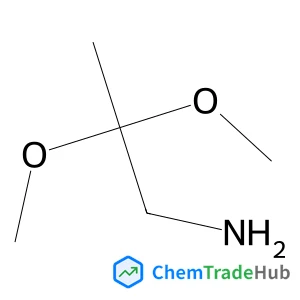
methanone structure](https://static.chemtradehub.com/structs/814/81449-01-6-786d.webp "[4-(Hydroxymethyl)phenyl](phenyl)methanone structure")
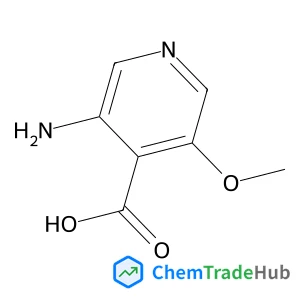
![[3-Chloro-5-(diethylcarbamoyl)phenyl]boronic acid structure](https://static.chemtradehub.com/structs/957/957120-59-1-febc.webp "[3-Chloro-5-(diethylcarbamoyl)phenyl]boronic acid structure")




