













Chemical capacitance measurements reveal the impact of oxygen vacancies on the charge curve of LiNi0.5Mn1.5O4−δ thin films
文献情報
出版日
2023-10-16
DOI
10.1039/D3TA05086F
インパクトファクター
12.732
著者
Andreas E. Bumberger, Sergej Ražnjević, Zaoli Zhang, Gernot Friedbacher, Juergen Fleig
原文を見る
要旨
The level of oxygen deficiency δ in high-voltage spinels of the composition LiNi0.5Mn1.5O4−δ (LNMO) significantly influences the thermodynamic and kinetic properties of the material, ultimately affecting the cell performance of the corresponding lithium-ion batteries. This study presents a comprehensive defect chemical analysis of LNMO thin films with oxygen vacancy concentrations of 2.4% and 0.53%, focusing particularly on the oxygen vacancy regime around 4 V versus Li+/Li. A set of electrochemical properties is extracted from impedance measurements as a function of state-of-charge for the full tetrahedral-site regime (3.8 to 4.9 V versus Li+/Li). A defect chemical model (Brouwer diagram) is derived from the data, providing a coherent explanation for all important trends of the electrochemical properties and charge curve. Highly resolved chemical capacitance measurements allow a refining of the defect model for the oxygen vacancy regime, showing that a high level of oxygen deficiency not only impacts the amount of redox active Mn3+/4+, but also promotes the trapping of electrons in proximity to an oxygen vacancy. The resulting stabilisation of Mn3+ thereby mitigates the voltage reduction in the oxygen vacancy regime. These findings offer valuable insights into the complex influence of oxygen deficiency on the performance of lithium-ion batteries based on LNMO.
関連文献
Improved ion adsorption capacities and diffusion dynamics in surface anchored MoS2⊥Mo4/3B2 and MoS2⊥Mo4/3B2O2 heterostructures as anodes for alkaline metal-ion batteries
Zifeng Song, Haoliang Liu, Baiyi Chen, Qin Jiang, Fengxiang Sui, Kai Wu, Yonghong Cheng, Bing Xiao
2023-11-27
Paper
DOI: 10.1039/D3CP05035A
Aging of quinoxaline-based polymer solar cells under UV-free white light
Martin Hager, Frédéric Laquai, Yingping Zou
2023-12-24
Paper
DOI: 10.1039/D3SE00987D
Investigating theoretical and experimental cross sections for elastic electron scattering from isoflurane
Bratislav P. Marinković, Jaime Rosado, Francisco Blanco, Gustavo García, Jelena B. Maljković
2023-12-07
Paper
DOI: 10.1039/D3CP05052A
Exploiting the photophysical features of DMAN template in ITQ-51 zeotype in the search for FRET energy transfer
Ainhoa Oliden-Sánchez, Rebeca Sola-Llano, Joaquín Pérez-Pariente, Luis Gómez-Hortigüela, Virginia Martínez-Martínez
2023-12-07
Paper
DOI: 10.1039/D3CP02625F
Dendrite-free deposition and side-reaction suppression of zinc anodes achieved via constructing synergistic interface buffer layers
Ting Li, Zhongfu Yan, Mengjiao Liu, Xinyu Liu, Liang Liu, Jiahao Chen, Jianping Long
2023-12-09
Paper
DOI: 10.1039/D3SE01334K
Delayed photodissociation of the tin cluster Sn22−
Alexander Jankowski, Paul Fischer, Klavs Hansen, Lutz Schweikhard
2023-12-15
Paper
DOI: 10.1039/D3CP04476A
Temperature gradient reduction in a tubular direct ammonia solid oxide fuel cell by fluidizing the cathode particles
Yu Qiu, Yanxin Yang, Enkang Fu, Rui Xiao
2024-01-03
Paper
DOI: 10.1039/D3SE01168B
Green–Kubo expressions for transport coefficients from dissipative particle dynamics simulations revisited
D. C. Malaspina, J. P. Larentzos, J. K. Brennan, A. D. Mackie, J. Bonet Avalos
2023-12-01
Paper
DOI: 10.1039/D3CP03791F
Design of J-aggregates-like oligomers built from squaraine dyes exhibiting transparency in the visible regime and high fluorescence quantum yield in the NIR region
Margarita Bužančić Milosavljević
2023-12-05
Paper
DOI: 10.1039/D3CP05291E
こちらもおすすめ
化合物よくある質問
2-メトキシ-4-(メチルスルフィニル)アミンの主な用途は何ですか?
2-メトキシ-4-(メチルスルフィニル)アミンは、主に医薬品および農薬の製造に使用されます。また、合成化学の一部として研究用材料としても利用されます。
41608-73-52-Methoxy-4-(methyls...
118684-13-24-(Bromomethyl)-3-me...
化合物よくある質問
4,6-二氯-N-甲基ピラミジンアミンの代替品はありますか?
代替品としては、4,6-二クロロピラミジンアミンや他のピラミジン系化合物が考えられます。ただし、目的と用途によって最適な代替品は異なります。
10397-15-64,6-Dichloro-N-methy...
化合物よくある質問
6-氯-4-甲基-1H-吲哚を含む廃棄物はどのように処理すべきですか?
6-氯-4-甲基-1H-吲哚の廃棄物は、適切な容器に収集し、密閉して保管します。温度は常温、湿度は低く、直射日光を避けて保管することを推奨します。廃棄処理は専門...
885520-84-36-chloro-4-methyl-1H...
化合物よくある質問
2-フローユロ-4-(トリフルオロメチル)ベンゾイドについて「に適用される法規ガイドラインは何ですか」
2-フローユロ-4-(トリフルオロメチル)ベンゾイドのCAS番号は207974-08-1です。この化合物はGHS分類で毒性物質と有害な反応物質として分類されます...
207974-08-1[2-Fluoro-4-(trifluo...
化合物よくある質問
4-ニトロフェニルN-[(ベンゼルオキシルカーボンイル]グリシングリシングリシン酸はどのように保存すればよいですか?
4-ニトロフェニルN-[(ベンゼルオキシルカーボンイル]グリシングリシングリシン酸は、室温で暗所に保管し、乾燥した環境で保存することを推奨します。容器は密閉性の...
19811-64-44-Nitrophenyl N-[(be...
化合物よくある質問
イソデスロラタドリンの代替品はありますか?
イソデスロラタドリンの代替品としては、デスロラタドリンや他の抗ヒスタミン薬が挙げられます。具体的には、デスロラタドリン、ラセカミド、フェルタドリンなどが、症状や...
183198-49-4Iso Desloratadine
化合物よくある質問
5-甲氧基-1,2,3,4-四氢异喹啉盐酸盐はどのように合成されますか?
5-甲氧基-1,2,3,4-四氢异喹啉盐酸盐の一般的な合成方法は、メタノール中で5-メトキシ-1,2,3,4-四ヒュドロイソキシンを塩酸で塩化します。この反応で...
103030-69-95-Methoxy-1,2,3,4-te...
化合物よくある質問
4-アミノ-5-メトキシ-2-トルエンサルホニック酸についての法規ガイドラインは何ですか?
CAS番号6471-78-9の4-アミノ-5-メトキシ-2-トルエンサルホニック酸は、GHS分類では corrosive(腐食性)と識別されます。EUのREAC...
6471-78-94-Amino-5-Methoxy-2-...
化合物よくある質問
甲基孕酮を取り扱う際の実験室安全事項は何ですか?
甲基孕酮の取り扱いは、PPE(個人保護具)の使用が必要な重要な安全事項を伴います。防塵マスク、ゴーグル、手袋を着用することが推奨されます。ドラフトチャンバーを使...
204063-33-22-[(Diphenylmethyl)a...
掲載誌
Journal of Materials Chemistry A

CiteScore:
19.5
自己引用率:
4.7%
年間論文数:
2211
Journal of Materials Chemistry A, B & C cover high quality studies across all fields of materials chemistry. The journals focus on those theoretical or experimental studies that report new understanding, applications, properties and synthesis of materials. The journals have a strong history of publishing quality reports of interest to interdisciplinary communities and providing an efficient and rigorous service through peer review and publication. The journals are led by an international team of Editors-in-Chief and Associate Editors who are all active researchers in their fields. Journal of Materials Chemistry A, B & C are separated by the intended application of the material studied. Broadly, applications in energy and sustainability are of interest to Journal of Materials Chemistry A, applications in biology and medicine are of interest to Journal of Materials Chemistry B, and applications in optical, magnetic and electronic devices are of interest to Journal of Materials Chemistry C. More than one Journal of Materials Chemistry journal may be suitable for certain fields and researchers are encouraged to submit their paper to the journal that they feel best fits for their particular article. Example topic areas within the scope of Journal of Materials Chemistry A are listed below. This list is neither exhaustive nor exclusive. Artificial photosynthesis Batteries Carbon dioxide conversion Catalysis Fuel cells Gas capture/separation/storage Green/sustainable materials Hydrogen generation Hydrogen storage Photocatalysis Photovoltaics Self-cleaning materials Self-healing materials Sensors Supercapacitors Thermoelectrics Water splitting Water treatment
おすすめ化合物
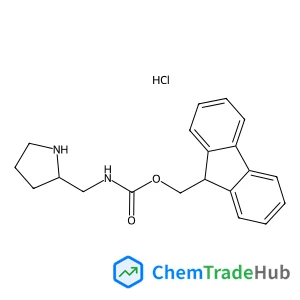
(S)-(9H-Fluoren-9-yl)methyl (pyrrolidin-2-ylmethyl)carbamate hydrochloride
CAS番号:
1217813-15-4
分子式:
C20H23ClN2O2

![4-[(2-{2-[2-(2-Aminoethoxy)ethoxy]ethoxy}ethyl)amino]-2-(2,6-dioxo-3-piperidinyl)-1H-isoindole-1,3(2H)-dione structure](https://static.chemtradehub.com/structs/209/2093416-31-8-3162.webp "4-[(2-{2-[2-(2-Aminoethoxy)ethoxy]ethoxy}ethyl)amino]-2-(2,6-dioxo-3-piperidinyl)-1H-isoindole-1,3(2H)-dione structure")
おすすめサプライヤー





免責事項
このページに表示される学術雑誌情報は、参考および研究目的のみを目的としています。当社は雑誌出版社とは提携しておらず、投稿の取り扱いも行っておりません。出版に関するお問い合わせは、各雑誌出版社に直接ご連絡ください。
表示されている情報に誤りがある場合は、support@chemtradehub.com までご連絡ください。迅速に確認し、対応いたします。