












Cartilage-inspired rapid in situ fabrication of seamless interlocked electrolyte–electrode interface for high-performance flexible supercapacitors
文献情報
出版日
2023-10-17
DOI
10.1039/D3TA04985J
インパクトファクター
12.732
著者
Yu Guo, Yinghui Shang, Bingqian Jiao, Yuting Guo, Yujing Tang, Saiji Shen, Dongbei Wu, Xia Wang, Wenju Li, Qigang Wang
原文を見る
要旨
Despite gel electrolytes' high ionic conductivity and appreciable mechanical softness making them promising candidates for flexible electronic devices (FEDs), preparing gel electrolytes which seamlessly interface with electrodes is still challenging, especially via rapid gelation. Inspired by cartilage, a mechanically interlocked and hydrogen bonded electrolyte–electrode interface (MHEEI) generated using an ultrafast gelation process via in situ interfacial polymerization of gelatin macromolecules and acrylamide monomers hybrid fluid is reported. A nanoporous carbon (NC) electrode favorable for polymer matrix embedding is employed to lock into the in situ gel electrolyte through a mechanical interlocking structure. Polyacrylamide chains inside the nanoporous electrode are strongly connected with gelatin chains via intra-intermolecular hydrogen bond interactions. Their synergy simultaneously imparts low contact resistance (1 Ω), high ionic conductivity (55.9 mS cm−1) and interfacial toughness of 16 J m−2 at MHEEI, which is 6.4 times greater than that obtained by a physical stacking approach. The NC electrode with MHEEI thus exhibits a specific capacitance of 336 F g−1 (at 8 A g−1), about 12 times greater than that of the electrode with MEEI. Additionally, an interrupted electronic circuit is instantly restored via ultrafast construction of interlocking layers. This concept can be demonstrated in other gel systems, providing generalized design principles for the ultrafast construction of interlocking structures for FEDs.
関連文献
Low-cost transition metal–nitrogen–carbon electrocatalysts for the oxygen reduction reaction: operating conditions from aqueous electrolytes to fuel cells
Li-Ting Cui, Wen-Feng Lin, Shi-Gang Sun
2023-12-05
Perspective
DOI: 10.1039/D3SE01275A
Refining protein amide I spectrum simulations with simple yet effective electrostatic models for local wavenumbers and dipole derivative magnitudes
Cesare M. Baronio, Andreas Barth
2023-12-15
Paper
DOI: 10.1039/D3CP02018E
Observation of the possible magnetic correction above the Curie temperature in Cr2Si2Te6 single crystals
Yan Sun, Zhongzhu Jiang, Yang Li, Lanxin Liu, Hui Liang, Yiyan Wang, Dandan Wu, Na Li, Ying Zhou, Qiuju Li, Xiaoyu Yue, Wei Tong, Xuan Luo, Jianghe Lan, Xuefeng Sun
2023-11-28
Paper
DOI: 10.1039/D3CP03854H
Temperature gradient reduction in a tubular direct ammonia solid oxide fuel cell by fluidizing the cathode particles
Yu Qiu, Yanxin Yang, Enkang Fu, Rui Xiao
2024-01-03
Paper
DOI: 10.1039/D3SE01168B
Green–Kubo expressions for transport coefficients from dissipative particle dynamics simulations revisited
D. C. Malaspina, J. P. Larentzos, J. K. Brennan, A. D. Mackie, J. Bonet Avalos
2023-12-01
Paper
DOI: 10.1039/D3CP03791F
Unravelling the band splitting origin in bulk and 2D distorted α-CsPbI3 perovskite
Safieh Nazari, Fatemeh Mohammad Dezashibi, Nadia Babaei Bidmeshki
2023-12-05
Paper
DOI: 10.1039/D3CP04558G
Effect of substituting donors on the hole mobility of hole transporting materials in perovskite solar cells: a DFT study
Md Al Mamunur Rashid, Sein Min, Sung Keon Namgoong, Keunhong Jeong
2023-12-04
Paper
DOI: 10.1039/D3CP04310J
Breaking the size constraint for nano cages using annular patchy particles
Vikki Anand Varma, Simmie Jaglan, Mohd Yasir Khan, Sujin B. Babu
2023-12-07
Paper
DOI: 10.1039/D3CP03681B
こちらもおすすめ
化合物よくある質問
2-メトキシ-4-(メチルスルフィニル)アミンの主な用途は何ですか?
2-メトキシ-4-(メチルスルフィニル)アミンは、主に医薬品および農薬の製造に使用されます。また、合成化学の一部として研究用材料としても利用されます。
41608-73-52-Methoxy-4-(methyls...
118684-13-24-(Bromomethyl)-3-me...
化合物よくある質問
4,6-二氯-N-甲基ピラミジンアミンの代替品はありますか?
代替品としては、4,6-二クロロピラミジンアミンや他のピラミジン系化合物が考えられます。ただし、目的と用途によって最適な代替品は異なります。
10397-15-64,6-Dichloro-N-methy...
化合物よくある質問
6-氯-4-甲基-1H-吲哚を含む廃棄物はどのように処理すべきですか?
6-氯-4-甲基-1H-吲哚の廃棄物は、適切な容器に収集し、密閉して保管します。温度は常温、湿度は低く、直射日光を避けて保管することを推奨します。廃棄処理は専門...
885520-84-36-chloro-4-methyl-1H...
化合物よくある質問
2-フローユロ-4-(トリフルオロメチル)ベンゾイドについて「に適用される法規ガイドラインは何ですか」
2-フローユロ-4-(トリフルオロメチル)ベンゾイドのCAS番号は207974-08-1です。この化合物はGHS分類で毒性物質と有害な反応物質として分類されます...
207974-08-1[2-Fluoro-4-(trifluo...
化合物よくある質問
4-ニトロフェニルN-[(ベンゼルオキシルカーボンイル]グリシングリシングリシン酸はどのように保存すればよいですか?
4-ニトロフェニルN-[(ベンゼルオキシルカーボンイル]グリシングリシングリシン酸は、室温で暗所に保管し、乾燥した環境で保存することを推奨します。容器は密閉性の...
19811-64-44-Nitrophenyl N-[(be...
化合物よくある質問
イソデスロラタドリンの代替品はありますか?
イソデスロラタドリンの代替品としては、デスロラタドリンや他の抗ヒスタミン薬が挙げられます。具体的には、デスロラタドリン、ラセカミド、フェルタドリンなどが、症状や...
183198-49-4Iso Desloratadine
化合物よくある質問
5-甲氧基-1,2,3,4-四氢异喹啉盐酸盐はどのように合成されますか?
5-甲氧基-1,2,3,4-四氢异喹啉盐酸盐の一般的な合成方法は、メタノール中で5-メトキシ-1,2,3,4-四ヒュドロイソキシンを塩酸で塩化します。この反応で...
103030-69-95-Methoxy-1,2,3,4-te...
化合物よくある質問
4-アミノ-5-メトキシ-2-トルエンサルホニック酸についての法規ガイドラインは何ですか?
CAS番号6471-78-9の4-アミノ-5-メトキシ-2-トルエンサルホニック酸は、GHS分類では corrosive(腐食性)と識別されます。EUのREAC...
6471-78-94-Amino-5-Methoxy-2-...
化合物よくある質問
甲基孕酮を取り扱う際の実験室安全事項は何ですか?
甲基孕酮の取り扱いは、PPE(個人保護具)の使用が必要な重要な安全事項を伴います。防塵マスク、ゴーグル、手袋を着用することが推奨されます。ドラフトチャンバーを使...
204063-33-22-[(Diphenylmethyl)a...
掲載誌
Journal of Materials Chemistry A

CiteScore:
19.5
自己引用率:
4.7%
年間論文数:
2211
Journal of Materials Chemistry A, B & C cover high quality studies across all fields of materials chemistry. The journals focus on those theoretical or experimental studies that report new understanding, applications, properties and synthesis of materials. The journals have a strong history of publishing quality reports of interest to interdisciplinary communities and providing an efficient and rigorous service through peer review and publication. The journals are led by an international team of Editors-in-Chief and Associate Editors who are all active researchers in their fields. Journal of Materials Chemistry A, B & C are separated by the intended application of the material studied. Broadly, applications in energy and sustainability are of interest to Journal of Materials Chemistry A, applications in biology and medicine are of interest to Journal of Materials Chemistry B, and applications in optical, magnetic and electronic devices are of interest to Journal of Materials Chemistry C. More than one Journal of Materials Chemistry journal may be suitable for certain fields and researchers are encouraged to submit their paper to the journal that they feel best fits for their particular article. Example topic areas within the scope of Journal of Materials Chemistry A are listed below. This list is neither exhaustive nor exclusive. Artificial photosynthesis Batteries Carbon dioxide conversion Catalysis Fuel cells Gas capture/separation/storage Green/sustainable materials Hydrogen generation Hydrogen storage Photocatalysis Photovoltaics Self-cleaning materials Self-healing materials Sensors Supercapacitors Thermoelectrics Water splitting Water treatment
おすすめ化合物
![2-Methyl-2-propanyl {3-[4-(4,4,5,5-tetramethyl-1,3,2-dioxaborolan-2-yl)phenyl]-3-oxetanyl}carbamate structure](https://static.chemtradehub.com/structs/127/1279090-25-3-1b84.webp "2-Methyl-2-propanyl {3-[4-(4,4,5,5-tetramethyl-1,3,2-dioxaborolan-2-yl)phenyl]-3-oxetanyl}carbamate structure")
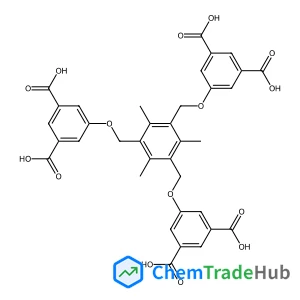
![tert-Butyl 6-chloro-4-oxospiro[chroman-2,4'-piperidine]-1'-carboxylate structure](https://static.chemtradehub.com/structs/101/1011482-37-3-88a5.webp "tert-Butyl 6-chloro-4-oxospiro[chroman-2,4'-piperidine]-1'-carboxylate structure")
tert-Butyl 6-chloro-4-oxospiro[chroman-2,4'-piperidine]-1'-carboxylate
CAS番号:
1011482-37-3
分子式:
C18H22ClNO4
おすすめサプライヤー




免責事項
このページに表示される学術雑誌情報は、参考および研究目的のみを目的としています。当社は雑誌出版社とは提携しておらず、投稿の取り扱いも行っておりません。出版に関するお問い合わせは、各雑誌出版社に直接ご連絡ください。
表示されている情報に誤りがある場合は、support@chemtradehub.com までご連絡ください。迅速に確認し、対応いたします。