












![(4-Methyl-1H-benzo[d]imidazol-2-yl)methanamine structure](https://static.chemtradehub.com/structs/933/933756-31-1-7b0b.webp "(4-Methyl-1H-benzo[d]imidazol-2-yl)methanamine structure")
Hypergolic ionic liquids: to be or not to be?
文献情報
出版日
2023-12-18
DOI
10.1039/D3SC05096C
インパクトファクター
9.825
著者
Souvick Biswas, Kazuumi Fujioka, Ivan Antonov, Grace L. Rizzo, Steven D. Chambreau, Stefan Schneider, Rui Sun, Ralf I. Kaiser
原文を見る
要旨
Hypergolic ionic liquids (HIL) – ionic liquids which ignite spontaneously upon contact with an oxidizer – emerged as green space propellants. Exploiting the previously marked hypergolic [EMIM][CBH] – WFNA (1-ethyl-3-methylimidazolium cyanoborohydride – white fuming nitric acid) system as a benchmark, through the utilization of a novel chirped-pulse droplet-merging technique in an ultrasonic levitation environment and electronic structure calculations, this work deeply questions the hypergolicity of the [EMIM][CBH]-WFNA system. Molecular oxygen is critically required for the [EMIM][CBH]-WFNA system to ignite spontaneously. State-of-the-art electronic structure calculations identified the resonantly stabilized N-boryl-N-oxo-formamide [(H3B–N(O)–CHO)−; BOFA] radical anion as the key intermediate in driving the oxidation chemistry upon reaction with molecular oxygen of the ionic liquid. These findings challenge conventional wisdom of ‘well-established’ test protocols as indicators of the hypergolicity of ionic liquids thus necessitating truly oxygen-free experimental conditions to define the ignition delay upon mixing of the ionic liquid and the oxidizer and hence designating an ionic liquid as truly hypergolic at the molecular level.
関連文献
Tunable electronic properties of BSe–MoS2/WS2 heterostructures for promoted light utilization
Honglin Li, Lijuan Ye, Yuanqiang Xiong, Hong Zhang, Shuren Zhou, Wanjun Li
2021-04-19
Paper
DOI: 10.1039/D1CP00709B
Termination dependence and electric field modification of band alignment in a CNT/CH3NH3PbI3 heterojunction
Chao Zhang, Kunpeng Gao, Yuanfangzhou Wang, Chen Qing, Dapeng Yu
2021-03-22
Paper
DOI: 10.1039/D1CP00914A
Oxygen-substituted borophene as a potential anode material for Li/Na-ion batteries: a first principles study
Yao Wu, Bicheng Zhang
2021-03-18
Paper
DOI: 10.1039/D0CP06530G
A computational approach to understand the role of metals and axial ligands in artificial heme enzyme catalyzed C–H insertion
Reena Balhara, Ritwika Chatterjee, Garima Jindal
2021-04-03
Paper
DOI: 10.1039/D1CP00412C
Failure of molecular dynamics to provide appropriate structures for quantum mechanical description of the aqueous chloride ion charge-transfer-to-solvent ultraviolet spectrum
Timothy W. Marin, Ireneusz Janik, David M. Bartels, Daniel M. Chipman
2021-03-31
Paper
DOI: 10.1039/D1CP00930C
Canonical and explicitly-correlated coupled cluster correlation energies of sub-kJ mol−1 accuracy via cost-effective hybrid-post-CBS extrapolation
2021-04-07
Paper
DOI: 10.1039/D1CP00357G
Pressure induced topochemical polymerization of solid acrylamide facilitated by anisotropic response of the hydrogen bond network
Sayan Maity, Abhijeet S. Gangan, Ashwini Anshu, Rashid Rafeek V. Valappil, Varadharajan Srinivasan
2021-03-16
Paper
DOI: 10.1039/D0CP04993J
Enhancing the analysis of disorder in X-ray absorption spectra: application of deep neural networks to T-jump-X-ray probe experiments
Conor D. Rankine, Thomas J. Penfold
2021-03-30
Paper
DOI: 10.1039/D0CP06244H
Hidden polymorphism of FAPbI3 discovered by Raman spectroscopy
Josefa Ibaceta-Jaña, Ruslan Muydinov, Pamela Rosado, Sri Hari Bharath Vinoth Kumar, Rene Gunder, Axel Hoffmann, Bernd Szyszka, Markus R. Wagner
2021-04-12
Paper
DOI: 10.1039/D1CP00102G
こちらもおすすめ
化合物よくある質問
オステニ二甲磺酸塩に適用される法規ガイドラインは何ですか?
オステニ二甲磺酸塩は、GHS分類に基づき corrosive 物質として分類されます。REACH規則では、該当物質の登録が要求される可能性があります。また、FD...
2070014-82-1N-(2-{[2-(Dimethylam...
化合物よくある質問
環丁基肼盐酸盐は安全ですか?
環丁基肼盐酸盐は毒性があり、吸入や皮膚接触は有害です。使用時の安全対策として、密閉システムを使用し、適切な排気設備を備えた場所で作業することが推奨されます。
1156980-49-2Cyclobutylhydrazine ...
化合物よくある質問
N-(4-パリドン基ソニルフェニル)硫代イソシアネートを取り扱う際の実験室安全事項は何ですか?
N-(4-パリドン基ソニルフェニル)硫代イソシアネートは高毒性で、皮膚や吸入による毒性があります。取り扱う際は防毒マスク、保護用手袋、保護眼鏡などのPPEを着用...
7356-55-01-[(4-Isothiocyanato...
化合物よくある質問
5-ヒドロキシ-1,3-ジヒドロ-2H-インドン-2-酮の物理化学的性質は何ですか?
CAS番号3416-18-0の5-ヒドロキシ-1,3-ジヒドロ-2H-インドン-2-酮は、結晶性の白色粉末です。分子量は228.25であり、 aqueous m...
3416-18-05-Hydroxy-1,3-dihydr...
化合物よくある質問
O-苄基-D-丝氨醇はどのように合成されますか?
O-苄基-D-丝氨醇は、D-アミノ酸とベンゼン環の経由で合成されます。触媒としてジメチルアミノピリジンが使用され、選択性は高いです。一般的な収率は約90%です。
58577-88-1(s)-2-Amino-3-benzyl...
化合物よくある質問
ナトリウム3-ヒドロキシbutano酸とは何ですか?
ナトリウム3-ヒドロキシbutano酸は、CAS番号13613-65-5で登録されている化合物です。この化合物は、(3R)-3-ヒドロキシbutano酸とナトリ...
13613-65-5sodium;(3R)-3-hydrox...
化合物よくある質問
1-(二苯甲基)-4-甲基ベンゼンの物理化学的性質は何ですか?
CAS番号603-37-2の1-(二苯甲基)-4-甲基ベンゼンは、結晶性の固体で、分子量は244.28であり、水中的には微溶です。この化合物は有機反応において中...
603-37-21-(Diphenylmethyl)-4...
化合物よくある質問
ネアミン塩酸塩の物理化学的性質は何ですか?
ネアミン塩酸塩の分子量は321.19であり、結晶性の白色粉末です。この化合物は水に溶けやすく、pHが低くなると不溶性になります。反応活性は高く、水溶液中の酸化還...
15446-43-2NEAMINE HYDROCHLORID...
化合物よくある質問
偶氮二甲酰二哌啶の主な用途は何ですか?
偶氮二甲酰二哌啶は、医薬品、染料、高 Então 剤、触媒、溶媒、量論試薬など、様々な分野で使用されています。特に、高 Enough 反応において、グリコール酸...
10465-81-3(E)-1,2-Diazenediylb...
664969-54-44-[(2E)-3-Phenyl-2-p...
掲載誌
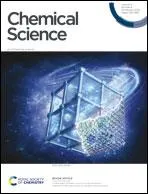
Chemical Science
CiteScore:
14.4
自己引用率:
3.9%
年間論文数:
1413
Our journal has a wide-ranging scope which covers the full breadth of the chemical sciences. The research we publish contains the sorts of novel ideas, challenging questions and progressive thinking that bring undiscovered breakthroughs within reach. Your paper could focus on a single area, or cross many. It could be beyond the accepted bounds of the chemical sciences. It might address an immediate challenge, contribute to a future breakthrough or be wholly conceptual. We’re a team from every field of the chemical sciences, and know from experience that breakthroughs that drive the solutions to global challenges can come from anywhere, at any time. You could even start an entirely new area of research. Too bold? Too progressive? No such thing
おすすめ化合物
![5-Chloropyrrolo[2,1-f][1,2,4]triazin-4(3H)-one structure](https://static.chemtradehub.com/structs/888/888720-60-3-4f7c.webp "5-Chloropyrrolo[2,1-f][1,2,4]triazin-4(3H)-one structure")
おすすめサプライヤー





免責事項
このページに表示される学術雑誌情報は、参考および研究目的のみを目的としています。当社は雑誌出版社とは提携しておらず、投稿の取り扱いも行っておりません。出版に関するお問い合わせは、各雑誌出版社に直接ご連絡ください。
表示されている情報に誤りがある場合は、support@chemtradehub.com までご連絡ください。迅速に確認し、対応いたします。