












![3-[4-(difluoromethoxy)phenyl]-2-({[(9H-fluoren-9-yl)methoxy]carbonyl}amino)propanoic acid structure](https://static.chemtradehub.com/structs/149/1496564-27-2-952e.webp "3-[4-(difluoromethoxy)phenyl]-2-({[(9H-fluoren-9-yl)methoxy]carbonyl}amino)propanoic acid structure")
Challenges in the design and synthesis of self-assembling molecules as selective contacts in perovskite solar cells
文献情報
出版日
2023-11-10
DOI
10.1039/D3SC04668K
インパクトファクター
9.825
著者
Carlos E. Puerto Galvis, Eugenia Martínez-Ferrero
原文を見る
要旨
Self-assembling molecules (SAMs), as selective contacts, play an important role in perovskite solar cells (PSCs), determining the performance and stability of these photovoltaic devices. These materials offer many advantages over other traditional materials used as hole-selective contacts, as they can be easily deposited on a large area of metal oxides, can modify the work function of these substrates, and reduce optical and electric losses with low material consumption. However, the most interesting thing about SAMs is that by modifying the chemical structure of the small molecules used, the energy levels, molecular dipoles, and surface properties of this assembled monolayer can be modulated to fine-tune the desired interactions between the substrate and the active layer. Due to the important role of organic chemistry in the field of photovoltaics, in this review, we will cover the current challenges for the design and synthesis of SAMs PSCs. Discussing, the structural features that define a SAM, (ii) disclosing how commercial molecules inspired the synthesis of new SAMs; and (iii) detailing the pros- and cons- of the reported synthetic protocols that have been employed for the synthesis of molecules for SAMs, helping synthetic chemists to develop novel structures and promoting the fast industrialization of PSCs.
関連文献
Isomerization of the methoxy radical revisited: the impact of water dimers
Pradeep Kumar, Partha Biswas, Biman Bandyopadhyay
2016-09-22
Communication
DOI: 10.1039/C6CP04544H
N2 activation on Al metal clusters: catalyzing role of BN-doped graphene support
Deepak Kumar, Sourav Pal, Sailaja Krishnamurty
2016-09-21
Communication
DOI: 10.1039/C6CP03342C
Calculations of the light absorption spectra of porphyrinoid chromophores for dye-sensitized solar cells
Dage Sundholm
2016-09-28
Paper
DOI: 10.1039/C6CP04627D
Two-dimensional exciton properties in monolayer semiconducting phosphorus allotropes
A. S. Rodin, Alexandra Carvalho, A. R. Rocha
2016-09-13
Paper
DOI: 10.1039/C6CP05566D
Bottom-up excited state dynamics of two cinnamate-based sunscreen filter molecules
Michael Staniforth, Lewis A. Baker, Natércia D. N. Rodrigues, Neil C. Cole-Filipiak, Wen-Dong Quan, Vasilios G. Stavros
2016-09-22
Paper
DOI: 10.1039/C6CP05205C
The first example of ab initio calculations of f–f transitions for the case of [Eu(DOTP)]5− complex—experiment versus theory
Rafał Janicki, Andrzej Kędziorski, Anna Mondry
2016-09-12
Paper
DOI: 10.1039/C6CP05284C
A theoretical investigation of internal conversion in 1,2-dithiane using non-adiabatic multiconfigurational molecular dynamics
C. D. Rankine, J. P. F. Nunes, M. S. Robinson, P. D. Lane, D. A. Wann
2016-09-15
Communication
DOI: 10.1039/C6CP05518D
Exploring the substrate specificity and catalytic mechanism of imidazolonepropionase (HutI) from Bacillus subtilis
Hao Su, Xiang Sheng, Yongjun Liu
2016-09-16
Paper
DOI: 10.1039/C6CP04918D
A redox-active radical as an effective nanoelectronic component: stability and electrochemical tunnelling spectroscopy in ionic liquids
Carlos Franco, Núria Crivillers, Gonca Seber, Andrea Droghetti, Ivan Rungger, Ilya V. Pobelov, Jaume Veciana, Marta Mas-Torrent, Concepció Rovira
2016-09-26
Communication
DOI: 10.1039/C6CP05658J
How photon pump fluence changes the charge carrier relaxation mechanism in an organic–inorganic hybrid lead triiodide perovskite
Piotr Piatkowski, Boiko Cohen, Samrana Kazim, Shahzada Ahmad, Abderrazzak Douhal
2016-06-10
Paper
DOI: 10.1039/C6CP02682F
こちらもおすすめ
化合物よくある質問
4'-ブロモビフェニル-3-メトークシーディ.ActionBarはどのように保存すればよいですか?
4'-ブロモビフェニル-3-メトークシーディ.ActionBarは、冷暗所で、直射日光を避け、密栓の容器に保存し、遠隔場所に保管してください。温度は常温(0〜2...
149506-25-24'-Bromo-biphenyl-3-...
2947-60-6(3-Methylphenyl)acet...
化合物よくある質問
2-異丙基フェニルヒドラジン塩酸塩とは何ですか?
2-異丙基フェニルヒドラジン塩酸塩は、CAS番号58928-82-8を有する化合物で、構造式はC11H14N2HClです。これは塩基性化合物であり、水に溶けやす...
58928-82-8(2-Isopropylphenyl)h...
化合物よくある質問
5-(4-クロロフェニル)-4H-1,2,4-三氮唑-3-アミンを取り扱う際の実験室安全事項は何ですか?
5-(4-クロロフェニル)-4H-1,2,4-三氮唑-3-アミンは取り扱いに注意が必要です。PPEとして防塵マスク、ゴーグル、手袋を使用し、ドラフトチャンバーを...
98554-00-85-(4-Chlorophenyl)-1...
化合物よくある質問
去甲基雷贝拉唑硫醚はどのように合成されますか?
去甲基雷贝拉唑硫醚は、ベンジミダゾール硫化物と3-メチル-4-ピリジノールの反応によって合成されます。具体的には、2-チオキシドベンジミダゾールと3-メチル-4...
117976-91-73-({2-[(1H-Benzimida...
化合物よくある質問
2-ブロモ-5-フロロ-N-(2-フェノールメチル)ベンゼンウレアは安全ですか?
2-ブロモ-5-フロロ-N-(2-フェノールメチル)ベンゼンウレアは、毒性や刺激性の実験データに基づき、適切な取扱いと防護措置を講じることで安全に使用できます。...
923722-86-52-Bromo-5-fluoro-N-(...
化合物よくある質問
対甲苯磺酸酯-四聚乙二醇-四氢吡喃醚の物理化学的性質は何ですか?
対甲苯磺酸酯-四聚乙二醇-四氢吡喃醚のCAS番号は86259-89-4です。この化合物は無色の液体で、分子量は約724.8です。高濃度では溶血性が報告されており...
86259-89-42-(2-{2-[2-(Tetrahyd...
化合物よくある質問
2-(3-(二氟甲基)-4-氟苯基)-4,4,5,5-四甲基-1,3,2-二噁硼戊環はどのように保存すればよいですか?
2-(3-(二氟甲基)-4-氟苯基)-4,4,5,5-四甲基-1,3,2-二噁硼戊環は、室温で暗い場所に保管し、直射日光から遠ざけ、容器は密閉状態で保存してくだ...
445303-65-12-[3-(difluoromethyl...
化合物よくある質問
6-アミノ-5-クロロ-2-シクロプロピルピリミジンカルボン酸の代替品はありますか?
この化合物の代替品には、ピロリミジン酸やその類似物、またピロリミジンカルボン酸の他の異性体があります。これらの代替品は、特定の化学反応や目的に応じて選択すること...
858956-08-86-Amino-5-chloro-2-c...
化合物よくある質問
5-クロロベンゾ[1,3]二オキセイン-4-アミンに適用される法規ガイドラインは何ですか?
5-クロロベンゾ[1,3]二オキセイン-4-アミンはCAS番号379228-45-2に該当します。この化合物はGHS分類でH314(接触により急性毒性がある)と...
379228-45-25-Chloro-1,3-benzodi...
掲載誌
Chemical Science
CiteScore:
14.4
自己引用率:
3.9%
年間論文数:
1413
Our journal has a wide-ranging scope which covers the full breadth of the chemical sciences. The research we publish contains the sorts of novel ideas, challenging questions and progressive thinking that bring undiscovered breakthroughs within reach. Your paper could focus on a single area, or cross many. It could be beyond the accepted bounds of the chemical sciences. It might address an immediate challenge, contribute to a future breakthrough or be wholly conceptual. We’re a team from every field of the chemical sciences, and know from experience that breakthroughs that drive the solutions to global challenges can come from anywhere, at any time. You could even start an entirely new area of research. Too bold? Too progressive? No such thing
おすすめ化合物
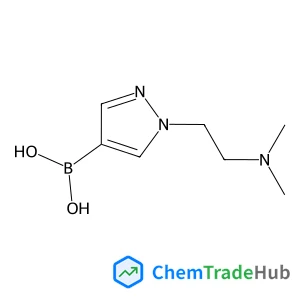
![{3-[Bis(4-hydroxyphenyl)methyl]-1-[2-(dimethylamino)ethyl]-1H-indol-2-yl}[4-(2-chlorophenyl)-1-piperazinyl]methanone structure](https://static.chemtradehub.com/structs/170/170365-25-0-e4d7.webp "{3-[Bis(4-hydroxyphenyl)methyl]-1-[2-(dimethylamino)ethyl]-1H-indol-2-yl}[4-(2-chlorophenyl)-1-piperazinyl]methanone structure")
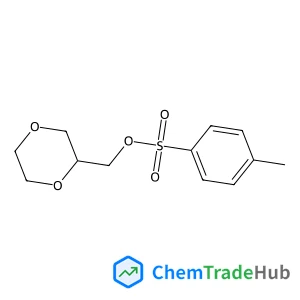
![2-[(E)-(2-Methoxyphenyl)diazenyl]-3-oxo-N-(2-oxo-2,3-dihydro-1H-benzimidazol-5-yl)butanamide structure](https://static.chemtradehub.com/structs/821/82199-12-0-f1d0.webp "2-[(E)-(2-Methoxyphenyl)diazenyl]-3-oxo-N-(2-oxo-2,3-dihydro-1H-benzimidazol-5-yl)butanamide structure")
おすすめサプライヤー


免責事項
このページに表示される学術雑誌情報は、参考および研究目的のみを目的としています。当社は雑誌出版社とは提携しておらず、投稿の取り扱いも行っておりません。出版に関するお問い合わせは、各雑誌出版社に直接ご連絡ください。
表示されている情報に誤りがある場合は、support@chemtradehub.com までご連絡ください。迅速に確認し、対応いたします。