












Thermally activated delayed fluorescence in a deep red dinuclear iridium(iii) complex: a hidden mechanism for short luminescence lifetimes
文献情報
出版日
2023-11-14
DOI
10.1039/D3SC04450E
インパクトファクター
9.825
著者
Andrey V. Zaytsev, Amit Sil, Glib V. Baryshnikov, J. A. Gareth Williams, Fernando B. Dias, Valery N. Kozhevnikov
原文を見る
要旨
The high luminescence efficiency of cyclometallated iridium(III) complexes, including those widely used in OLEDs, is typically attributed solely to the formally spin-forbidden phosphorescence process being facilitated by spin–orbit coupling with the Ir(III) centre. In this work, we provide unequivocal evidence that an additional mechanism can also participate, namely a thermally activated delayed fluorescence (TADF) pathway. TADF is well-established in other materials, including in purely organic compounds, but has never been observed in iridium complexes. Our findings may transform the design of iridium(III) complexes by including an additional, faster fluorescent radiative decay pathway. We discover it here in a new dinuclear complex, 1, of the form [Ir(N^C)2]2(μ-L), where N^C represents a conventional N^C-cyclometallating ligand, and L is a bis-N^O-chelating bridging ligand derived from 4,6-bis(2-hydroxyphenyl)-pyrimidine. Complex 1 forms selectively as the rac diastereoisomer upon reaction of [Ir(N^C)2(μ-Cl)]2 with H2L under mild conditions, with none of the alternative meso isomer being separated. Its structure is confirmed by X-ray diffraction. Complex 1 displays deep-red luminescence in solution or in polystyrene film at room temperature (λem = 643 nm). Variable-temperature emission spectroscopy uncovers the TADF pathway, involving the thermally activated re-population of S1 from T1. At room temperature, TADF reduces the photoluminescence lifetime in film by a factor of around 2, to 1 μs. The TADF pathway is associated with a small S1–T1 energy gap ΔEST of approximately 50 meV. Calculations that take into account the splitting of the T1 sublevels through spin–orbit coupling perfectly reproduce the experimentally observed temperature-dependence of the lifetime over the range 20–300K. A solution-processed OLED comprising 1 doped into the emitting layer at 5 wt% displays red electroluminescence, λEL = 625 nm, with an EQE of 5.5% and maximum luminance of 6300 cd m−2.
関連文献
PVP-functionalized nanometre scale metal oxide coatings for cathode materials: successful application to LiMn2O4 spinel nanoparticles
2008-07-30
Communication
DOI: 10.1039/B807973K
Suzuki cross-coupling reactions on the surface of carbon-coated cobalt: expanding the applicability of core–shell nano-magnets
Chun Ghee Tan, Robert N. Grass
2008-07-16
Communication
DOI: 10.1039/B807741J
Hydroxylamine as an oxygen nucleophile. Chemical evidence from its reaction with a phosphate triester
Anthony J. Kirby, Bruno S. Souza, Michelle Medeiros, Jacks P. Priebe, Alex M. Manfredi, Faruk Nome
2008-08-13
Communication
DOI: 10.1039/B810408E
Apoferritinprotein cages: a novel drug nanocarrier for photodynamic therapy
Fei Yan, Yan Zhang, Hsiang-kuo Yuan, Molly K. Gregas, Tuan Vo-Dinh
2008-08-21
Communication
DOI: 10.1039/B810949D
A diastereo- and enantioselective synthesis of α-substituted anti-α,β-diaminophosphonic acid derivatives
Jeremy C. Wilt, Maren Pink, Jeffrey N. Johnston
2008-08-06
Communication
DOI: 10.1039/B808393B
Biocompatible bacteria@Au composites for application in the photothermal destruction of cancer cells
Wen-Shuo Kuo, Ching-Ming Wu, Zih-Syuan Yang, Szu-Yu Chen, Cheng-Ying Chen, Chih-Chia Huang, Wei-Ming Li, Chi-Kuang Sun, Chen-Sheng Yeh
2008-08-20
Communication
DOI: 10.1039/B808871C
Subtractive assembly of DNA nanoarchitectures driven by fuel strand displacement
Zhe Li, Yonggang Ke, Chenxiang Lin, Hao Yan, Yan Liu
2008-07-17
Communication
DOI: 10.1039/B807933A
Facile fabrication of conducting polymer hydrogels via supramolecular self-assembly
Tingyang Dai, Xiujuan Jiang, Shouhu Hua, Xiaoshu Wang, Yun Lu
2008-07-16
Communication
DOI: 10.1039/B807116K
B-Alkyl Suzuki couplings for the stereoselective synthesis of substituted pyrans
Gregory W. O’Neil, Alois Fürstner
2008-07-16
Communication
DOI: 10.1039/B806898D
こちらもおすすめ
化合物よくある質問
2-ブロモ-9,9-ジフェニル-9H-フルオレンの主な用途は何ですか?
2-溴-9,9-二苯基芴は、医薬品、工業材料、有機合成の研究分野で応用されます。特に、レーザー材料や機能性ポリマーの合成に使用されることがあります。また、蛍光色...
474918-32-62-Bromo-9,9-diphenyl...
化合物よくある質問
四氯化铱の市場動向や研究トレンドはどうですか?
四氯化铱の市場は研究開発分野で注目されており、特にナノ技術や金属有機框架(MOFs)の分野での需要が増加傾向にあります。価格は安定しており、中国や韓国での生産が...
207399-11-9Tetrachloroiridium h...
882-06-44-Nitrocinnamic acid
化合物よくある質問
1-(4-溴-3-氟苯基)-2-氯乙酮を含む廃棄物はどのように処理すべきですか?
1-(4-溴-3-氟苯基)-2-氯乙酮 (CAS番号: 1260857-14-4) の廃棄物は専門的な廃棄処理が必要です。まず、廃棄物は密閉された容器に収集し、...
1260857-14-41-(4-Bromo-3-fluorop...
化合物よくある質問
苦参酚Kとは何ですか?
苦参酚Kは、CAS番号101236-49-1を持つ化合物で、主に天然由来の生薬から抽出されます。この化合物は、抗炎症作用や抗癌作用を持つことが報告されています。
101236-49-1Kushenol K
化合物よくある質問
POTASSIUM (1-(TERTBUTOXYCARBONYL)AZETIDIN-3-YL)TRIFLUOROBORATE を含む廃棄物はどのように処理すべきですか?
POTASSIUM (1-(TERTBUTOXYCARBONYL)AZETIDIN-3-YL)TRIFLUOROBORATE を含む廃棄物は、まず安全なエント...
1430219-73-0Potassium (1-(tert-b...
化合物よくある質問
4-庚基-4’-联苯羧酸の市場動向や研究トレンドはどうですか?
4-庚基-4’-聯苯羧酸は、特殊化学品や合成化学の分野で用いられる化学物質ですが、市場動向としては、研究開発の進展とともに需要が増加しています。また、環境配慮型...
58573-94-74'-Heptyl-4-biphenyl...
化合物よくある質問
6-ブロモ-3-メトキシ-1-フェニル-1H-インドゾールを含む廃棄物はどのように処理すべきですか?
6-ブロモ-3-メトキシ-1-フェニル-1H-インドゾールを含む廃棄物は、適切な化学廃棄処理が必要です。通常、廃棄物は密閉容器に収集され、専門の廃棄処理業者に引...
1332527-03-36-Bromo-3-methoxy-1-...
化合物よくある質問
4,4-二甲基-2-吡咯烷酮はどの業界で使用されていますか?
4,4-二甲基-2-吡咯烷酮は医薬、ポリマー、センサー、半導体などの業界で広く使用されています。特に溶媒としての性能が高く評価されています。
66899-02-34,4-dimethylpyrrolid...
51312-42-6Sodium Phosphotungst...
掲載誌
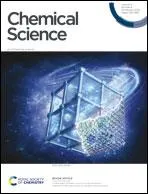
Chemical Science
CiteScore:
14.4
自己引用率:
3.9%
年間論文数:
1413
Our journal has a wide-ranging scope which covers the full breadth of the chemical sciences. The research we publish contains the sorts of novel ideas, challenging questions and progressive thinking that bring undiscovered breakthroughs within reach. Your paper could focus on a single area, or cross many. It could be beyond the accepted bounds of the chemical sciences. It might address an immediate challenge, contribute to a future breakthrough or be wholly conceptual. We’re a team from every field of the chemical sciences, and know from experience that breakthroughs that drive the solutions to global challenges can come from anywhere, at any time. You could even start an entirely new area of research. Too bold? Too progressive? No such thing
おすすめ化合物
![1-[3-(4-Morpholinylsulfonyl)phenyl]methanamine structure](https://static.chemtradehub.com/structs/933/933989-32-3-51af.webp "1-[3-(4-Morpholinylsulfonyl)phenyl]methanamine structure")
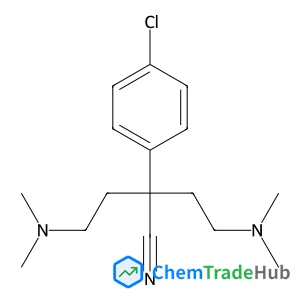
2-(4-Chlorophenyl)-4-(dimethylamino)-2-(2-(dimethylamino)ethyl)butanenitrile
CAS番号:
1246816-57-8
分子式:
C16H24ClN3
おすすめサプライヤー



免責事項
このページに表示される学術雑誌情報は、参考および研究目的のみを目的としています。当社は雑誌出版社とは提携しておらず、投稿の取り扱いも行っておりません。出版に関するお問い合わせは、各雑誌出版社に直接ご連絡ください。
表示されている情報に誤りがある場合は、support@chemtradehub.com までご連絡ください。迅速に確認し、対応いたします。