












Enhanced photocatalytic performance of Ag nanoparticle–TiO2−X nanotube arrays obtained by a predischarge–deposition method and calcination in H2/N2
文献情報
出版日
2023-10-27
DOI
10.1039/D3RE00344B
インパクトファクター
4.239
著者
Qihang Liu, Junjun Chen, Lang Zhang, Olim Ruzimuradov, Yichun Liu, Fengxian Li, Caiju Li, Mingjun Wang, Dong Fang, Jianhong Yi
原文を見る
要旨
In this study, Ag/TiO2−X nanotubes with oxygen defects were synthesized by a simple and controllable predischarge–electrodeposition method, and they were calcined in H2/N2. After Ag modification, the maximum transient photocurrent of TiO2 nanotubes increased by 22.4 times. In addition, compared with that of pure TiO2 nanotubes, the photocatalytic performance of the Ag/TiO2−X nanotubes for degradation of methylene blue and aqueous formaldehyde was enhanced by 6.9 and 3.5 times, respectively. There are two reasons for the strengthened photocatalytic performance of Ag/TiO2−X. One is the localized surface plasmon resonance effect of Ag nanoparticles, which effectively promotes the separation of photogenerated electron–hole pairs. The other is that the oxygen defects act as shallow donors and accelerate charge transfer at the interface. This work provides a research idea for fabricating nanocomposites applied in photoelectrochemical and photocatalytical fields.
関連文献
Theoretical insight into the roles of cocatalysts in the Ni–NiO/β-Ga2O3 photocatalyst for overall water splitting
Ionut Tranca, Xin Zhou, Can Li
2015-04-10
Paper
DOI: 10.1039/C5TA02193F
Electrostimulus-associated PD-L1 expression on cell membrane revealed by immune SERS nanoprobes
Jiafeng Wang, Yan Wang, Guohua Qi
2021-12-31
Paper
DOI: 10.1039/D1AN01930A
Development of a PCR-free electrochemical point of care test for clinical detection of methicillin resistant Staphylococcus aureus (MRSA)
H. Schulze, G. Henihan, A. Hardie, I. Ciani, G. Giraud, J. G. Terry, A. J. Walton, R. Pethig, P. Ghazal, K. E. Templeton, A. R. Mount, T. T. Bachmann
2013-10-04
Paper
DOI: 10.1039/C3AN01319G
Self-defending additively manufactured bone implants bearing silver and copper nanoparticles
I. A. J. van Hengel, M. W. A. M. Tierolf, V. P. M. Valerio, M. Minneboo, A. C. Fluit, L. E. Fratila-Apachitei, I. Apachitei, A. A. Zadpoor
2019-12-13
Paper
DOI: 10.1039/C9TB02434D
Determination of total ionic alkyllead in water by electrothermal atomisation atomic absorption spectrometry
Paper
DOI: 10.1039/JA9860100293
An integrated self-powered 3D printed sample concentrator for highly sensitive molecular detection of HIV in whole blood at the point of care
Karteek Kadimisetty, Aoife M. Roche, Yanjie Yi, Frederic D. Bushman, Liang Feng
2021-03-30
Paper
DOI: 10.1039/D0AN02482A
Identification of bacterial species by untargeted NMR spectroscopy of the exo-metabolome
T. L. Palama, I. Canard, G. J. P. Rautureau, C. Mirande, S. Chatellier, B. Elena-Herrmann
2016-06-16
Communication
DOI: 10.1039/C6AN00393A
A universal in situ strategy for charging supercapacitors
Zhiling Luo, Changhong Liu, Shoushan Fan, Enchong Liu
2019-05-24
Paper
DOI: 10.1039/C9TA04105B
こちらもおすすめ
化合物よくある質問
3-イチチルビフェニルはどのように合成されますか?
3-イチチルビフェニルは、ビフェニルとイチプロピオニトリルを回収率約90%で反応させて合成されます。触媒は通常、亜リチウムホウ素を用います。
5668-93-93-Ethylbiphenyl
化合物よくある質問
8-溴-5-三氟甲基喹啉はどのように合成されますか?
8-溴-5-三氟甲基喹啉は、5-トリフルオロメチル-2-メチル-1,3-ベンゼンジオールをブロモエタノールと反応させて生成します。この反応は塩基性条件下で行われ...
917251-92-48-Bromo-5-(trifluoro...
化合物よくある質問
ジメチル4-(4,4,5,5-テトラメチル-1,3,2-ドioxaborolan-2-基)-2,6-ピリジンジカルボイル酸フェニルアミニドの代替品はありますか?
ジメチル4-(4,4,5,5-テトラメチル-1,3,2-ドioxaborolan-2-基)-2,6-ピリジンジカルボイル酸フェニルアミニドの代替品としては、4-...
741709-66-0Dimethyl 4-(4,4,5,5-...
化合物よくある質問
N-(3,5-ヘキサクロロ-4-ピリドインイル)-8-メチオキシ-5-キノリンカーボン酸の市場動向や研究トレンドはどのようなものでしょうか?
N-(3,5-ヘキサクロロ-4-ピリドインイル)-8-メチオキシ-5-キノリンカーボン酸の市場動向は、主に産業用途での需要により影響を受けます。研究トレンドとし...
199871-63-1N-(3,5-Dichloro-4-py...
化合物よくある質問
イソステアロイルグリセリルは安全ですか?
イソステアロイルグリセリルは一般的に安全性が高いとされていますが、過度な使用や個人差により皮�owsん炎などの反応が起こる可能性があります。使用前に医師に相談す...
222723-55-92-[(5Z,8Z,11Z,14Z)-5...
化合物よくある質問
1-(二苯甲基)-3,3-二氟-氮杂环丁烷の市場動向や研究トレンドはどうですか?
1-(二苯甲基)-3,3-二氟-氮杂环丁烷の市場動向は、医薬品や合成化学の研究分野で注目を集めています。新興研究は、該当化合物の合成改良と生体内での作用メカニズ...
288315-02-61-Benzhydryl-3,3-dif...
化合物よくある質問
3-チオフェンスチオールの物理化学的性質は何ですか?
3-チオフェンスチオールのCAS番号は7774-73-4です。結晶性の白色粉末で、分子量は122.17です。この化合物は水に微溶解し、エタノールやジクロロメタン...
7774-73-43-Thiophenethiol
化合物よくある質問
2-Methyl-2-propanyl (2S)-2-(aminomethyl)-1-piperidinecarboxylateは安全ですか?
2-Methyl-2-propanyl (2S)-2-(aminomethyl)-1-piperidinecarboxylateは一定の安全性基準を満たしていま...
475105-35-22-Methyl-2-propanyl ...
化合物よくある質問
CAS番号1316822-90-8の化合物は安全ですか?
CAS番号1316822-90-8の化合物は安全性に関しては評価が不足していますが、一般的には生物学的に活性な物質であり、取り扱いには適切な安全防護措置が必要で...
1316822-90-8Gal beta(1-3)[Neu5Ac...
化合物よくある質問
Tert-butyl 2-(2-羟基乙基)哌嗪-1-羧酸はどのように保存すればよいですか?
Tert-butyl 2-(2-羟基乙基)哌嗪-1-羧酸は、冷暗所で保存し、直射日光から遠ざけてください。容器は密閉し、高湿度や高温を避けて保管してください。
517866-79-4Tert-butyl 2-(2-hydr...
掲載誌
Reaction Chemistry & Engineering

CiteScore:
0
自己引用率:
8.8%
年間論文数:
284
Reaction Chemistry & Engineering is an interdisciplinary journal reporting cutting-edge research focused on enhancing the understanding and efficiency of reactions. Reaction engineering leverages the interface where fundamental molecular chemistry meets chemical engineering and technology. Challenges in chemistry can be overcome by the application of new technologies, while engineers may find improved solutions for process development from the latest developments in reaction chemistry. Reaction Chemistry & Engineering is a unique forum for researchers whose interests span the broad areas of chemical engineering and chemical sciences to come together in solving problems of importance to wider society. All papers should be written to be approachable by readers across the engineering and chemical sciences. Papers that consider multiple scales, from the laboratory up to and including plant scale, are particularly encouraged.
おすすめ化合物
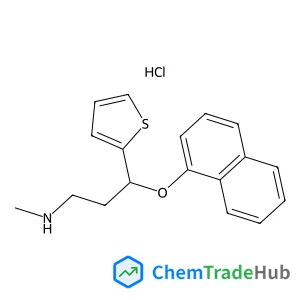
N-Methyl-3-(1-naphthyloxy)-3-(2-thienyl)-1-propanamine hydrochloride (1:1)
CAS番号:
1188266-11-6
分子式:
C18H20ClNOS
おすすめサプライヤー






免責事項
このページに表示される学術雑誌情報は、参考および研究目的のみを目的としています。当社は雑誌出版社とは提携しておらず、投稿の取り扱いも行っておりません。出版に関するお問い合わせは、各雑誌出版社に直接ご連絡ください。
表示されている情報に誤りがある場合は、support@chemtradehub.com までご連絡ください。迅速に確認し、対応いたします。