


Synthesis of the indeno[1,2-b]indole core of janthitrem B
文献情報
出版日
2023-11-02
DOI
10.1039/D3OB01566A
インパクトファクター
3.876
著者
Marvin Fresia, Alexandra Dierks, Peter G. Jones, Thomas Lindel
原文を見る
要旨
The tetracyclic core structure of the majority of indole diterpenoids features a trans-hydrindane moiety that is fused to an indole unit. We report here a novel synthetic route that includes a photo-Nazarov cyclization of a 3-acylindole precursor initially providing the thermodynamically preferred cis-hydrindanone. After reduction and conversion to the cyclopentadiene, dihydroxylation and hydrogenation provided the indoline. The key step generated the trans-system by stereospecific hydride shift on a dioxaphospholane under Grainger's conditions, for the first time applied to an N-heterocycle. When starting from the corresponding indole, we observed the formation of hitherto unknown methanocyclohepta[b]indolones. Deoxygenation of the trans-hydrindanone was achieved after conversion to the 1,3-dithiolane, followed by RANEY® Ni reduction.
おすすめジャーナル

Herald of the Russian Academy of Sciences

Bioorganic & Medicinal Chemistry Letters

Main Group Chemistry

Journal of the Indian Institute of Science

Polycyclic Aromatic Compounds

Acta Metallurgica Sinica-English Letters

Journal of Chemical Sciences

Chinese Journal of Chemistry

Biocatalysis and Biotransformation

Topics in Catalysis
関連文献
Photoinduced DNA end capping viaN3-methyl-5-cyanovinyl-2′-deoxyuridine
Yoshinaga Yoshimura, Tadayoshi Ikemoto, Akio Nakazawa, Masayuki Hayashi, Isao Saito
2005-05-24
Communication
DOI: 10.1039/B504162G
Processable stabilizer-free polyaniline nanofiber aqueous colloids
Dan Li, Richard B. Kaner
2005-05-25
Communication
DOI: 10.1039/B504020E
NaOH-catalyzed crossed Claisen condensation between ketenesilylacetals and methyl esters
Akira Iida, Kenta Takai, Tomohito Okabayashi, Tomonori Misaki, Yoo Tanabe
2005-05-20
Communication
DOI: 10.1039/B504750A
Organometallic based strategies for metal nanocrystal synthesis
2005-03-24
Feature Article
DOI: 10.1039/B501835H
Concomitant polymorphs of 2,2′,6,6′-tetramethyl-4,4′-terphenyldiol: the β-quinol network reproduced in a metastable polymorph
Srinivasulu Aitipamula, Ashwini Nangia
2005-05-24
Communication
DOI: 10.1039/B500665A
Poly(ionic liquid)s: a new material with enhanced and fast CO2 absorption
Huadong Tang, Weilin Sun, Henry Plancher, Maciej Radosz, Youqing Shen
2005-05-27
Communication
DOI: 10.1039/B501940K
A readily prepared neutral heterobimetallic titanium(iv)–rhodium(i) catalyst for intramolecular hydroacylation
John P. Morgan, Kousik Kundu, Michael P. Doyle
2005-06-01
Communication
DOI: 10.1039/B504195C
Ionic diamine rhodium(i) complexes—highly active catalysts for the hydroformylation of olefins
Jai Jun Kim, Howard Alper
2005-05-09
Communication
DOI: 10.1039/B502435H
Unprecedented, fully recyclable, solid-supported reagent for the kinetic resolution of racemic amines through enantioselective N-acetylation
Stellios Arseniyadis, Pithani V. Subhash, Alain Valleix, Alain Wagner
2005-06-01
Communication
DOI: 10.1039/B504200C
Programmable DNA translation system using cross-linked DNA mediators
Masayuki Endo, Shinsuke Uegaki, Tetsuro Majima
2005-05-24
Communication
DOI: 10.1039/B503247D
こちらもおすすめ
化合物よくある質問
6-苄基-6,7-二氢-5H-吡咯并3,4-b吡啶とは何ですか?
6-苄基-6,7-二氢-5H-吡咯并3,4-b吡啶は、CAS番号109966-30-5の化合物です。これは、6-ベンジル基を持つ6,7-二氢-5H-吡咯並みの化...
109966-30-56-Benzyl-6,7-dihydro...
化合物よくある質問
半硫酸奎宁单水水合物はどのように保存すればよいですか?
半硫酸奎宁单水水合物は、乾燥した涼しい場所に保管し、直射日光や湿気を避ける必要があります。保存温度は常温(15〜25℃)が適切で、湿度は40%以下を維持すること...
6119-70-6Quinine sulfate hydr...
化合物よくある質問
D-核糖-5-リン酸二ナトリウムとは何ですか?
D-核糖-5-リン酸二ナトリウムは、CAS番号18265-46-8を有する化合物で、D-核糖の5位付加部位にリン酸基が結合した化合物です。この化合物は、水溶性で...
18265-46-8Disodium (2R,3R,4R)-...
2257-52-5Isopropylhydrazine
化合物よくある質問
3-乙酰基-4-羟基喹啉-2(1H)-酮はどのように合成されますか?
3-乙酰基-4-羟基喹啉-2(1H)-酮は、ハイドロキノンと酢酸アセトイルアミドのアミド化反応により合成されます。この反応は塩基触媒を用いて行われ、選択性は良好...
26138-64-73-Acetyl-4-hydroxyqu...
2280037-51-44-Amino-1-(3-bipheny...
化合物よくある質問
5-溴-4-甲基-1H-吲唑とは何ですか?
5-溴-4-甲基-1H-吲唑は、CAS番号1082041-34-6の化学物質で、化学式はC10H9BrNです。この化合物は淡黄色の結晶性粉末で、吸湿性があります...
1082041-34-65-Bromo-4-methyl-1H-...
化合物よくある質問
3-(4メトキシフェニル)オキテナン-3カーボイル酸の代替品はありますか?
3-(4メトキシフェニル)オキテナン-3カーボイル酸の代替品は、その用途により異なりますが、例えば4-(メトキシフェニル)オキテナン-3カーボイル酸や、他のオキ...
1416323-25-53-(4-Methoxyphenyl)-...
化合物よくある質問
3-イリドオキシピロロ[2,3-b]ピリジン-5-カルボキシlic酸は安全ですか?
3-イリドオキシピロロ[2,3-b]ピリジン-5-カルボキシlic酸は危険な化合物ではありませんが、適切な手袋や保護眼鏡の使用を推奨します。誤って摂取または接触...
1060816-80-93-Iodo-1H-pyrrolo[2,...
化合物よくある質問
3-氟-4- iodobenolを取り扱う際の実験室安全事項は何ですか?
3-氟-4- iodobenolは可燃性を有し、強力な反応性を持つため、取り扱いには注意が必要です。PPE(個人保護具)の着用、ドラフトチャンバーの使用、漏洩時...
122927-84-83-Fluoro-4-iodopheno...
掲載誌
Organic & Biomolecular Chemistry

CiteScore:
3.4
自己引用率:
10.3%
年間論文数:
1041
Organic & Biomolecular Chemistry (OBC) publishes original and high impact research and reviews in organic chemistry. We welcome research that shows new or significantly improved protocols or methodologies in total synthesis, synthetic methodology or physical and theoretical organic chemistry as well as research that shows a significant advance in the organic chemistry or molecular design aspects of chemical biology, catalysis, supramolecular and macromolecular chemistry, theoretical chemistry, mechanism-oriented physical organic chemistry, medicinal chemistry or natural products. Articles published in the journal should report new work which makes a highly-significant impact in the field. Routine and incremental work is generally not suitable for publication in the journal. More details about key areas of our scope are below. In all cases authors should include in their article clear rationale for why their research has been carried out.
おすすめ化合物
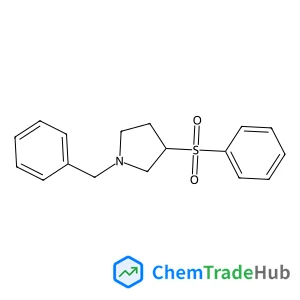
![1-Benzyl-1,7-diazaspiro[4.4]nonane dihydrochloride structure](https://static.chemtradehub.com/structs/115/1159822-71-5-0320.webp "1-Benzyl-1,7-diazaspiro[4.4]nonane dihydrochloride structure")
おすすめサプライヤー






免責事項
このページに表示される学術雑誌情報は、参考および研究目的のみを目的としています。当社は雑誌出版社とは提携しておらず、投稿の取り扱いも行っておりません。出版に関するお問い合わせは、各雑誌出版社に直接ご連絡ください。
表示されている情報に誤りがある場合は、support@chemtradehub.com までご連絡ください。迅速に確認し、対応いたします。