












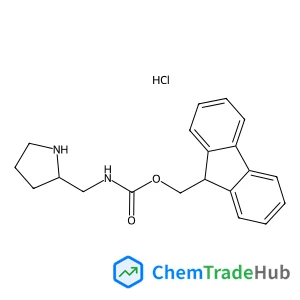
(S)-(9H-Fluoren-9-yl)methyl (pyrrolidin-2-ylmethyl)carbamate hydrochloride
CAS番号:
1217813-15-4
分子式:
C20H23ClN2O2
Zhen Zhang, Linyan Zhao, Lin Cui, DongMei Li, Xing Tian, Zhiyong Liu, Shenglin Liu
Developing multifunctional materials with oil/water separation, dye adsorption, and antibacterial activities presents an enticing prospect for wastewater treatment. In this paper, a three-dimensional (3D) porous cellulose (CE)/quaternized cellulose (QCE) composite aerogel with super-wettability through co-deposition of polydopamine (PDA) and polyethylenimine (PEI) is reported. The PDA/PEI coating endows the aerogel with superhydrophilicity (WCA = 0°), and the QCE act as an anionic dye sorbent at the same time, endowing the material with antimicrobial activity against Escherichia coli (E. coli). Oil/water mixtures can be separated on an as-prepared aerogel with high efficiency (>99%), even when the filtration was repeated 10 times, and the as-prepared aerogel can also separate oil-in-water emulsions. Moreover, the as-prepared aerogel exhibited excellent adsorption performance for alizarin red, with a calculated maximum adsorption capacity of 454.545 mg g−1. Besides, our modification also endowed the aerogel with antibacterial and anti-oil-fouling activities. The inhibition zone test verified the efficient elimination of E. coli. This work may open a new avenue for designing versatile aerogel with multiple functions for waste water remediation.
DOI: 10.1039/D3CP03393G
Robert Tirawat, Mengjin Yang, Severin N. Habisreutinger, Soňa Uličná, Ross A. Kerner, Kai Zhu, Laura T. Schelhas, Axel F. Palmstrom
DOI: 10.1039/D3SE01268A
Jianglu Huang, Donggang Zhao, Yu Zhao
DOI: 10.1039/D3SE01403G
Vikki Anand Varma, Simmie Jaglan, Mohd Yasir Khan, Sujin B. Babu
DOI: 10.1039/D3CP03681B
Zhichao Liu, Tianle Zhou, Gui Jin, Jiangbin Su, Bin Tang
DOI: 10.1039/D3CP05095E
Raquel Yanes-Rodríguez, Rita Prosmiti
DOI: 10.1039/D3CP05410A
Sergey S. Nikitin, Alexander D. Koryakov, Elizaveta A. Antipinskaya, Mikhail V. Patrakeev
DOI: 10.1039/D3CP05421G
Bratislav P. Marinković, Jaime Rosado, Francisco Blanco, Gustavo García, Jelena B. Maljković
DOI: 10.1039/D3CP05052A
2-メトキシ-4-(メチルスルフィニル)アミンは、主に医薬品および農薬の製造に使用されます。また、合成化学の一部として研究用材料としても利用されます。
代替品としては、4,6-二クロロピラミジンアミンや他のピラミジン系化合物が考えられます。ただし、目的と用途によって最適な代替品は異なります。
6-氯-4-甲基-1H-吲哚の廃棄物は、適切な容器に収集し、密閉して保管します。温度は常温、湿度は低く、直射日光を避けて保管することを推奨します。廃棄処理は専門...
2-フローユロ-4-(トリフルオロメチル)ベンゾイドのCAS番号は207974-08-1です。この化合物はGHS分類で毒性物質と有害な反応物質として分類されます...
4-ニトロフェニルN-[(ベンゼルオキシルカーボンイル]グリシングリシングリシン酸は、室温で暗所に保管し、乾燥した環境で保存することを推奨します。容器は密閉性の...
イソデスロラタドリンの代替品としては、デスロラタドリンや他の抗ヒスタミン薬が挙げられます。具体的には、デスロラタドリン、ラセカミド、フェルタドリンなどが、症状や...
5-甲氧基-1,2,3,4-四氢异喹啉盐酸盐の一般的な合成方法は、メタノール中で5-メトキシ-1,2,3,4-四ヒュドロイソキシンを塩酸で塩化します。この反応で...
CAS番号6471-78-9の4-アミノ-5-メトキシ-2-トルエンサルホニック酸は、GHS分類では corrosive(腐食性)と識別されます。EUのREAC...
甲基孕酮の取り扱いは、PPE(個人保護具)の使用が必要な重要な安全事項を伴います。防塵マスク、ゴーグル、手袋を着用することが推奨されます。ドラフトチャンバーを使...

NJC (New Journal of Chemistry) is a broad-based primary journal encompassing all branches of chemistry and its sub-disciplines. It contains full research articles, communications, perspectives and focus articles. This well-established journal, owned by the Centre National de la Recherche Scientifique (CNRS) of France, has been co-published with the Royal Society of Chemistry since January 1998. NJC is the forum for the publication of high-quality, original and significant work that opens new directions in chemistry or other scientific disciplines. In addition to having a significant chemical component, work published in NJC must demonstrate that it will have an impact on areas of research other than that of the reported work.
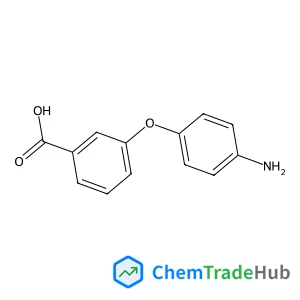
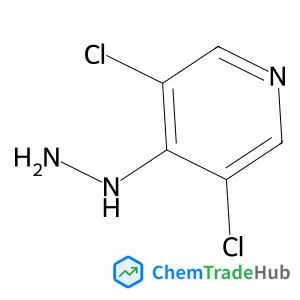
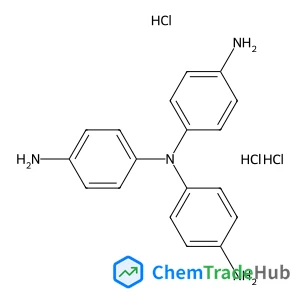
![[5-fluoro-2-(morpholine-4-carbonyl)phenyl]boronic acid structure](https://static.chemtradehub.com/structs/121/1217501-26-2-505c.webp "[5-fluoro-2-(morpholine-4-carbonyl)phenyl]boronic acid structure")




