












![Ethyl 2-[(3-bromo-4-pyridinyl)sulfanyl]-2-methylpropanoate structure](https://static.chemtradehub.com/structs/135/1352794-86-5-a8aa.webp "Ethyl 2-[(3-bromo-4-pyridinyl)sulfanyl]-2-methylpropanoate structure")
Novel and rapid approach for benzanthrone synthesis: BBr3-promoted annulation of 8-aryl-1-naphthoic acid derivatives
文献情報
出版日
2023-12-14
DOI
10.1039/D3NJ03905F
インパクトファクター
3.591
著者
Xinkun An, Haoyun Ma, Guoen Cui, Tingting Zhang, Leichuan Xu, Mingan Wang
原文を見る
要旨
The synthesis of 3-methoxy-benzanthrones was achieved in two steps by Suzuki–Miyaura coupling and BBr3-promoted Friedel–Crafts acylation under mild conditions with an overall yield of 17–74% and tolerance toward various substrates using commercially available reagents. The competitive mechanism between demethylation and Friedel–Crafts acylation was first rationalized via a deuterium-labelling experiment and DFT calculations. Basic photochemical characteristics of 3-methoxy-benzanthrones and 3-hydroxy benzanthrones were investigated, and the benzanthrones were found to possess excellent photochemical properties. Additionally, using this novel strategy, alkaloid oxoglaucine with a similar tetracyclic skeleton was successfully synthesized with a 70% overall yield via two steps.
関連文献
Functionalized polycarbonates from dihydroxyacetone: insights into the immortal ring-opening polymerization of 2,2-dimethoxytrimethylene carbonate
Marion Helou, Jean-Michel Brusson, Jean-François Carpentier, Sophie M. Guillaume
2011-10-14
Communication
DOI: 10.1039/C1PY00405K
Preparation of jellyfish-shaped amphiphilic block-graft copolymers consisting of a poly(ε-caprolactone)-block-poly(pentafluorostyrene) ring and poly(ethylene glycol) lateral brushes
Tao Cai, Wen Jing Yang
2012-02-08
Paper
DOI: 10.1039/C2PY00609J
High relaxivity MRI imaging reagents from bimodal star polymers
Chinessa T. Adkins, Julia N. Dobish, Clifford S. Brown, Brian Mayrsohn, Sharon K. Hamilton, Felicia Udoji, Kelly Radford, Thomas E. Yankeelov, John C. Gore, Eva Harth
2011-11-29
Paper
DOI: 10.1039/C1PY00474C
Two dimensional size controlled confinement of poly(vinyl pyrrolidone) in the interlayer space of swelling clay mineral
Minoru Sohmiya, Shingo Omata
2012-02-10
Paper
DOI: 10.1039/C2PY00465H
An improved grafting technique for producing imprinted thin film composite beads
Mahadeo R. Halhalli, Carla S. A. Aureliano, Eric Schillinger, Claudia Sulitzky, M. Magdalena Titirici, Börje Sellergren
2012-02-06
Paper
DOI: 10.1039/C2PY00544A
Facile synthesis of cross-linked patchy fluorescent conjugated polymernanoparticles by click reactions
Vüsala İbrahimova, Seyma Ekiz, Özlem Gezici, Dönüs Tuncel
2011-10-12
Paper
DOI: 10.1039/C1PY00332A
Synthesis of microporous polymers by Friedel–Crafts reaction of 1-bromoadamantane with aromatic compounds and their surface modification
Ho Lim, Min Chul Cha, Ji Young Chang
2012-02-16
Communication
DOI: 10.1039/C2PY00511E
Photo-cross-linked mPEG-poly(γ-cinnamyl-l-glutamate) micelles as stable drug carriers
Xiuli Hu, Zhigang Xie, Yubin Huang, Xiabin Jing
2012-03-23
Paper
DOI: 10.1039/C2PY20049J
Random introduction of degradable linkages into functional vinyl polymers by radical ring-opening polymerization, tailored for soft tissue engineering
Jenny Undin, Teresa Illanes, Anna Finne-Wistrand, Ann-Christine Albertsson
2012-03-19
Paper
DOI: 10.1039/C2PY20034A
こちらもおすすめ
化合物よくある質問
N-乙酰基-L-精氨酸はどのように合成されますか?
N-乙酰基-L-精氨酸は、L-精氨酸をエタノールと酸化アクリル酸で反応させて得られます。この合成過程では、酸化アクリル酸がL-精氨酸のN-アミノグループに結合す...
155-84-0N~2~-Acetyl-L-argini...
化合物よくある質問
カウウェルパリミタートを含む廃棄物はどのように処理すべきですか?
カウウェルパリミタートの廃棄物は、化学廃棄物として適切に収集し、専門的な廃棄処理業者に委託します。処理には、有害物質の除去と環境への影響最小化が重要です。温度は...
81760-45-4Kahweol palmitate
化合物よくある質問
タテライル1,4,8,11-テトラエチルアセートの代替品はありますか?
タテライル1,4,8,11-テトラエチルアセートの代替品として、他のエチルエステル化合物や、有機窒素化合物が考えられます。ただし、代替品の選択は目的や使用条件に...
126320-57-8Tetraethyl 1,4,8,11-...
化合物よくある質問
異丁卡因を取り扱う際の実験室安全事項は何ですか?
異丁卡因は毒性があり、皮膚や目を刺激する可能性があります。作業中は保護目鏡、防護手袋、防護マスクを使用し、ドラフトチャンバーで扱うべきです。漏えいした場合、その...
94-14-4Isobutamben
化合物よくある質問
4-氯-2-丙基吡啶を取り扱う際の実験室安全事項は何ですか?
4-氯-2-丙基吡啶は有毒で、吸入や皮膚接触を避けることが重要です。PPEとしてゴーグル、マスク、長袖のガウン、手袋を使用し、ドラフトチャンバーを用いて操作しま...
93856-98-54-Chloro-2-propylpyr...
化合物よくある質問
9,10-脱水阿霉素について適用される法規ガイドラインは何ですか?
CAS番号80996-23-2の9,10-脱水阿霉素は、GHS分類においては第3類毒性物質に分類され、REACH規則においてはカテゴリー1の急性毒性物質とされて...
80996-23-29,10-Anhydroadriamyc...
化合物よくある質問
4-(3-溴苯基)噻唑-2-甲酸の物理化学的性質は何ですか?
4-(3-溴苯基)噻唑-2-甲酸の分子量は265.01です。この化合物は水に微溶です。反応性は中程度で、酸性やアルカリ性の条件下で分解する可能性があります。
808128-00-94-(3-Bromophenyl)-1,...
化合物よくある質問
3-(4-塩素フェニル)-3-オキセタニアミン塩酸塩はどの業界で使用されていますか?
3-(4-塩素フェニル)-3-オキセタニアミン塩酸塩は、医薬業界、ポリマー業界、センサー業界、半導体業界などで使用されています。この化合物は薬物開発の一部として...
1245782-61-93-(4-Chlorophenyl)-3...
化合物よくある質問
氮卓斯汀杂质Eを取り扱う際の実験室安全事項は何ですか?
氮卓斯汀杂质E(CAS番号: 20526-97-0)を扱う際は、ゴーグルとシールド付きの手袋を使用し、漏洩がある場合はドラフトチャンバーを使用して処理することを...
20526-97-03-(4-chlorobenzylide...
化合物よくある質問
デシシボチル-n-ブチルボルテゾミブはどのように保存すればよいですか?
デシシボチル-n-ブチルボルテゾミブは室温で保管し、直日光から遠ざけて密栓容器に保管することが推奨されます。
1104011-35-9Desisobutyl-n-butyl ...
掲載誌
New Journal of Chemistry

CiteScore:
5.3
自己引用率:
3.7%
年間論文数:
2153
NJC (New Journal of Chemistry) is a broad-based primary journal encompassing all branches of chemistry and its sub-disciplines. It contains full research articles, communications, perspectives and focus articles. This well-established journal, owned by the Centre National de la Recherche Scientifique (CNRS) of France, has been co-published with the Royal Society of Chemistry since January 1998. NJC is the forum for the publication of high-quality, original and significant work that opens new directions in chemistry or other scientific disciplines. In addition to having a significant chemical component, work published in NJC must demonstrate that it will have an impact on areas of research other than that of the reported work.
おすすめ化合物
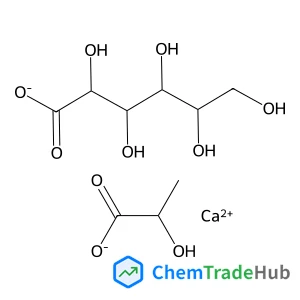
![Methyl 5-iodo-3-({[(2-methyl-2-propanyl)oxy]carbonyl}amino)-2-thiophenecarboxylate structure](https://static.chemtradehub.com/structs/100/1007171-35-8-177e.webp "Methyl 5-iodo-3-({[(2-methyl-2-propanyl)oxy]carbonyl}amino)-2-thiophenecarboxylate structure")
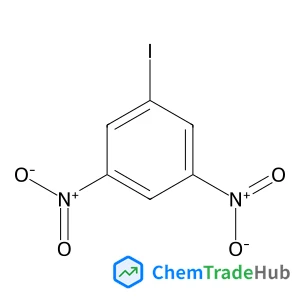
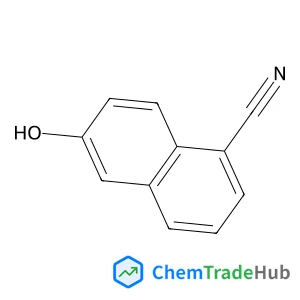
おすすめサプライヤー



免責事項
このページに表示される学術雑誌情報は、参考および研究目的のみを目的としています。当社は雑誌出版社とは提携しておらず、投稿の取り扱いも行っておりません。出版に関するお問い合わせは、各雑誌出版社に直接ご連絡ください。
表示されている情報に誤りがある場合は、support@chemtradehub.com までご連絡ください。迅速に確認し、対応いたします。