













Strategies and applications of generating spin polarization in organic semiconductors
文献情報
出版日
2023-06-12
DOI
10.1039/D3NH00101F
インパクトファクター
10.989
著者
Lidan Guo
原文を見る
要旨
The advent of spintronics has undoubtedly revolutionized data storage, processing, and sensing applications. Organic semiconductors (OSCs), characterized by long spin relaxation times (>μs) and abundant spin-dependent properties, have emerged as promising materials for advanced spintronic applications. To successfully implement spin-related functions in organic spintronic devices, the four fundamental processes of spin generation, transport, manipulation, and detection form the main building blocks and are commonly in demand. Thereinto, the effective generation of spin polarization in OSCs is a precondition, but in practice, this has not been an easy task. In this context, considerable efforts have been made on this topic, covering novel materials systems, spin-dependent theories, and device fabrication technologies. In this review, we underline recent advances in external spin injection and organic property-induced spin polarization, according to the distinction between the sources of spin polarization. We focused mainly on summarizing and discussing both the physical mechanism and representative research on spin generation in OSCs, especially for various spin injection methods, organic magnetic materials, the chiral-induced spin selectivity effect, and the spinterface effect. Finally, the challenges and prospects that allow this topic to continue to be dynamic were outlined.
関連文献
Manipulating the proton transfer process in molecular complexes: synthesis and spectroscopic studies
Sumit Kumar Panja, Nidhi Dwivedi, Satyen Saha
2016-07-18
Paper
DOI: 10.1039/C6CP03797F
Formic acid oxidation on platinum: a simple mechanistic study
Kathleen A. Schwarz, Ravishankar Sundararaman, Thomas P. Moffat, Thomas C. Allison
2015-07-15
Paper
DOI: 10.1039/C5CP03045E
Enhanced energy transfer efficiency and stability of europium β-diketonate complex in ionic liquid-based lyotropic liquid crystals
Sijing Yi, Jiao Wang, Xiao Chen
2015-07-13
Paper
DOI: 10.1039/C5CP03659C
Photochemical etiology of promising ancestors of the RNA nucleobases
M. M. Brister, M. Pollum, C. E. Crespo-Hernández
2016-02-17
Communication
DOI: 10.1039/C6CP00639F
Comparing the catalytic strategy of ATP hydrolysis in biomolecular motors
Stefan Fischer
2016-06-01
Perspective
DOI: 10.1039/C6CP01364C
Correction: Kinetics and mechanism of the reaction of perfluoro propyl vinyl ether (PPVE, C3F7OCHCH2) with OH: assessment of its fate in the atmosphere
D. Amedro, L. Vereecken, J. N. Crowley
2015-07-24
Correction
DOI: 10.1039/C5CP90133B
A ‘bottom up’, ab initio computational approach to understanding fundamental photophysical processes in nitrogen containing heterocycles, DNA bases and base pairs
Barbara Marchetti, Michael N. R. Ashfold, Wolfgang Domcke
2016-03-08
Perspective
DOI: 10.1039/C6CP00165C
Influence of PPH dendrimers' surface functions on the activation of human monocytes: a study of their interactions with pure lipid model systems
F. Ielasi, S. Fruchon, R. Poupot, M. Blanzat
2016-07-11
Paper
DOI: 10.1039/C6CP03536A
Free energy of solvation of carbon nanotubes in pyridinium-based ionic liquids
Vitaly V. Chaban, Eudes Eterno Fileti
2016-06-29
Paper
DOI: 10.1039/C6CP03497G
Electrostatically enhanced F⋯F interactions through hydrogen bonding, halogen bonding and metal coordination: an ab initio study
Antonio Bauzá, Antonio Frontera
2016-07-04
Paper
DOI: 10.1039/C6CP03862J
こちらもおすすめ
化合物よくある質問
1-{3-[5-(エチルカルボンイル)-2,4-ジメチル-1H-ピロロール-3-基]プロパニル}ピペリジン-4-カルボン酸について、適用される法規ガイドラインは何ですか?
この化合物はCAS番号1142209-81-1であり、GHS分類では corrosive (腐食性物質) と classified (分類物質) として指定され...
1142209-81-11-{3-[5-(Ethoxycarbo...
化合物よくある質問
2,2-二氟-1,3-ベンゾジオキサン-5-カルボキシlic酸とは何ですか?
2,2-二氟-1,3-ベンゾジオキサン-5-カルボキシlic酸は、CAS番号656-46-2の化合物で、化学式はC8H4F2O4です。この化合物は白色の結晶性粉...
656-46-22,2-Difluoro-1,3-ben...
化合物よくある質問
8-氯-4-色原酮の代替品はありますか?
8-氯-4-色原酮(CAS番号: 49701-11-3)の代替品には、他の色原酮類似物や、構造が似ている化合物があります。例えば、8-メチル-4-色原酮や、他の...
49701-11-38-Chloro-2,3-dihydro...
化合物よくある質問
エチル6,6-ジメチル-4,5,6,7-テトラヒドロ-1H-インドアゼー-3-カルボキシレートとは何ですか?
エチル6,6-ジメチル-4,5,6,7-テトラヒドロ-1H-インドアゼー-3-カルボキシレートは、CAS番号1233243-56-5を有する化合物です。これは有...
1233243-56-5Ethyl 6,6-dimethyl-4...
化合物よくある質問
4-叔丁基-6-氯-嘧啶に適用される法規ガイドラインは何ですか?
4-叔丁基-6-氯-嘧啶はCAS番号3435-24-3で、GHS分類では毒性物質とみなし、GHSの危険性分類が適用されます。REACH規則では登録が必要で、Eu...
3435-24-34-Tert-butyl-6-chlor...
化合物よくある質問
維库溴铵杂质Bはどのように合成されますか?
維库溴铵杂质Bは、アンドロステンデンから始まり、一連の合成反応、包括的な選択性と高い収率で合成されます。具体的には、ブロミド化、酸化、ジマーゼ反応、アミド化など...
50587-95-6(2beta,3alpha,5alpha...
化合物よくある質問
2-(4-氟苄基)-吡咯烷の物理化学的性質は何ですか?
CAS番号350017-04-8の2-(4-氟苄基)-吡咯烷は、結晶性の白色粉末です。分子量は199.17 g/molで、水に溶けにくいです。化学反応では比較的...
350017-04-82-(4-Fluorobenzyl)py...
化合物よくある質問
3-喹啉甲醛(2-チロール-8-エチル)は安全ですか?
3-喹啉甲醛(2-チロール-8-エチル)は一定の毒性を持つため、取扱には注意が必要です。使用する際は適切な防護具を着用し、密閉容器で保管・搬送し、直接的な接触を...
335196-05-92-Chloro-8-ethyl-3-q...
化合物よくある質問
エチル3-(ヒドロキシメチル)-1H-ピロール-2-カルボキシレートはどのように保存すればよいですか?
エチル3-(ヒドロキシメチル)-1H-ピロール-2-カルボキシレートは、室温(25℃)以下で保存し、直射日光を避け、乾燥した環境で保管することが推奨されます。ま...
75448-69-0Ethyl 3-(hydroxymeth...
119410-05-88-Chloro-11-(4-piper...
掲載誌
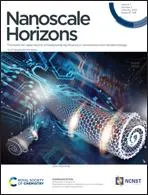
Nanoscale Horizons
CiteScore:
16.3
自己引用率:
3.4%
年間論文数:
138
Nanoscale Horizons is a leading journal for the publication of exceptionally high-quality, innovative nanoscience and nanotechnology. The journal places an emphasis on original research that demonstrates a new concept or a new way of thinking (a conceptual advance), rather than primarily reporting technological improvements. However, outstanding articles featuring truly breakthrough developments such as record performance alone may also be published in the journal. For work to be published it must be of significant general interest to our community-spanning readership. Topics covered in the journal include, but are not limited to: Synthesis of nanostructured and nanoscale materials Quantum materials 2D materials Layered materials Layered quantum materials Characterisation of functional nanoscale materials and bio-assemblies Properties of nanoscale materials Self-assembly and molecular organisation Complex hybrid nanostructures Nanocomposites, nanoparticles, nanocrystalline materials, and nanoclusters Nanotubes, molecular nanowires and nanocrystals Molecular nanoscience Nanocatalysis Theoretical modelling Single-molecules Plasmonics Nanoelectronics and molecular electronics Nanophotonics Nanochips, nanosensors, nanofluidics and nanofabrication Carbon-based nanoscale materials and devices Biomimetic materials Nanobiotechnology/bionanomaterials Nanomedicine Regulatory approaches and risk assessment
おすすめ化合物


![Bis[(1,2,3,4,5-eta)-1-(diphenylphosphino)cyclopentadienyl]iron structure](https://static.chemtradehub.com/structs/121/12150-46-8-ecd2.webp "Bis[(1,2,3,4,5-eta)-1-(diphenylphosphino)cyclopentadienyl]iron structure")
おすすめサプライヤー






免責事項
このページに表示される学術雑誌情報は、参考および研究目的のみを目的としています。当社は雑誌出版社とは提携しておらず、投稿の取り扱いも行っておりません。出版に関するお問い合わせは、各雑誌出版社に直接ご連絡ください。
表示されている情報に誤りがある場合は、support@chemtradehub.com までご連絡ください。迅速に確認し、対応いたします。