












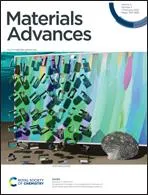
Post-lithiation: a way to control the ionic conductivity of solid-state thin film electrolyte
文献情報
出版日
2023-11-18
DOI
10.1039/D3MA00894K
インパクトファクター
0
著者
Jixi Chen, Alessandro Palliotto, Shinhee Yun, Dennis Valbjørn Christensen, Vincenzo Esposito, Nini Pryds
原文を見る
要旨
Ionic conductivity is pivotal for solid-state battery performance. While the garnet oxide electrolyte Li7La3Zr2O12 (LLZO) boasts high ionic conductivity due to its distinct crystal structure and lithium-ion mobility, lithium loss during fabrication hampers its potential. In this study, we introduce a method that merges synthesis optimization with a post-lithiation process, enhancing LLZO's ionic conductivity. This approach compensates lithium loss with a gas-phase diffusion process, which stabilizes the cubic LLZO phase and amplifies its ionic conductivity by more than three orders of magnitude compared to electrolytes without post-lithiation. Through our comprehensive experimental procedure, we have conclusively determined that the film deposited at 700 °C and subsequently annealed at 700 °C with LiOH exhibits the highest conductivity, with a notable value of 1.11 × 10⁻² S cm−1 at 200 °C. This is a significant boost compared to the as-deposited film (3.54 × 10⁻⁶ S cm−1 at 200 °C). Our findings present an additional approach to boosting lithium ion diffusion. The approach employed in this work has the potential to be applicable to films produced through other deposition methods, as it addresses the prevalent issue of lithium loss, a significant barrier to the utilization of lithium-rich thin films.
関連文献
Chemical fuel energy driving polymerization towards porous carbon nitride for energy storage application
Tatyana Jackson, Schindra Kumar Ray, Kiran Subedi, Tansir Ahamad, Bishnu Prasad Bastakoti
2023-12-19
Paper
DOI: 10.1039/D3NJ02100A
pH-Responsive nanoplatform synergistic gas/photothermal therapy to eliminate biofilms in poly(l-lactic acid) scaffolds
Yuqian Mao, Huihui Zhao, Lemin Zhang, Long Xiong, Zhisheng Long
2024-01-22
Paper
DOI: 10.1039/D3TB02600K
Design of manganese-based nanomaterials for pharmaceutical and biomedical applications
Ashok Kumar Jangid, Deep Pooja, Hitesh Kulhari
2023-10-20
Review Article
DOI: 10.1039/D3TB00779K
Potassium energy storage behavior of nickel–zinc co-doped Prussian blue analogs formed by a chelating-agent-assisted route and its application in a K+-proton hybrid-ion aqueous alkaline battery
Ruiqing Hua, Caiyun Xu, Dian Lin, Deyu Qu, Xi Li, Ruiming Zhang, Zhizhong Xie
2023-11-17
Paper
DOI: 10.1039/D3NJ04095J
A new Cu(ii) complex derived from the reaction between tris(2-aminoethyl)amine and Cu(i)-activated acetonitrile with potent anticancer activity against some cell lines and high affinity for the essential proteins of SARS-CoV-2
Farshid Hajibabaei, Sadegh Salehzadeh, Robert William Gable
2024-01-12
Paper
DOI: 10.1039/D3NJ04142E
PhNCO-enabled synthesis of secondary amides from N-(2-aminophenyl)benzamides
Karthick Govindan, Nian-Qi Chen, Alageswaran Jayaram
2023-12-06
Paper
DOI: 10.1039/D3NJ04995G
Mn-doped FeOOH modified g-C3N4 as a 3D tubular heterogeneous catalyst for photo-Fenton removal of organic pollutants
Liumi Deng, Meng Liao, Xuejing Wei, Zixuan Zou, Shaohua Chen, Hua Wang, Jiayue Chen
2023-12-19
Paper
DOI: 10.1039/D3NJ05134J
Electrochemical assembly of flexible PPy/Bi–Te alloy/PPy thermoelectric composite films with a sandwich-type structure
Cai-Yan Gao, Xin-Heng Fan, Xingbo Cao, Lian-Ming Yang
2023-12-12
Paper
DOI: 10.1039/D3NJ04785G
こちらもおすすめ
化合物よくある質問
N-乙酰基-L-精氨酸はどのように合成されますか?
N-乙酰基-L-精氨酸は、L-精氨酸をエタノールと酸化アクリル酸で反応させて得られます。この合成過程では、酸化アクリル酸がL-精氨酸のN-アミノグループに結合す...
155-84-0N~2~-Acetyl-L-argini...
化合物よくある質問
カウウェルパリミタートを含む廃棄物はどのように処理すべきですか?
カウウェルパリミタートの廃棄物は、化学廃棄物として適切に収集し、専門的な廃棄処理業者に委託します。処理には、有害物質の除去と環境への影響最小化が重要です。温度は...
81760-45-4Kahweol palmitate
化合物よくある質問
タテライル1,4,8,11-テトラエチルアセートの代替品はありますか?
タテライル1,4,8,11-テトラエチルアセートの代替品として、他のエチルエステル化合物や、有機窒素化合物が考えられます。ただし、代替品の選択は目的や使用条件に...
126320-57-8Tetraethyl 1,4,8,11-...
化合物よくある質問
異丁卡因を取り扱う際の実験室安全事項は何ですか?
異丁卡因は毒性があり、皮膚や目を刺激する可能性があります。作業中は保護目鏡、防護手袋、防護マスクを使用し、ドラフトチャンバーで扱うべきです。漏えいした場合、その...
94-14-4Isobutamben
化合物よくある質問
4-氯-2-丙基吡啶を取り扱う際の実験室安全事項は何ですか?
4-氯-2-丙基吡啶は有毒で、吸入や皮膚接触を避けることが重要です。PPEとしてゴーグル、マスク、長袖のガウン、手袋を使用し、ドラフトチャンバーを用いて操作しま...
93856-98-54-Chloro-2-propylpyr...
化合物よくある質問
9,10-脱水阿霉素について適用される法規ガイドラインは何ですか?
CAS番号80996-23-2の9,10-脱水阿霉素は、GHS分類においては第3類毒性物質に分類され、REACH規則においてはカテゴリー1の急性毒性物質とされて...
80996-23-29,10-Anhydroadriamyc...
化合物よくある質問
4-(3-溴苯基)噻唑-2-甲酸の物理化学的性質は何ですか?
4-(3-溴苯基)噻唑-2-甲酸の分子量は265.01です。この化合物は水に微溶です。反応性は中程度で、酸性やアルカリ性の条件下で分解する可能性があります。
808128-00-94-(3-Bromophenyl)-1,...
化合物よくある質問
3-(4-塩素フェニル)-3-オキセタニアミン塩酸塩はどの業界で使用されていますか?
3-(4-塩素フェニル)-3-オキセタニアミン塩酸塩は、医薬業界、ポリマー業界、センサー業界、半導体業界などで使用されています。この化合物は薬物開発の一部として...
1245782-61-93-(4-Chlorophenyl)-3...
化合物よくある質問
氮卓斯汀杂质Eを取り扱う際の実験室安全事項は何ですか?
氮卓斯汀杂质E(CAS番号: 20526-97-0)を扱う際は、ゴーグルとシールド付きの手袋を使用し、漏洩がある場合はドラフトチャンバーを使用して処理することを...
20526-97-03-(4-chlorobenzylide...
化合物よくある質問
デシシボチル-n-ブチルボルテゾミブはどのように保存すればよいですか?
デシシボチル-n-ブチルボルテゾミブは室温で保管し、直日光から遠ざけて密栓容器に保管することが推奨されます。
1104011-35-9Desisobutyl-n-butyl ...
掲載誌
おすすめ化合物
おすすめサプライヤー





免責事項
このページに表示される学術雑誌情報は、参考および研究目的のみを目的としています。当社は雑誌出版社とは提携しておらず、投稿の取り扱いも行っておりません。出版に関するお問い合わせは、各雑誌出版社に直接ご連絡ください。
表示されている情報に誤りがある場合は、support@chemtradehub.com までご連絡ください。迅速に確認し、対応いたします。