












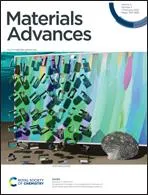
Cell surface functionalization with lysine ligand-containing copolymers for fibrinolytic activity
文献情報
出版日
2023-12-02
DOI
10.1039/D3MA00737E
インパクトファクター
0
著者
Shengjie Liu, Xingyu Heng, Wenjin Wang, He Yang, Wei Sun, Zhaoqiang Wu, Hong Chen
原文を見る
要旨
Although cell transplantation has achieved great success in the treatment of many intractable diseases, due to the effect of an instant blood-mediated inflammatory reaction (IBMIR), blood clots usually form on the surface of transplanted cells, resulting in a significant reduction in the survival of transplanted cells. Inspired by the fibrinolytic mechanism in human blood, this paper constructs lysine ligand-containing copolymer-functionalized cell surfaces for fibrinolytic activity. First, a copolymer (POLF) of oligoethylene glycol methacrylate (OEGMA), 6-amino-2-(2-methacylamido)-hexanoic acid (Lys) and fluorescein O-methacrylate (FluMA) was synthesized by reversible addition–fragmentation chain transfer (RAFT) copolymerization. Then, the copolymer POLF was modified onto the HeLa cell surface by codeposition with dopamine. An in vitro study showed that compared to unmodified HeLa cells, modified cells not only have good cell viability but can also resist fibrinogen adsorption and selectively bind plasminogen from plasma. More importantly, upon activation of plasminogen adsorbed to plasmin, the modified cells were able to rapidly lyse fibrin formed on their surface. This study offers a novel proof-of-concept for constructing transplanted cells with fibrinolytic activity.
関連文献
In situ forming, mechanically resilient hydrogels prepared from 4a-[PEG-b-PTMC-Ac] and thiolated chondroitin sulfate for nucleus pulposus cell delivery
Hossein Riahinezhad, Brian G. Amsden
2023-12-21
Paper
DOI: 10.1039/D3TB02574H
Ferrocene carboxylic acid-doped copper MOFs as a nanozyme with high peroxidase-mimicking activity for catalytic dye degradation
Hui Xie, Rongqiu Yan, Yu Zhang, Chenghong Lei
2023-12-26
Communication
DOI: 10.1039/D3NJ05327J
Hydrogen bond-dominated polybenzimidazole semi-interpenetrating network membranes for alkaline water electrolysis
Lihua Wang, Min He, Pingxia Zhang, Hao Li, Yanbin Yun, Tong Zhao
2023-11-03
Paper
DOI: 10.1039/D3TA05159E
Robust and self-lubricating polyvinyl alcohol tubes with a mucosa-like hierarchical architecture for endotracheal intubation
Tongrui Zhang, Kuo Gai, Ruyi Li, Yi Liang, Li Li, Junyu Chen, Min Nie
2024-01-17
Paper
DOI: 10.1039/D3TB02402D
Boosting photoelectrochemical water oxidation by sandwiching gold nanoparticles between BiVO4 and NiFeOOH
Hang Yin, Yanzhen Guo, Nan Zhang, Yuyang Wang, Shouren Zhang, Ruibin Jiang
2023-10-23
Paper
DOI: 10.1039/D3TA05483G
3D-printed palladium/activated carbon-based catalysts for the dehydrogenation of formic acid as a hydrogen carrier
Irene Diaz-Herrezuelo, Gonzalo Vega, Marina Navarro, Pilar Miranzo, M. Isabel Osendi, Jose A. Casas, Asuncion Quintanilla, Manuel Belmonte
2023-10-20
Paper
DOI: 10.1039/D3TA05644A
Assembly-fission synthesized fluorescent sulfur quantum dots combined with tyrosinase catalytic oxidation for selective detection of p-aminophenol in water samples
Ming Gao, Chang Bian, Hongjie Zhao, Huili Wang, Xuedong Wang
2023-12-24
Paper
DOI: 10.1039/D3NJ04152B
こちらもおすすめ
化合物よくある質問
N-乙酰基-L-精氨酸はどのように合成されますか?
N-乙酰基-L-精氨酸は、L-精氨酸をエタノールと酸化アクリル酸で反応させて得られます。この合成過程では、酸化アクリル酸がL-精氨酸のN-アミノグループに結合す...
155-84-0N~2~-Acetyl-L-argini...
化合物よくある質問
カウウェルパリミタートを含む廃棄物はどのように処理すべきですか?
カウウェルパリミタートの廃棄物は、化学廃棄物として適切に収集し、専門的な廃棄処理業者に委託します。処理には、有害物質の除去と環境への影響最小化が重要です。温度は...
81760-45-4Kahweol palmitate
化合物よくある質問
タテライル1,4,8,11-テトラエチルアセートの代替品はありますか?
タテライル1,4,8,11-テトラエチルアセートの代替品として、他のエチルエステル化合物や、有機窒素化合物が考えられます。ただし、代替品の選択は目的や使用条件に...
126320-57-8Tetraethyl 1,4,8,11-...
化合物よくある質問
異丁卡因を取り扱う際の実験室安全事項は何ですか?
異丁卡因は毒性があり、皮膚や目を刺激する可能性があります。作業中は保護目鏡、防護手袋、防護マスクを使用し、ドラフトチャンバーで扱うべきです。漏えいした場合、その...
94-14-4Isobutamben
化合物よくある質問
4-氯-2-丙基吡啶を取り扱う際の実験室安全事項は何ですか?
4-氯-2-丙基吡啶は有毒で、吸入や皮膚接触を避けることが重要です。PPEとしてゴーグル、マスク、長袖のガウン、手袋を使用し、ドラフトチャンバーを用いて操作しま...
93856-98-54-Chloro-2-propylpyr...
化合物よくある質問
9,10-脱水阿霉素について適用される法規ガイドラインは何ですか?
CAS番号80996-23-2の9,10-脱水阿霉素は、GHS分類においては第3類毒性物質に分類され、REACH規則においてはカテゴリー1の急性毒性物質とされて...
80996-23-29,10-Anhydroadriamyc...
化合物よくある質問
4-(3-溴苯基)噻唑-2-甲酸の物理化学的性質は何ですか?
4-(3-溴苯基)噻唑-2-甲酸の分子量は265.01です。この化合物は水に微溶です。反応性は中程度で、酸性やアルカリ性の条件下で分解する可能性があります。
808128-00-94-(3-Bromophenyl)-1,...
化合物よくある質問
3-(4-塩素フェニル)-3-オキセタニアミン塩酸塩はどの業界で使用されていますか?
3-(4-塩素フェニル)-3-オキセタニアミン塩酸塩は、医薬業界、ポリマー業界、センサー業界、半導体業界などで使用されています。この化合物は薬物開発の一部として...
1245782-61-93-(4-Chlorophenyl)-3...
化合物よくある質問
氮卓斯汀杂质Eを取り扱う際の実験室安全事項は何ですか?
氮卓斯汀杂质E(CAS番号: 20526-97-0)を扱う際は、ゴーグルとシールド付きの手袋を使用し、漏洩がある場合はドラフトチャンバーを使用して処理することを...
20526-97-03-(4-chlorobenzylide...
化合物よくある質問
デシシボチル-n-ブチルボルテゾミブはどのように保存すればよいですか?
デシシボチル-n-ブチルボルテゾミブは室温で保管し、直日光から遠ざけて密栓容器に保管することが推奨されます。
1104011-35-9Desisobutyl-n-butyl ...
掲載誌
おすすめ化合物
![Ethyl 2-[(3-bromo-4-pyridinyl)sulfanyl]-2-methylpropanoate structure](https://static.chemtradehub.com/structs/135/1352794-86-5-a8aa.webp "Ethyl 2-[(3-bromo-4-pyridinyl)sulfanyl]-2-methylpropanoate structure")
![(3aR,7R,7aR)-2,2-Diethyl-3a,6,7,7a-tetrahydro-7-[(methylsulfonyl)oxy]-1,3-benzodioxole-5-carboxylic Acid Ethyl Ester structure](https://static.chemtradehub.com/structs/204/204254-90-0-7172.webp "(3aR,7R,7aR)-2,2-Diethyl-3a,6,7,7a-tetrahydro-7-[(methylsulfonyl)oxy]-1,3-benzodioxole-5-carboxylic Acid Ethyl Ester structure")
おすすめサプライヤー






免責事項
このページに表示される学術雑誌情報は、参考および研究目的のみを目的としています。当社は雑誌出版社とは提携しておらず、投稿の取り扱いも行っておりません。出版に関するお問い合わせは、各雑誌出版社に直接ご連絡ください。
表示されている情報に誤りがある場合は、support@chemtradehub.com までご連絡ください。迅速に確認し、対応いたします。