












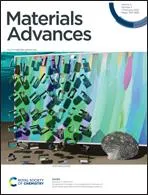
Ab initio study of uniaxial strain-induced thermoelectric property tuning of individual single-wall carbon nanotubes
文献情報
出版日
2023-10-26
DOI
10.1039/D3MA00713H
インパクトファクター
0
著者
Ahmed Zubair
原文を見る
要旨
Carbon nanotubes (CNT) have garnered significant importance as thermoelectric (TE) material due to their high TE performance owing to their inherent fascinating one-dimensional quantum confinement of charge carriers. Among various methods to tune and enhance TE properties, the impact of strain on the properties of CNT-based TE devices is rarely explored, though it is immanently present, specifically on multi-functional CNT fibers. In this study, we present the tunability and enhancement of electronic and TE properties of single-wall carbon nanotubes (SWCNTs) by strain engineering within the framework of density functional theory and Boltzmann transport theory. Semiconducting to metallic transition with a zigzag pattern of band gap (Eg) and Seebeck coefficient (S) variation was observed for uniaxial strain due to shifting of the Dirac points. Within the smaller range of strains, the Eg and S for the (10,0) SWCNT exhibited a positive correlation with tensile strain and demonstrated a negative correlation with compressive strain, while it showed a reverse trend for (11,0) SWCNT. In contrast, for (9,0) SWCNT, the Eg and S increased under both tensile and compressive strains. The SWCNTs exhibited a significant enhancement of thermoelectric transport properties while they underwent tensile and compressive strains. Applying uniaxial stress enhanced the Seebeck coefficient of SWCNTs to 1580 μV K−1. We achieved the enhancement of thermoelectric power factor as follows: 2.2 mW m−1 K−2 (−9%), 1.3 mW m−1 K−2 (−3%), 1.15 mW m−1 K−2 (−3%), and 1.24 mW m−1 K−2 (−9%) for (6,6), (9,0), (10,0), and (11,0) SWCNTs, respectively. The overall performance parameter thermoelectric figure of merit, zT was tuned up to 1.56 when the strain varied from −9% to +9%, a fewfold increment compared to its relaxed state. The optimum range of doping for SWCNTs was found to be within 5 × 1019 cm−3– 1 × 1021 cm−3 to achieve the best thermoelectric power factor and zT. The insights gained from this study will be indispensable for diverse applications in the solid-state and especially in fiber-based wearable nanoelectronic devices such as strain sensors, thermoelectric energy harvesters, and thermoelectric coolers.
関連文献
A new era in cancer treatment: harnessing ZIF-8 nanoparticles for PD-1 inhibitor delivery
Farangis Rastin, Mahsa Akbari Oryani, Sonia Iranpour, Alireza Hashemzadeh
2023-12-11
Review Article
DOI: 10.1039/D3TB02471G
Difunctionalization of alkenes proceeding with radical 1,2-alkynyl migration in batch and continuous-flow modes
Ziren Mao, Yiliang Zhou, Jingming Zhang, Chengkou Liu, Chang-Sheng Wang, Xiaobing Yang, Hong Qin, Zheng Fang
2023-12-02
Paper
DOI: 10.1039/D3NJ05081E
Click chemistry-based synthesis of new 1,2,3-triazolo-benzoquinoline-3-carbonitriles: anticancer screening and DFT studies
Tamer El Malah, Hanaa Farag, Hanem M. Awad, Hanan A. Soliman
2024-01-03
Paper
DOI: 10.1039/D3NJ05003C
Silver-integrated cobalt hydroxide hybrid nanostructured materials for improved electrocatalytic oxygen evolution reaction
Gunasekaran Arunkumar, Pandi Muthukumar, Govindan Deviga, Mariappan Mariappan, Savarimuthu Philip Anthony
2023-12-21
Paper
DOI: 10.1039/D3NJ05268K
Copper(ii)-infused porphyrin MOF: maximum scavenging GSH for enhanced photodynamic disruption of bacterial biofilm
Yaoxin Zhang, Linpei Li, Hui Liu, Haixia Zhang, Menghao Wei, Yanwei Yang, Mengnan Wu, Zhaowei Chen, Faming Wang, Qiang Wu, Jiahua Shi
2024-01-02
Paper
DOI: 10.1039/D3TB02577B
A review of nanomaterials for biosensing applications
Lei Li, Tianshu Wang, Yuting Zhong, Ruyi Li, Wei Deng, Xuanyu Xiao, Yuanyuan Xu, Jieyu Zhang, Xuefeng Hu, Yunbing Wang
2023-12-21
Review Article
DOI: 10.1039/D3TB02648E
High-performance asparagine-modified graphene oxide membranes for organic dyes and heavy metal ion separation
Ashique Hussain Jatoi, Ahmed Nadeem, Shah Nawaz Phulpoto, Muzaffar Iqbal, Ayaz Ali Memon, Khalid Hussain Thebo
2023-12-15
Paper
DOI: 10.1039/D3NJ04552H
Ostwald ripening mechanism-derived MnOOH induces lattice oxygen escape for efficient aqueous MnO2–Zn batteries
Chenchen Qin, Chi Chen, Chuankun Zhang, Xin Chen, Yi Gan, Jingying Li, Jia Yao, Xin Liu, Junyan Cheng, Dan Sun
2023-10-24
Paper
DOI: 10.1039/D3TA05364D
Constructing carbon nanotube-optimized hollow Ti3C2 MXene hierarchical conductive networks for robust lithium–sulfur batteries
Ran Liu, Shengjun Zhai, Zimujun Ye, Mengzhu Liu, Yang Xu, Changwen Li, Xianbao Wang, Tao Mei
2023-10-23
Paper
DOI: 10.1039/D3TA04677J
こちらもおすすめ
化合物よくある質問
N-乙酰基-L-精氨酸はどのように合成されますか?
N-乙酰基-L-精氨酸は、L-精氨酸をエタノールと酸化アクリル酸で反応させて得られます。この合成過程では、酸化アクリル酸がL-精氨酸のN-アミノグループに結合す...
155-84-0N~2~-Acetyl-L-argini...
化合物よくある質問
カウウェルパリミタートを含む廃棄物はどのように処理すべきですか?
カウウェルパリミタートの廃棄物は、化学廃棄物として適切に収集し、専門的な廃棄処理業者に委託します。処理には、有害物質の除去と環境への影響最小化が重要です。温度は...
81760-45-4Kahweol palmitate
化合物よくある質問
タテライル1,4,8,11-テトラエチルアセートの代替品はありますか?
タテライル1,4,8,11-テトラエチルアセートの代替品として、他のエチルエステル化合物や、有機窒素化合物が考えられます。ただし、代替品の選択は目的や使用条件に...
126320-57-8Tetraethyl 1,4,8,11-...
化合物よくある質問
異丁卡因を取り扱う際の実験室安全事項は何ですか?
異丁卡因は毒性があり、皮膚や目を刺激する可能性があります。作業中は保護目鏡、防護手袋、防護マスクを使用し、ドラフトチャンバーで扱うべきです。漏えいした場合、その...
94-14-4Isobutamben
化合物よくある質問
4-氯-2-丙基吡啶を取り扱う際の実験室安全事項は何ですか?
4-氯-2-丙基吡啶は有毒で、吸入や皮膚接触を避けることが重要です。PPEとしてゴーグル、マスク、長袖のガウン、手袋を使用し、ドラフトチャンバーを用いて操作しま...
93856-98-54-Chloro-2-propylpyr...
化合物よくある質問
9,10-脱水阿霉素について適用される法規ガイドラインは何ですか?
CAS番号80996-23-2の9,10-脱水阿霉素は、GHS分類においては第3類毒性物質に分類され、REACH規則においてはカテゴリー1の急性毒性物質とされて...
80996-23-29,10-Anhydroadriamyc...
化合物よくある質問
4-(3-溴苯基)噻唑-2-甲酸の物理化学的性質は何ですか?
4-(3-溴苯基)噻唑-2-甲酸の分子量は265.01です。この化合物は水に微溶です。反応性は中程度で、酸性やアルカリ性の条件下で分解する可能性があります。
808128-00-94-(3-Bromophenyl)-1,...
化合物よくある質問
3-(4-塩素フェニル)-3-オキセタニアミン塩酸塩はどの業界で使用されていますか?
3-(4-塩素フェニル)-3-オキセタニアミン塩酸塩は、医薬業界、ポリマー業界、センサー業界、半導体業界などで使用されています。この化合物は薬物開発の一部として...
1245782-61-93-(4-Chlorophenyl)-3...
化合物よくある質問
氮卓斯汀杂质Eを取り扱う際の実験室安全事項は何ですか?
氮卓斯汀杂质E(CAS番号: 20526-97-0)を扱う際は、ゴーグルとシールド付きの手袋を使用し、漏洩がある場合はドラフトチャンバーを使用して処理することを...
20526-97-03-(4-chlorobenzylide...
化合物よくある質問
デシシボチル-n-ブチルボルテゾミブはどのように保存すればよいですか?
デシシボチル-n-ブチルボルテゾミブは室温で保管し、直日光から遠ざけて密栓容器に保管することが推奨されます。
1104011-35-9Desisobutyl-n-butyl ...
掲載誌
おすすめ化合物
![6-Nitro-2-(4-nitrophenyl)imidazo[1,2-a]pyridine structure](https://static.chemtradehub.com/structs/118/118000-57-0-cb82.webp "6-Nitro-2-(4-nitrophenyl)imidazo[1,2-a]pyridine structure")
おすすめサプライヤー






免責事項
このページに表示される学術雑誌情報は、参考および研究目的のみを目的としています。当社は雑誌出版社とは提携しておらず、投稿の取り扱いも行っておりません。出版に関するお問い合わせは、各雑誌出版社に直接ご連絡ください。
表示されている情報に誤りがある場合は、support@chemtradehub.com までご連絡ください。迅速に確認し、対応いたします。