


![(4-Methyl-1H-benzo[d]imidazol-2-yl)methanamine structure](https://static.chemtradehub.com/structs/933/933756-31-1-7b0b.webp "(4-Methyl-1H-benzo[d]imidazol-2-yl)methanamine structure")
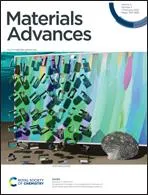
Advances in graphene-based nanoplatforms and their application in Parkinson's disease
文献情報
出版日
2023-11-07
DOI
10.1039/D3MA00623A
インパクトファクター
0
著者
Tuba Oz, Małgorzata Kujawska
原文を見る
要旨
Parkinson's disease (PD) is a progressive, complex, and chronic neurodegenerative disorder that remains challenging to cure and diagnose in the early stage. The neuropathological hallmark of PD are Lewy bodies, which are intracellular protein aggregates composed primarily of α-synuclein (α-syn). The unmet therapeutic and diagnostic needs are projected to be managed by exploring alternative strategies. In this direction, research on using tailored graphene-based nanomaterials (GBNs) is gaining attention due to their capability to affect pathogenic forms of α-syn. In this review, we discuss computational and experimental approaches and look at the benefits of GBNs to target mechanisms contributed to PD neurodegeneration, including α-syn aggregation, autophagy, inflammation, and oxidative stress, for the development of an entirely new class of antiparkinsonian therapy. We overview advanced GBN-based nanomedicines, regenerative medicine, and biosensors supporting the application of GBNs in PD management. Moreover, this review highlights the biocompatibility and safety aspects of emergent GBNs. Although GBNs represent a new and promising approach to PD treatment, as of now, it is limited to computational and early-stage experimental studies, as carefully discussed in this article.
おすすめジャーナル

Current Opinion in Colloid & Interface Science

Nature Medicine

Current Opinion in Solid State & Materials Science

Acta Materialia

Russian Journal of General Chemistry

Organic Process Research & Development

Journal of Saudi Chemical Society

Drug Discovery Today

Russian Journal of Organic Chemistry

Chemical Communications
関連文献
Correction: Energy efficiency: a critically important but neglected factor in battery research
Ali Eftekhari
2020-01-02
Correction
DOI: 10.1039/C9SE90068C
Rational synthesis of Pt-based dandelion-like yolk–shell nanoparticles with enhanced oxygen reduction properties
Chunjie Li, Shuli Yin, Hongjie Yu, Ziqiang Wang, You Xu, Xiaonian Li, Liang Wang, Hongjing Wang
2019-09-09
Paper
DOI: 10.1039/C9SE00618D
Nanoscale mapping of newly-synthesised phospholipid molecules in a biological cell using tip-enhanced Raman spectroscopy
Naresh Kumar, Marek M. Drozdz, Haibo Jiang, Daniela M. Santos, David J. Vaux
2017-02-08
Communication
DOI: 10.1039/C6CC10226C
The “excited state C–C bond cleavage–luminescence” phenomenon of a biphenyl-substituted methylenecyclopropane triggered by intermolecular energy transfer from triplet benzophenone‡
Taiki Kido
2014-09-16
Communication
DOI: 10.1039/C4CC06847E
Solvothermal synthesis of cobalt nickel layered double hydroxides with a three-dimensional nano-petal structure for high-performance supercapacitors
Hailiang Chu, Ying Zhu, Tingting Fang, Junqiang Hua, Shujun Qiu, Haidong Liu, Liyuan Qin, Qiuhong Wei, Yongjin Zou, Cuili Xiang, Fen Xu, Lixian Sun
2019-10-24
Paper
DOI: 10.1039/C9SE00712A
An advanced and highly efficient Ce assisted NiFe-LDH electrocatalyst for overall water splitting
Harsharaj S. Jadhav, Animesh Roy, Bezawit Z. Desalegan, Jeong Gil Seo
2019-10-16
Paper
DOI: 10.1039/C9SE00700H
Multicomponent decarboxylative allylations
Yamuna Ariyarathna, Jon A. Tunge
2014-09-25
Communication
DOI: 10.1039/C4CC07253G
NiMoS on alumina-USY zeolites for hydrotreating lignin dimers: effect of support acidity and cleavage of C–C bonds
Prakhar Arora, Houman Ojagh, You Wayne Cheah, Louise Olsson, Derek Creaser
2019-10-08
Paper
DOI: 10.1039/C9SE00507B
Exploiting coordination geometry to selectively predict the σ-donor and π-acceptor abilities of ligands: a back-and-forth journey between electronic properties and spectroscopy
Marco Fusè, Isabella Rimoldi, Giorgio Facchetti, Sergio Rampino, Vincenzo Barone
2018-02-13
Communication
DOI: 10.1039/C7CC09627E
こちらもおすすめ
化合物よくある質問
オステニ二甲磺酸塩に適用される法規ガイドラインは何ですか?
オステニ二甲磺酸塩は、GHS分類に基づき corrosive 物質として分類されます。REACH規則では、該当物質の登録が要求される可能性があります。また、FD...
2070014-82-1N-(2-{[2-(Dimethylam...
化合物よくある質問
環丁基肼盐酸盐は安全ですか?
環丁基肼盐酸盐は毒性があり、吸入や皮膚接触は有害です。使用時の安全対策として、密閉システムを使用し、適切な排気設備を備えた場所で作業することが推奨されます。
1156980-49-2Cyclobutylhydrazine ...
化合物よくある質問
N-(4-パリドン基ソニルフェニル)硫代イソシアネートを取り扱う際の実験室安全事項は何ですか?
N-(4-パリドン基ソニルフェニル)硫代イソシアネートは高毒性で、皮膚や吸入による毒性があります。取り扱う際は防毒マスク、保護用手袋、保護眼鏡などのPPEを着用...
7356-55-01-[(4-Isothiocyanato...
化合物よくある質問
5-ヒドロキシ-1,3-ジヒドロ-2H-インドン-2-酮の物理化学的性質は何ですか?
CAS番号3416-18-0の5-ヒドロキシ-1,3-ジヒドロ-2H-インドン-2-酮は、結晶性の白色粉末です。分子量は228.25であり、 aqueous m...
3416-18-05-Hydroxy-1,3-dihydr...
化合物よくある質問
O-苄基-D-丝氨醇はどのように合成されますか?
O-苄基-D-丝氨醇は、D-アミノ酸とベンゼン環の経由で合成されます。触媒としてジメチルアミノピリジンが使用され、選択性は高いです。一般的な収率は約90%です。
58577-88-1(s)-2-Amino-3-benzyl...
化合物よくある質問
ナトリウム3-ヒドロキシbutano酸とは何ですか?
ナトリウム3-ヒドロキシbutano酸は、CAS番号13613-65-5で登録されている化合物です。この化合物は、(3R)-3-ヒドロキシbutano酸とナトリ...
13613-65-5sodium;(3R)-3-hydrox...
化合物よくある質問
1-(二苯甲基)-4-甲基ベンゼンの物理化学的性質は何ですか?
CAS番号603-37-2の1-(二苯甲基)-4-甲基ベンゼンは、結晶性の固体で、分子量は244.28であり、水中的には微溶です。この化合物は有機反応において中...
603-37-21-(Diphenylmethyl)-4...
化合物よくある質問
ネアミン塩酸塩の物理化学的性質は何ですか?
ネアミン塩酸塩の分子量は321.19であり、結晶性の白色粉末です。この化合物は水に溶けやすく、pHが低くなると不溶性になります。反応活性は高く、水溶液中の酸化還...
15446-43-2NEAMINE HYDROCHLORID...
化合物よくある質問
偶氮二甲酰二哌啶の主な用途は何ですか?
偶氮二甲酰二哌啶は、医薬品、染料、高 Então 剤、触媒、溶媒、量論試薬など、様々な分野で使用されています。特に、高 Enough 反応において、グリコール酸...
10465-81-3(E)-1,2-Diazenediylb...
664969-54-44-[(2E)-3-Phenyl-2-p...
掲載誌
おすすめ化合物
![[3-Fluoro-4-(1-pyrrolidinylcarbonyl)phenyl]boronic acid structure](https://static.chemtradehub.com/structs/874/874289-09-5-e3d4.webp "[3-Fluoro-4-(1-pyrrolidinylcarbonyl)phenyl]boronic acid structure")
おすすめサプライヤー



免責事項
このページに表示される学術雑誌情報は、参考および研究目的のみを目的としています。当社は雑誌出版社とは提携しておらず、投稿の取り扱いも行っておりません。出版に関するお問い合わせは、各雑誌出版社に直接ご連絡ください。
表示されている情報に誤りがある場合は、support@chemtradehub.com までご連絡ください。迅速に確認し、対応いたします。