












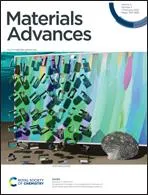
The state of understanding of the electrochemical behaviours of a valve-regulated lead–acid battery comprising manganese dioxide-impregnated gel polymer electrolyte
文献情報
出版日
2023-10-16
DOI
10.1039/D3MA00563A
インパクトファクター
0
著者
Bipin S. Chikkatti, Nagaraj R. Banapurmath
原文を見る
要旨
Gel electrolyte plays a vital role in the valve-regulated lead acid battery. To address this, we formulate a gel polymer electrolyte containing poly(vinyl alcohol) as the base matrix and manganese dioxide as an additive. The addition of manganese dioxide into poly(vinyl alcohol) increases the ionic conductivity of the gel. Chemical interaction between poly(vinyl alcohol) and manganese dioxide is confirmed by Fourier transform infrared spectroscopy. Electrochemical characterisations such as cyclic voltammetry, electrochemical impedance spectroscopy and potentiodynamic polarisation suggest that 3 wt% manganese dioxide in the poly(vinyl alcohol) gel system displays better electrochemical performance. The galvanostatic charge–discharge technique reveals that the battery device with an optimised gel system showed the highest discharge capacity of 9.080 μA h at a current density of 87.5 μA cm−2 and 81% discharge capacity after 500 steady cycles.
関連文献
Advances in reparative materials for infectious bone defects and their applications in maxillofacial regions
Ziyi Han, Jingdi Xiong, Xiaohan Jin, Qinyue Dai, Mingyue Han, Hongkun Wu, Jiaojiao Yang, Haiqin Tang, Libang He
2023-12-05
Review Article
DOI: 10.1039/D3TB02069J
Gd doped LaFeCuO3 perovskites for enhanced olefin selectivity in CO2 hydrogenation
Lihai Ma, Wenlong Song, Yaqin Xing, Kangzhou Wang, Xinhua Gao, Qingxiang Ma, Jianli Zhang, Jingjing Ma, Qingjie Guo
2023-12-05
Paper
DOI: 10.1039/D3NJ04905A
High-performance asparagine-modified graphene oxide membranes for organic dyes and heavy metal ion separation
Ashique Hussain Jatoi, Ahmed Nadeem, Shah Nawaz Phulpoto, Muzaffar Iqbal, Ayaz Ali Memon, Khalid Hussain Thebo
2023-12-15
Paper
DOI: 10.1039/D3NJ04552H
Design of manganese-based nanomaterials for pharmaceutical and biomedical applications
Ashok Kumar Jangid, Deep Pooja, Hitesh Kulhari
2023-10-20
Review Article
DOI: 10.1039/D3TB00779K
Near-infrared light-actuated on-demand botanicals release and hyperthermia by an antibiotic-free polysaccharide-based hydrogel dressing for the synergistic treatment of wound infections
Shuwen Sun, Wenbo Lin, Lu Yang, Chenhao Zhang
2024-01-03
Paper
DOI: 10.1039/D3TB02714G
Superamphiphobic concrete with anti-icing properties
Siyu Zhang
2023-12-20
Communication
DOI: 10.1039/D3NJ04928K
Ferrocene carboxylic acid-doped copper MOFs as a nanozyme with high peroxidase-mimicking activity for catalytic dye degradation
Hui Xie, Rongqiu Yan, Yu Zhang, Chenghong Lei
2023-12-26
Communication
DOI: 10.1039/D3NJ05327J
A new Cu(ii) complex derived from the reaction between tris(2-aminoethyl)amine and Cu(i)-activated acetonitrile with potent anticancer activity against some cell lines and high affinity for the essential proteins of SARS-CoV-2
Farshid Hajibabaei, Sadegh Salehzadeh, Robert William Gable
2024-01-12
Paper
DOI: 10.1039/D3NJ04142E
(Co,Mn)3O4-doped carbon nanotube composite as a bifunctional electrocatalyst for aluminum–air batteries
Xi Wang, Zhao Li, Lei Liu, Jiuqing Hu, Haobo Shen, Rongrong Li, Zhiqiang Geng, Zunlong Jin, Changliang Wang
2023-12-20
Paper
DOI: 10.1039/D3NJ05117J
Electrode-free flexible batteries enabled by electro-deposition of both Zn and MnO2 from electrolytes
Shiqiang Luo, Shiwei Liu, Guoshen Yang, Chuanlong Liu, Jiazhen Wu, Pritesh Hiralal, Zanxiang Nie, Gehan A. J. Amaratunga, Hang Zhou
2023-12-29
Communication
DOI: 10.1039/D3NJ04827F
こちらもおすすめ
化合物よくある質問
N-乙酰基-L-精氨酸はどのように合成されますか?
N-乙酰基-L-精氨酸は、L-精氨酸をエタノールと酸化アクリル酸で反応させて得られます。この合成過程では、酸化アクリル酸がL-精氨酸のN-アミノグループに結合す...
155-84-0N~2~-Acetyl-L-argini...
化合物よくある質問
カウウェルパリミタートを含む廃棄物はどのように処理すべきですか?
カウウェルパリミタートの廃棄物は、化学廃棄物として適切に収集し、専門的な廃棄処理業者に委託します。処理には、有害物質の除去と環境への影響最小化が重要です。温度は...
81760-45-4Kahweol palmitate
化合物よくある質問
タテライル1,4,8,11-テトラエチルアセートの代替品はありますか?
タテライル1,4,8,11-テトラエチルアセートの代替品として、他のエチルエステル化合物や、有機窒素化合物が考えられます。ただし、代替品の選択は目的や使用条件に...
126320-57-8Tetraethyl 1,4,8,11-...
化合物よくある質問
異丁卡因を取り扱う際の実験室安全事項は何ですか?
異丁卡因は毒性があり、皮膚や目を刺激する可能性があります。作業中は保護目鏡、防護手袋、防護マスクを使用し、ドラフトチャンバーで扱うべきです。漏えいした場合、その...
94-14-4Isobutamben
化合物よくある質問
4-氯-2-丙基吡啶を取り扱う際の実験室安全事項は何ですか?
4-氯-2-丙基吡啶は有毒で、吸入や皮膚接触を避けることが重要です。PPEとしてゴーグル、マスク、長袖のガウン、手袋を使用し、ドラフトチャンバーを用いて操作しま...
93856-98-54-Chloro-2-propylpyr...
化合物よくある質問
9,10-脱水阿霉素について適用される法規ガイドラインは何ですか?
CAS番号80996-23-2の9,10-脱水阿霉素は、GHS分類においては第3類毒性物質に分類され、REACH規則においてはカテゴリー1の急性毒性物質とされて...
80996-23-29,10-Anhydroadriamyc...
化合物よくある質問
4-(3-溴苯基)噻唑-2-甲酸の物理化学的性質は何ですか?
4-(3-溴苯基)噻唑-2-甲酸の分子量は265.01です。この化合物は水に微溶です。反応性は中程度で、酸性やアルカリ性の条件下で分解する可能性があります。
808128-00-94-(3-Bromophenyl)-1,...
化合物よくある質問
3-(4-塩素フェニル)-3-オキセタニアミン塩酸塩はどの業界で使用されていますか?
3-(4-塩素フェニル)-3-オキセタニアミン塩酸塩は、医薬業界、ポリマー業界、センサー業界、半導体業界などで使用されています。この化合物は薬物開発の一部として...
1245782-61-93-(4-Chlorophenyl)-3...
化合物よくある質問
氮卓斯汀杂质Eを取り扱う際の実験室安全事項は何ですか?
氮卓斯汀杂质E(CAS番号: 20526-97-0)を扱う際は、ゴーグルとシールド付きの手袋を使用し、漏洩がある場合はドラフトチャンバーを使用して処理することを...
20526-97-03-(4-chlorobenzylide...
化合物よくある質問
デシシボチル-n-ブチルボルテゾミブはどのように保存すればよいですか?
デシシボチル-n-ブチルボルテゾミブは室温で保管し、直日光から遠ざけて密栓容器に保管することが推奨されます。
1104011-35-9Desisobutyl-n-butyl ...
掲載誌
おすすめ化合物
![6-[2-(Trifluoromethoxy)phenyl]-2-pyridinecarboxylic acid structure](https://static.chemtradehub.com/structs/887/887983-48-4-f6ac.webp "6-[2-(Trifluoromethoxy)phenyl]-2-pyridinecarboxylic acid structure")
![7-Amino-5-methyl-5,7-dihydro-6H-dibenzo[b,d]azepin-6-one hydrochloride (1:1) structure](https://static.chemtradehub.com/structs/209/209984-32-7-9912.webp "7-Amino-5-methyl-5,7-dihydro-6H-dibenzo[b,d]azepin-6-one hydrochloride (1:1) structure")
7-Amino-5-methyl-5,7-dihydro-6H-dibenzo[b,d]azepin-6-one hydrochloride (1:1)
CAS番号:
209984-32-7
分子式:
C15H15ClN2O
おすすめサプライヤー







免責事項
このページに表示される学術雑誌情報は、参考および研究目的のみを目的としています。当社は雑誌出版社とは提携しておらず、投稿の取り扱いも行っておりません。出版に関するお問い合わせは、各雑誌出版社に直接ご連絡ください。
表示されている情報に誤りがある場合は、support@chemtradehub.com までご連絡ください。迅速に確認し、対応いたします。