












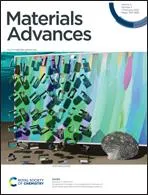
From waste to energy: luminescent solar concentrators based on carbon dots derived from surgical facemasks
文献情報
出版日
2023-09-20
DOI
10.1039/D3MA00507K
インパクトファクター
0
著者
Antonino Arrigo, Ambra M. Cancelliere, Maurilio Galletta, Antonio Burtone, Giovanni Lanteri, Francesco Nastasi, Fausto Puntoriero
原文を見る
要旨
The enormous increase in the consumption of personal protection equipment, such as facemasks, mainly related to the COVID-19 pandemic, has shone light on the metric tons of plastic waste that are released into the oceans, with dramatic environmental concerns. Here, we report on the preparation of carbon dots (C-dots) following an environmentally friendly synthetic strategy using surgical facemasks as the starting material. Such C-dots are highly photostable and luminescent and were used to prepare luminescent solar concentrators exhibiting – once connected to silicon photovoltaic panels – a remarkable solar-to-energy conversion of 6.1%. Our results could suggest a way both to alleviate the serious environmental problem and to produce low-cost materials for solar energy conversion purposes.
関連文献
Mastering a biphasic single-reactor process for direct conversion of glycerol into liquid hydrocarbon fuels
V. V. Ordomsky, A. Y. Khodakov
2014-01-14
Communication
DOI: 10.1039/C3GC42319K
Journey on greener pathways: from the use of alternate energy inputs and benign reaction media to sustainable applications of nano-catalysts in synthesis and environmental remediation
2014-01-17
Perspective
DOI: 10.1039/C3GC42640H
Cobalt-modified molybdenum carbide as an efficient catalyst for chemoselective reduction of aromatic nitro compounds
Zhongkui Zhao, Hongling Yang, Yu Li, Xinwen Guo
2013-11-08
Paper
DOI: 10.1039/C3GC42049C
Catalyst-free chemo-/regio-/stereo-selective amination of alk-3-ynones. Synthesis of 1,5-benzodiazepines and 3-amino-2-alkenones
Agnes Solan, Bilal Nişanci, Miranda Belcher, Jonathon Young, Christian Schäfer, Kraig A. Wheeler, Béla Török, Roman Dembinski
2013-12-19
Communication
DOI: 10.1039/C3GC41898G
Cu(OAc)2-catalyzed remote benzylic C(sp3)–H oxyfunctionalization for CO formation directed by the hindered para-hydroxyl group with ambient air as the terminal oxidant under ligand- and additive-free conditions
Jian-An Jiang, Cheng Chen, Jian-Gang Huang, Hong-Wei Liu, Song Cao, Ya-Fei Ji
2013-10-11
Paper
DOI: 10.1039/C3GC41946K
Carbonylation in microflow: close encounters of CO and reactive species
Takahide Fukuyama, Takenori Totoki, Ilhyong Ryu
2013-12-13
Critical Review
DOI: 10.1039/C3GC41789A
Regioselective synthesis of renewable bisphenols from 2,3-pentanedione and their application as plasticizers
Wouter Schutyser, Steven-Friso Koelewijn, Michiel Dusselier, Joice Thomas, Feng Yu, Maria Josefina Carbone, Mario Smet, Peter Van Puyvelde, Wim Dehaen, Bert F. Sels
2014-02-24
Paper
DOI: 10.1039/C4GC00250D
Selective production of cyclohexanol and methanol from guaiacol over Ru catalyst combined with MgO
Yoshinao Nakagawa, Momoko Ishikawa, Masazumi Tamura, Keiichi Tomishige
2014-01-07
Paper
DOI: 10.1039/C3GC42322K
Cr-MIL-101 encapsulated Keggin phosphotungstic acid as active nanomaterial for catalysing the alcoholysis of styrene oxide
Lik H. Wee, Francesca Bonino, Carlo Lamberti, Silvia Bordiga, Johan A. Martens
2013-11-22
Paper
DOI: 10.1039/C3GC41988F
こちらもおすすめ
化合物よくある質問
4-アミノフェノール酸ナトリウム水和物とは何ですか?
4-アミノフェノール酸ナトリウム水和物は、CAS番号206557-08-6の化合物で、4-アミノフェノールとナトリウムが結合した塩と水和物です。この化合物は、白...
206557-08-64-Aminobenzoic acid ...
化合物よくある質問
Methyl 3-methyl-N-{[(2-methyl-2-propanyl)oxy]carbonyl}-L-histidinateの代替品はありますか?
この化合物は特定の合成プロセスに使用される可能性がありますが、代替品として、他の类似的な化合物、例えばMethyl 3-methyl-N-{[(2-methyl...
72212-51-2Methyl 3-methyl-N-{[...
化合物よくある質問
4-Boc-2-哌嗪甲酸の市場動向や研究トレンドはどうですか?
4-Boc-2-哌嗪甲酸は、薬品開発や合成化学分野で広く使用されており、その需要は継続的に推移しています。特に、新薬開発における合成化学分野での需要が高まってい...
192330-11-3(2R)-4-[(tert-butoxy...
化合物よくある質問
4,4'-二羟甲基联苯の物理化学的性質は何ですか?
4,4'-二羟甲基联苯のCAS番号は1667-12-5です。この化合物は白色の結晶粉末で、分子量は154.20です。水にわずかに溶けますが、アルコールや有機溶媒...
1667-12-54,4'-Biphenyldiyldim...
化合物よくある質問
5-甲硫基戊腈はどの業界で使用されていますか?
5-甲硫基戊腈は医薬品産業で使用される可能性があります。また、ポリマー合成の触媒として、センサー製造の一部として、半導体製造のプロセス改善に使用される可能性があ...
59121-25-45-(Methylsulfanyl)pe...
化合物よくある質問
CAS番号1311961-50-8の化合物はどのように合成されますか?
この化合物は、1-abieta-8,11,13-trien-19-イルと6'-メトキシシンコナナン-9-基を含有する窒素含有化合物から合成されます。一般的な合成...
1311961-50-81-Abieta-8,11,13-tri...
化合物よくある質問
6-ブロモベンジジミダゾール-2-カルビルデオキシドはどのように保存すればよいですか?
6-ブロモベンジジミダゾール-2-カルビルデオキシドは、避光・乾燥した容器(密閉容器)で-20℃~4℃の低温で保存してください。高温や直射日光、湿気は避けてくだ...
885280-26-25-Bromo-1H-benzimida...
化合物よくある質問
Boc-N-甲基氨甲环酸とは何ですか?
621-65-8のCAS番号を持つBoc-N-甲基氨甲环酸は、化学式C7H13NO5を有する化合物です。この化合物は白色の結晶性粉末で、吸湿性があります。
621-65-83-Hydroxy-1,2-propan...
化合物よくある質問
乙基三氟硼酸钾はどのように合成されますか?
乙基三氟硼酸钾は、トリフLUオール酸カリウムとエチルブロミドを反応させて合成されます。この反応は高い選択性と収率を持ち、触媒を用いることで効率的に進行します。
882871-21-8Potassium ethyltrifl...
化合物よくある質問
2-フロウロ-5-クロロ-4-アミノフェノールはどのように保存すればよいですか?
2-フロウロ-5-クロロ-4-アミノフェノールは、直射日光を避けて冷却された暗所で保存し、密閉容器に保管してください。温度は常温か低温が適しています。
847872-10-04-Amino-5-chloro-2-f...
掲載誌
おすすめ化合物
![Imidazo[1,2-c]pyrimidine structure](https://static.chemtradehub.com/structs/274/274-78-2-8b4c.webp "Imidazo[1,2-c]pyrimidine structure")
![6-Bromo-3-ethyl-3H-imidazo[4,5-b]pyridine structure](https://static.chemtradehub.com/structs/103/1033202-59-3-2a8f.webp "6-Bromo-3-ethyl-3H-imidazo[4,5-b]pyridine structure")
おすすめサプライヤー



免責事項
このページに表示される学術雑誌情報は、参考および研究目的のみを目的としています。当社は雑誌出版社とは提携しておらず、投稿の取り扱いも行っておりません。出版に関するお問い合わせは、各雑誌出版社に直接ご連絡ください。
表示されている情報に誤りがある場合は、support@chemtradehub.com までご連絡ください。迅速に確認し、対応いたします。