












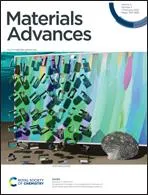
Maskless patterning of metal nanoparticles and silicon nanostructures by a droplet deposition and etching process
文献情報
出版日
2023-11-18
DOI
10.1039/D3MA00380A
インパクトファクター
0
著者
Chia-Wen Tsao, Ping-Chin Shen
原文を見る
要旨
This paper introduces a droplet-based method to deposit metal nanoparticles (named: droplet deposition) and etch silicon surfaces creating silicon nanostructures (named: droplet etching). The droplet deposition and etching process is a simple and cost-effective method that only requires a pipette tip for silver and gold nanoparticle coating and fabrication of silicon nanostructures. Besides, it also eliminates the need for mask designs or other fabrication facilities, simplifying the nanoparticle and silicon nanostructure patterning process. For the noble metal nanoparticle coating by droplet deposition, we investigate the influence of various process parameters such as metal ion concentration, hydrofluoric acid concentration, deposition time, and temperature effects on the resulting nanoparticle plating. And for silicon nanostructure creation, we use the droplet etching technique that selectively etches the silicon in regions where metal nanoparticles have been deposited while other regions remain unaffected and well-preserved. Finally, we demonstrate the capability of hand-writing geometric patterning, transferring pre-defined patterns by shadow masking and mass production for droplet deposition and etching using a multi-channel (8-channel) pipette.
関連文献
Ultrasound-propelled nanomotors for efficient cancer cell ferroptosis
Jie Yang, He Zhao, Dajian Li, Xiaoyong Luo, Zhiyu Fan, Biye Ren, Yuepeng Cai, Renfeng Dong
2023-12-08
Paper
DOI: 10.1039/D3TB02041J
Mesoporous carbon hemispheres integrated with Fe–Gd nanoparticles for potential MR/PA imaging-guided photothermal therapy
Mengmeng Zhang, Tianze Wu, Hui Zhang, Zhenxia Chen, Yannan Yang, Yun Ling, Yaming Zhou
2023-11-01
Paper
DOI: 10.1039/D3TB02073H
Red light-triggered release of ROS and carbon monoxide for combinational antibacterial application
Mengdan Zhang, Jian Cheng, Zhiqiang Shen, Kewu He, Bin Zheng
2023-12-21
Paper
DOI: 10.1039/D3TB01829F
A new Cu(ii) complex derived from the reaction between tris(2-aminoethyl)amine and Cu(i)-activated acetonitrile with potent anticancer activity against some cell lines and high affinity for the essential proteins of SARS-CoV-2
Farshid Hajibabaei, Sadegh Salehzadeh, Robert William Gable
2024-01-12
Paper
DOI: 10.1039/D3NJ04142E
Sustainable and shaped synthesis of MOF composites using PET waste for efficient phosphate removal
Elmehdi Moumen, Khaireddin Boukayouht, Soraia Elmoutchou, Said Kounbach, Samir El Hankari
2023-12-20
Paper
DOI: 10.1039/D3NJ05262A
Metal–organic framework-based platforms for implantation applications: recent advances and challenges
Chunhua Quan, Lei Wang
2023-12-13
Review Article
DOI: 10.1039/D3TB02620E
A light-sensitive protein-based wearable pH biometer
Siyuan Chen, Shiwang Xie, Zhou Li, Yujia Lv, Dan Luo
2024-01-15
Paper
DOI: 10.1039/D3TB02466K
A self-synthesised non-homogeneous MoS2/Fe–Co–N–BC composite catalyst as an activator for peroxomonosulfate activation for efficient degradation of perfluorooctanoic acid
Ling Tao, Jiepu Zhang, Fangke Yu
2023-12-18
Paper
DOI: 10.1039/D3NJ05139K
こちらもおすすめ
化合物よくある質問
N-乙酰基-L-精氨酸はどのように合成されますか?
N-乙酰基-L-精氨酸は、L-精氨酸をエタノールと酸化アクリル酸で反応させて得られます。この合成過程では、酸化アクリル酸がL-精氨酸のN-アミノグループに結合す...
155-84-0N~2~-Acetyl-L-argini...
化合物よくある質問
カウウェルパリミタートを含む廃棄物はどのように処理すべきですか?
カウウェルパリミタートの廃棄物は、化学廃棄物として適切に収集し、専門的な廃棄処理業者に委託します。処理には、有害物質の除去と環境への影響最小化が重要です。温度は...
81760-45-4Kahweol palmitate
化合物よくある質問
タテライル1,4,8,11-テトラエチルアセートの代替品はありますか?
タテライル1,4,8,11-テトラエチルアセートの代替品として、他のエチルエステル化合物や、有機窒素化合物が考えられます。ただし、代替品の選択は目的や使用条件に...
126320-57-8Tetraethyl 1,4,8,11-...
化合物よくある質問
異丁卡因を取り扱う際の実験室安全事項は何ですか?
異丁卡因は毒性があり、皮膚や目を刺激する可能性があります。作業中は保護目鏡、防護手袋、防護マスクを使用し、ドラフトチャンバーで扱うべきです。漏えいした場合、その...
94-14-4Isobutamben
化合物よくある質問
4-氯-2-丙基吡啶を取り扱う際の実験室安全事項は何ですか?
4-氯-2-丙基吡啶は有毒で、吸入や皮膚接触を避けることが重要です。PPEとしてゴーグル、マスク、長袖のガウン、手袋を使用し、ドラフトチャンバーを用いて操作しま...
93856-98-54-Chloro-2-propylpyr...
化合物よくある質問
9,10-脱水阿霉素について適用される法規ガイドラインは何ですか?
CAS番号80996-23-2の9,10-脱水阿霉素は、GHS分類においては第3類毒性物質に分類され、REACH規則においてはカテゴリー1の急性毒性物質とされて...
80996-23-29,10-Anhydroadriamyc...
化合物よくある質問
4-(3-溴苯基)噻唑-2-甲酸の物理化学的性質は何ですか?
4-(3-溴苯基)噻唑-2-甲酸の分子量は265.01です。この化合物は水に微溶です。反応性は中程度で、酸性やアルカリ性の条件下で分解する可能性があります。
808128-00-94-(3-Bromophenyl)-1,...
化合物よくある質問
3-(4-塩素フェニル)-3-オキセタニアミン塩酸塩はどの業界で使用されていますか?
3-(4-塩素フェニル)-3-オキセタニアミン塩酸塩は、医薬業界、ポリマー業界、センサー業界、半導体業界などで使用されています。この化合物は薬物開発の一部として...
1245782-61-93-(4-Chlorophenyl)-3...
化合物よくある質問
氮卓斯汀杂质Eを取り扱う際の実験室安全事項は何ですか?
氮卓斯汀杂质E(CAS番号: 20526-97-0)を扱う際は、ゴーグルとシールド付きの手袋を使用し、漏洩がある場合はドラフトチャンバーを使用して処理することを...
20526-97-03-(4-chlorobenzylide...
化合物よくある質問
デシシボチル-n-ブチルボルテゾミブはどのように保存すればよいですか?
デシシボチル-n-ブチルボルテゾミブは室温で保管し、直日光から遠ざけて密栓容器に保管することが推奨されます。
1104011-35-9Desisobutyl-n-butyl ...
掲載誌
おすすめ化合物

![4-[2-(3,4-Dihydro-2H-chromen-6-yl)-1,3-oxazol-5-yl]-1-(3-{[(2,5-dioxo-1-pyrrolidinyl)oxy]carbonyl}benzyl)pyridinium bromide structure](https://static.chemtradehub.com/structs/155/155863-03-9-8183.webp "4-[2-(3,4-Dihydro-2H-chromen-6-yl)-1,3-oxazol-5-yl]-1-(3-{[(2,5-dioxo-1-pyrrolidinyl)oxy]carbonyl}benzyl)pyridinium bromide structure")
おすすめサプライヤー





免責事項
このページに表示される学術雑誌情報は、参考および研究目的のみを目的としています。当社は雑誌出版社とは提携しておらず、投稿の取り扱いも行っておりません。出版に関するお問い合わせは、各雑誌出版社に直接ご連絡ください。
表示されている情報に誤りがある場合は、support@chemtradehub.com までご連絡ください。迅速に確認し、対応いたします。