


![Bis[(1,2,3,4,5-eta)-1-(diphenylphosphino)cyclopentadienyl]iron structure](https://static.chemtradehub.com/structs/121/12150-46-8-ecd2.webp "Bis[(1,2,3,4,5-eta)-1-(diphenylphosphino)cyclopentadienyl]iron structure")
The amelioration of a purified Pleurotus abieticola polysaccharide on atherosclerosis in ApoE−/− mice
文献情報
出版日
2023-11-13
DOI
10.1039/D3FO02740F
インパクトファクター
5.396
著者
Di Wang, Changtian Li
原文を見る
要旨
In this study, a polysaccharide known as PAPS2 was eluted from Pleurotus abieticola fruiting bodies using 0.1 M NaCl solutions. PAPS2 has a Mw of 19.64 kDa and its backbone is mainly composed of →6)-α-D-Galp-(1→, →6)-β-D-Glcp-(1→ and →2,6)-α-D-Galp-(1→ residues, and its branches mainly end with β-D-Manp-(1→, which is attached at C2 of →2,6)-α-D-Galp-(1→. PAPS2 elicited several effects in high-fat diet (HFD)-fed ApoE−/− mice. It significantly reduced the body weight, liver index, and serum levels of total cholesterol (TC) and triglycerides (TGs), and it alleviated lipid accumulation in the aorta. Intestinal microflora analysis showed that PAPS2 suppressed the abundances of Adlercreutzia, Turicibacter, and Helicobacter and enriched that of Roseburia. It also influenced lipid metabolism, suggesting that it reduced the levels of TGs, lysophosphatidylcholine (LPC), phosphatidylcholine (PC), and ceramide (Cer). Moreover, it suppressed oxidative response by increasing nuclear factor erythroid 2 (Nrf2)-related factor expression and activating the antioxidant enzymes superoxide dismutase (SOD) and glutathione peroxidase (GSH-Px) to reduce the level of reactive oxygen species (ROS). Meanwhile, it showed anti-inflammatory effects partially related to the inhibition of toll-like receptor 4 (TLR4)/nuclear factor kappa-B (NF-κB) signaling induced by lipopolysaccharide (LPS) in RAW 264.7 cells, as well as in the aorta of HFD-fed ApoE−/− mice. This study provides experimental evidence of the auxiliary applicability of PAPS2 in atherosclerosis treatment.
おすすめジャーナル

Coloration Technology

Green Chemistry

Photochemical & Photobiological Sciences

Nature Reviews Drug Discovery

Advanced Engineering Materials

Current Pharmaceutical Biotechnology

Journal of Enzyme inhibition and Medicinal Chemistry

Physical Chemistry Chemical Physics

CrystEngComm

Journal of Medical Biochemistry
関連文献
DFT studies of oxygen dissociation on the 116-atom platinum truncated octahedron particle
Paul C. Jennings, Roy L. Johnston
2014-07-15
Paper
DOI: 10.1039/C4CP02147A
Assessment of density-functionals for describing the X− + CH3ONO2 gas-phase reactions with X = F, OH, CH2CN
Yaicel G. Proenza, Elizete Ventura, Silmar A. do Monte, Ricardo L. Longo
2014-10-22
Paper
DOI: 10.1039/C4CP03674C
Electronic structures at the interface between Au and CH3NH3PbI3
Xiaoliang Liu, Chenggong Wang, Lu Lyu, Congcong Wang, Zhengguo Xiao, Cheng Bi, Jinsong Huang, Yongli Gao
2014-11-07
Paper
DOI: 10.1039/C4CP03842H
Intra-residue interactions in proteins: interplay between serine or cysteine side chains and backbone conformations, revealed by laser spectroscopy of isolated model peptides
Himansu S. Biswal
2014-11-27
Paper
DOI: 10.1039/C4CP04449E
Nano-design of quantum dot-based photocatalysts for hydrogen generation using advanced surface molecular chemistry
Dalal Noureldine, Tayirjan Isimjan, Bin Lin, Silvano Del Gobbo, Mutalifu Abulikemu, Mohamed Nejib Hedhili, Dalaver H. Anjum, Kazuhiro Takanabe
2014-11-12
Paper
DOI: 10.1039/C4CP04365K
Illuminating surface atoms in nanoclusters by differential X-ray absorption spectroscopy
Charles S. Spanjers, Thomas P. Senftle, Adri C. T. van Duin, Michael J. Janik, Anatoly I. Frenkel, Robert M. Rioux
2014-07-16
Paper
DOI: 10.1039/C4CP02146K
Molecular dynamics simulations of longer n-alkanes in silicalite: state-of-the-art models achieving close agreement with experiment
2014-11-21
Paper
DOI: 10.1039/C4CP04898A
Bimodal crystallization at polymer–fullerene interfaces
Dyfrig Môn, Anthony M. Higgins, David James, Mark Hampton, J. Emyr Macdonald, Michael B. Ward, Philipp Gutfreund, Samuele Lilliu, Jonathan Rawle
2014-11-26
Paper
DOI: 10.1039/C4CP04253K
Reverse hydrotropy by complex formation
Kamil Wojciechowski, Thomas Gutberlet, Vikram Singh Raghuwanshi, Ann Terry
2014-10-16
Paper
DOI: 10.1039/C4CP03835E
こちらもおすすめ
化合物よくある質問
1-{3-[5-(エチルカルボンイル)-2,4-ジメチル-1H-ピロロール-3-基]プロパニル}ピペリジン-4-カルボン酸について、適用される法規ガイドラインは何ですか?
この化合物はCAS番号1142209-81-1であり、GHS分類では corrosive (腐食性物質) と classified (分類物質) として指定され...
1142209-81-11-{3-[5-(Ethoxycarbo...
化合物よくある質問
2,2-二氟-1,3-ベンゾジオキサン-5-カルボキシlic酸とは何ですか?
2,2-二氟-1,3-ベンゾジオキサン-5-カルボキシlic酸は、CAS番号656-46-2の化合物で、化学式はC8H4F2O4です。この化合物は白色の結晶性粉...
656-46-22,2-Difluoro-1,3-ben...
化合物よくある質問
8-氯-4-色原酮の代替品はありますか?
8-氯-4-色原酮(CAS番号: 49701-11-3)の代替品には、他の色原酮類似物や、構造が似ている化合物があります。例えば、8-メチル-4-色原酮や、他の...
49701-11-38-Chloro-2,3-dihydro...
化合物よくある質問
エチル6,6-ジメチル-4,5,6,7-テトラヒドロ-1H-インドアゼー-3-カルボキシレートとは何ですか?
エチル6,6-ジメチル-4,5,6,7-テトラヒドロ-1H-インドアゼー-3-カルボキシレートは、CAS番号1233243-56-5を有する化合物です。これは有...
1233243-56-5Ethyl 6,6-dimethyl-4...
化合物よくある質問
4-叔丁基-6-氯-嘧啶に適用される法規ガイドラインは何ですか?
4-叔丁基-6-氯-嘧啶はCAS番号3435-24-3で、GHS分類では毒性物質とみなし、GHSの危険性分類が適用されます。REACH規則では登録が必要で、Eu...
3435-24-34-Tert-butyl-6-chlor...
化合物よくある質問
維库溴铵杂质Bはどのように合成されますか?
維库溴铵杂质Bは、アンドロステンデンから始まり、一連の合成反応、包括的な選択性と高い収率で合成されます。具体的には、ブロミド化、酸化、ジマーゼ反応、アミド化など...
50587-95-6(2beta,3alpha,5alpha...
化合物よくある質問
2-(4-氟苄基)-吡咯烷の物理化学的性質は何ですか?
CAS番号350017-04-8の2-(4-氟苄基)-吡咯烷は、結晶性の白色粉末です。分子量は199.17 g/molで、水に溶けにくいです。化学反応では比較的...
350017-04-82-(4-Fluorobenzyl)py...
化合物よくある質問
3-喹啉甲醛(2-チロール-8-エチル)は安全ですか?
3-喹啉甲醛(2-チロール-8-エチル)は一定の毒性を持つため、取扱には注意が必要です。使用する際は適切な防護具を着用し、密閉容器で保管・搬送し、直接的な接触を...
335196-05-92-Chloro-8-ethyl-3-q...
化合物よくある質問
エチル3-(ヒドロキシメチル)-1H-ピロール-2-カルボキシレートはどのように保存すればよいですか?
エチル3-(ヒドロキシメチル)-1H-ピロール-2-カルボキシレートは、室温(25℃)以下で保存し、直射日光を避け、乾燥した環境で保管することが推奨されます。ま...
75448-69-0Ethyl 3-(hydroxymeth...
119410-05-88-Chloro-11-(4-piper...
掲載誌
Food & Function
CiteScore:
10.1
自己引用率:
3.9%
年間論文数:
758
Food & Function provides a unique venue for physicists, chemists, biochemists, nutritionists and other food scientists to publish novel, cutting-edge, original research focussing on food, its nutrients and their relation to human health and nutrition. We welcome research describing the: Physical properties and structure of food and how this relates to sensory perception and human health Biochemical and physiological actions of food components Interactions between foods, gut microbiota and human physiology Nutritional and biological evaluation of food Clinical and population studies using food or food components Development of biomarkers of food intake and effects on human health We also welcome systematic reviews and meta-analyses of existing studies in the literature, provided these are objective and scientifically valid Food in this context is defined as materials of plant, animal or mineral origin, which are consumed orally (by humans) for pleasure and to sustain growth and vital processes. Examples of research topics that are of interest to be published in Food & Function are: Chemistry and physics of food components and digestion processes Relationship between the physical properties/structure of food and nutrition and human health - for example, impact of food matrix or processing on nutrient release and uptake Molecular properties and physiological effects of food components (nutrients, fibres, essential micronutrients, phytochemicals, bioactives, food substitutes, novel ingredients, allergens, flavours and fragrances) Nutritional and health effects of food including bioavailability and metabolism assessment of food components (nutrients, micronutrients and other microconstituents) Efficacy and mechanisms of food constituents in the body - including biomarkers of intakes, exposure and effects Impacts of foods/food components on gut microorganisms and human physiology - For example impact of fermented foods Role of nutrition and diet in human disease prevention and development Cellular and molecular effects/mechanisms of food/food components image block The following types of research are not within the scope of Food & Function: Research relating to traditional herbal medicines, medicinal plants or active compounds extracted from such plants (materials that are primarily consumed as medicine, i.e. the intended purpose is primarily to treat, cure or prevent a non-deficiency disease) or relating to foods not recognised as human diet contributors Animal nutrition research that is not primarily designed as a model to benefit human nutrition (for example, studies of growth/accretion, heat stress, weaning, ruminant digestion, meat quality, etc.) Treatments administered by non-oral routes such as injection (subcutaneous, intramuscular, intraperitoneal, etc.), dermal/transdermal, rectal, inhalation, nasal, etc. Exceptions are when such routes of administration are used for mechanistic/control purposes in the experimental design Pharmacological/pharmaceutical approaches: Encapsulation, emulsification and/or pure controlled release of compounds or bioactives that do not come directly from edible foods, such as dietary supplements - these are better suited to a pharmaceutical journal In vitro or in vivo studies with poorly defined (insufficiently characterised) extracts and studies without appropriate controls will not be considered Cells studies not considering the metabolism of food components ingested – for example, irrelevant exposure of cells to compounds not present in the body after absorption Manuscripts with only a fully theoretical/bioinformatic approach and without appropriate support from analytical evidence will not be considered for publication Studies focussing solely on food engineering, preservation and sustainable technologies – these can be published in our companion journal Sustainable Food Technology Pure food analysis - these can be published in Analytical Methods
おすすめ化合物


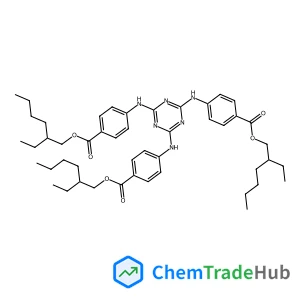
Tris(2-ethylhexyl) 4,4',4''-(1,3,5-triazine-2,4,6-triyltriimino)tribenzoate
CAS番号:
88122-99-0
分子式:
C48H66N6O6
おすすめサプライヤー





免責事項
このページに表示される学術雑誌情報は、参考および研究目的のみを目的としています。当社は雑誌出版社とは提携しておらず、投稿の取り扱いも行っておりません。出版に関するお問い合わせは、各雑誌出版社に直接ご連絡ください。
表示されている情報に誤りがある場合は、support@chemtradehub.com までご連絡ください。迅速に確認し、対応いたします。