












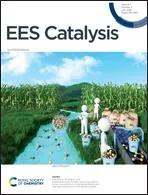
Multidisciplinary approaches for enzyme biocatalysis in pharmaceuticals: protein engineering, computational biology, and nanoarchitectonics
文献情報
出版日
2023-10-28
DOI
10.1039/D3EY00239J
インパクトファクター
0
著者
Ronald Sluyter, Konstantin Konstantinov, Jung Ho Kim
原文を見る
要旨
Enzyme biocatalysis is reshaping pharmaceutical synthesis, offering sustainable and efficient pathways for drug discovery and production. This paradigm shift towards eco-friendly methodologies addresses concerns inherent in traditional chemical synthesis. Enzymes, celebrated for their precision and adaptability to mild conditions, are poised as ideal candidates for pharmaceutical applications. Their versatility facilitates the synthesis of diverse pharmaceutical compounds, ensuring precise drug design and minimizing environmental impact. The integration of multidisciplinary approaches, including protein engineering, computational biology, and nanoarchitectonics, holds the potential to propel enzyme biocatalysis even further. Protein engineering utilizes directed evolution and rational design to customize enzymes, enhancing their stability and efficacy. Computational biology aids in deciphering enzymatic mechanisms, while nanoarchitectonics introduces innovative enzyme integration strategies into continuous flow systems. This comprehensive review explores how these multidisciplinary approaches can revolutionize pharmaceutical research and production. The synergy among these disciplines promises to expedite pharmaceutical processes, promote sustainability, optimize efficiency, and elevate precision—aligning perfectly with the evolving requirements of the pharmaceutical industry.
関連文献
Multipath oxygen-mediated PET-RAFT polymerization by a conjugated organic polymer photocatalyst under red LED irradiation
Hongjie Yang, Zhen Lu, Xiaoling Fu, Qiuyu Li, Rukai Zhao, Yulai Zhao
2021-10-13
Communication
DOI: 10.1039/D1PY01058A
Organocatalytic PET-RAFT polymerization with a low ppm of organic photocatalyst under visible light
Xun Zhang, Yu Jiang, Junqiang Lin, Siping Hu
2021-12-02
Paper
DOI: 10.1039/D1PY01431E
Upconversion nanoparticle-assisted cationic and radical/cationic hybrid photopolymerization using sulfonium salts
Xiaoyan Meng, Longji Li, Yaoxin Huang, Xin Deng, Xiaoxuan Liu, Zhiquan Li
2021-11-26
Communication
DOI: 10.1039/D1PY01455B
Gradient copolymer prepared from alternating ring-opening metathesis of three monomers
Francis O. Boadi, Nicole S. Sampson
2021-09-13
Paper
DOI: 10.1039/D1PY00690H
Synthesis methods of microporous organic polymeric adsorbents: a review
Mobina Khakbaz, Ahad Ghaemi, Gity Mir Mohamad Sadeghi
2021-11-11
Review Article
DOI: 10.1039/D1PY01145F
Intrinsically stretchable naphthalenediimide–bithiophene conjugated statistical terpolymers using branched conjugation break spacers for field–effect transistors
Megumi Matsuda, Kei-ichiro Sato, Chun-Kai Chen, Wei-Chen Yang, Tomoya Higashihara
2021-10-11
Paper
DOI: 10.1039/D1PY01154E
Degradability, thermal stability, and high thermal properties in spiro polycycloacetals partially derived from lignin
Minjie Shen, Srikanth Vijjamarri, Hongda Cao, Karla Solis
2021-10-05
Paper
DOI: 10.1039/D1PY01017D
Multi-responsive, injectable, and self-healing hydrogels based on benzoxaborole–tannic acid complexation
Yi-Yang Peng, Qiuli Cheng, Wenda Wang, Meng Wu, Diana Diaz-Dussan, Piyush Kumar, Ravin Narain
2021-08-31
Paper
DOI: 10.1039/D1PY00692D
Fabrication of an antibacterial hydrogel nanocomposite with self-healing properties using ZnO/β-cyclodextrin dimer/modified alginate
Masoumeh Mohamadhoseini, Zahra Mohamadnia
2021-09-23
Paper
DOI: 10.1039/D1PY00973G
こちらもおすすめ
化合物よくある質問
3-(5-フェニル-2-ファイル)-プロパン酸の市場動向や研究トレンドはどうですか?
この化合物の市場動向は不明ですが、類似化合物の需要は化学繊維、医薬品、農薬分野で安定しています。研究トレンドとしては、該当化合物の生物学的活性の評価や、その他の...
3465-61-03-(5-Phenyl-2-furyl)...
化合物よくある質問
3- Chloro-1H-indazol-5-olはどのように保存すればよいですか?
3- チロロ-1H-吲唑-5-醇は遮光し、直射日光を避けて、温度は室温を推奨し、密閉容器に保存してください。
885519-34-63-Chloro-1H-indazol-...
849924-76-11,2,3,4,5-Cyclopenta...
化合物よくある質問
L-(1-~13~C)メチオニンの市場動向や研究トレンドはどうですか?
L-(1-~13~C)メチオニンは、医薬品やバイオテクノロジー分野での研究が増加しており、その価格は安定しています。新興研究分野では、代謝解析や遺伝子機能解析で...
81202-04-2L-(1-~13~C)Methionin...
化合物よくある質問
1,3-フェニレンビスメチレンビスアクリレートは安全ですか?
1,3-フェニレンビスメチレンビスアクリレートは一般的に安全ですが、直接皮膚に触れる場合は保護用具を使用することを推奨します。高濃度の蒸気が吸入された場合は呼吸...
22757-16-01,3-Phenylenebis(met...
化合物よくある質問
丹参醇Aはどのように保存すればよいですか?
丹参醇Aは、直射日光を避けて室温で保存し、密栓容器に入れることをお勧めします。適切な保存条件は、安定性を保ち、安全性を確保する上で重要です。
189308-08-5Danshenol A
化合物よくある質問
4-メチル-2-(1,1,1-三フロロ-2-メチルプロパニル)ピリドインとは何ですか?
CAS番号1378865-93-0の4-メチル-2-(1,1,1-三フロロ-2-メチルプロパニル)ピリドインは、合成化学分野で用いられる有機化合物の一種です。こ...
1378865-93-04-Methyl-2-(1,1,1-tr...
化合物よくある質問
N-フェニルベンジル-2-クロロ酢氨を取り扱う際の実験室安全事項は何ですか?
N-フェニルベンジル-2-クロロ酢氨は毒性があり、皮膚や粘膜に刺激を与えます。取り扱う際には、保護眼鏡、手袋、ゴーグルを着用することを強く推奨します。ドラフトチ...
2653-14-7N-benzyl-2-chloro-N-...
化合物よくある質問
UCN-02を取り扱う際の実験室安全事項は何ですか?
UCN-02は毒性は低いですが、人体への直接的な接触は避けるべきです。PPE要件はグローブと顔面保護具を着用することです。ドラフトチャンバーを使用して漏洩を処理...
121569-61-7UCN-02
化合物よくある質問
N-[3-[2-(二甲基氨基)乙氧基]-4-甲氧基苯基]-2'-甲基-4'-(5-甲基-1,2,4-恶二唑-3-基)-[1,1'-联苯]-4-甲酰胺を取り扱う際の実験室安全事項は何ですか?
手袋と保護眼鏡を着用し、漏洩時には吸気防止装置を使用してください。室温、乾燥した場所に保管し、直日光から隔離してください。SDS(安全データシート)を参照してく...
170230-39-4N-{3-[2-(Dimethylami...
掲載誌
おすすめ化合物
![2,9-Dichloro-5,12-dihydroquinolino[2,3-b]acridine-7,14-dione structure](https://static.chemtradehub.com/structs/308/3089-17-6-750b.webp "2,9-Dichloro-5,12-dihydroquinolino[2,3-b]acridine-7,14-dione structure")
![(2S)-2-({[(2-Methyl-2-propanyl)oxy]carbonyl}amino)-4-pentynoic acid structure](https://static.chemtradehub.com/structs/630/63039-48-5-b66d.webp "(2S)-2-({[(2-Methyl-2-propanyl)oxy]carbonyl}amino)-4-pentynoic acid structure")
おすすめサプライヤー






免責事項
このページに表示される学術雑誌情報は、参考および研究目的のみを目的としています。当社は雑誌出版社とは提携しておらず、投稿の取り扱いも行っておりません。出版に関するお問い合わせは、各雑誌出版社に直接ご連絡ください。
表示されている情報に誤りがある場合は、support@chemtradehub.com までご連絡ください。迅速に確認し、対応いたします。