












Light cycling as a key to understanding the outdoor behaviour of perovskite solar cells
文献情報
出版日
2023-12-01
DOI
10.1039/D3EE03508E
インパクトファクター
38.532
著者
Mark Khenkin, Hans Köbler, Rajarshi Roy, Ulas Erdil, Jinzhao Li, Nga Phung, Ghefar Adwan, Gopinath Paramasivam, Quiterie Emery, Eva Unger, Rutger Schlatmann, Carolin Ulbrich, Antonio Abate
原文を見る
要旨
Forecasting the real-world stability of perovskite solar cells (PSCs) using indoor accelerated tests is a significant challenge on the way to commercialising this highly anticipated PV technology. The lack of outdoor data and considerable magnitude of meta-stability effects (or reversible changes) in PSCs’ performance over the day–night cycle makes it particularly challenging to correlate results of the commonly utilised light-soaking ageing test with outdoor experiments. Here we show the variety of short-term and long-term ageing behaviours by testing PSCs of various architectures under constant and intermitted light indoors and exposing them to natural conditions outdoors. We demonstrate that it is impossible to predict the results of a light cycling test from a continuous light test without prior knowledge of the ageing patterns for a particular device architecture. Cycling the light does not necessarily lead to an increased lifetime as expected due to dark time recovery. Instead, it sometimes reveals a different degradation behaviour resulting in a drastic lifetime reduction. The presence of various degradation patterns for different PSCs implies that an accelerated ageing with constant light experiment is no “worst-case scenario” and thus cannot replace the light cycling test nor can it reproduce the real-world scenarios. Furthermore, we show unique sets of weeks-to-years-long outdoor series on different PSCs highlighting the monumental importance of accounting for the meta-stability effects when analysing PSC outdoor data as opposed to simply following evaluation routines developed for silicon-based devices. In particular, meta-stability complicates the decoupling of the effects of environmental conditions from the cell's ageing behaviour and can result in large artefacts. A varying degree of saturation of reversible processes also results in unusual strong seasonality documented for PSCs, with summer representing favourable conditions for some PSCs’ energy generation compared to winter, despite higher temperatures. For the first time, the decisive impact of meta-stable processes on the outdoor performance and stability of perovskite solar cells is demonstrated, with data from over two years in the field, which is the longest outdoor exposure of PSCs reported so far to the best of our knowledge. The correlation between the outdoor results and those from the light cycled experiments is evident.
関連文献
Hosomi–Sakurai reactions of silacyclic allyl silanes
Jonathan D. Sellars, Patrick G. Steel, Michael J. Turner
2006-05-02
Communication
DOI: 10.1039/B602642G
Platinum–acetylide polymer based solar cells: involvement of the triplet state for energy conversion
Fengqi Guo, Young-Gi Kim, John R. Reynolds, Kirk S. Schanze
2006-03-21
Communication
DOI: 10.1039/B516086C
DNA microarraying on compact disc surfaces. Application to the analysis of single nucleotide polymorphisms in Plum pox virus
Sergi Morais, Raquel Marco-Molés, Rosa Puchades, Ángel Maquieira
2006-05-02
Communication
DOI: 10.1039/B600049E
Simple transformation of crystalline chiral natural anions to liquid medium and their use to induce chirality
Luís C. Branco, Pedro M. P. Gois, Nuno M. T. Lourenço, Vanya B. Kurteva, Carlos A. M. Afonso
2006-05-10
Communication
DOI: 10.1039/B600816J
Three-dimensional motion and transformation of a photoelectrochemical actuator
Kazutake Takada, Taichi Miyazaki, Nobutaka Tanaka, Tetsu Tatsuma
2006-04-11
Communication
DOI: 10.1039/B600442C
Bond length and bond multiplicity: σ-bond prevents short π-bonds
R. Bruce King, Henry F. Schaefer III
2006-04-18
Communication
DOI: 10.1039/B602116F
Recent progress in cobalt-mediated [2 + 2 + 2] cycloaddition reactions
Vincent Gandon, Corinne Aubert, Max Malacria
2006-03-16
Feature Article
DOI: 10.1039/B517696B
Regiochemical control of the catalytic asymmetric hydroboration of 1,2-diarylalkenes
Antonia Black, John M. Brown, Christophe Pichon
2005-10-05
Communication
DOI: 10.1039/B508292G
A novel mediatorless microbial fuel cell based on direct biocatalysis of Escherichia coli
Tian Zhang, Changzheng Cui, Shengli Chen, Xinping Ai, Hanxi Yang, Ping Shen, Zhenrong Peng
2006-04-25
Communication
DOI: 10.1039/B600876C
こちらもおすすめ
化合物よくある質問
S-(甲硅烷基丙基)異硫酰氯を取り扱う際の実験室安全事項は何ですか?
取り扱う際にはPPE(防護具)が必要です。特に手袋と面マスクは必須です。ドラフトチャンバーを使用して漏洩処理を行い、温度は常温、湿度は乾燥状態、容器はガラス容器...
84682-36-02-Amino-7,7-dimethox...
化合物よくある質問
8-硝基-咪唑并[1,2-a]吡啶とは何ですか?
8-硝基-咪唑并[1,2-a]吡啶は、CAS番号52310-46-0の化合物で、8-位に硝基を有する咪唑並みの结构をもつ吡啶の化合物です。この化合物は、酸化還元...
52310-46-08-Nitroimidazo[1,2-a...
化合物よくある質問
4-ブロモ-5-メトキシピリジン-2-甲醇の代替品はありますか?
4-ブロモ-5-メトキシピリジン-2-甲醇の代替品には、類似構造を持つ化合物や機能性に等しい代替試薬があります。例えば、4-クロロ-5-メトキシピリジン-2-甲...
1454849-84-3(4-Bromo-5-methoxy-2...
化合物よくある質問
全氟-1,2-二甲基環己烷を含む廃棄物はどのように処理すべきですか?
全氟-1,2-二甲基環己烷(CAS番号:306-98-9)の廃棄物は、特別な処理が必要です。まず、廃棄物を密閉容器に収集し、適切な防漏容器に保管します。次に、専...
306-98-91,1,2,2,3,3,4,4,5,6-...
化合物よくある質問
3-(溴甲基)苯乙酸の主な用途は何ですか?
3-(溴甲基)苯乙酸は主に研究用化学薬品として利用され、有機合成や医薬品の開発に用いられます。また、特定の化合物の合成中間体としても使用されることがあります。
118647-53-32-(3-(Bromomethyl)ph...
化合物よくある質問
5-イドキド-4-メチオキシ-6-メチルピリミジニン-2-アミンはどのように保存すればよいですか?
5-イドキド-4-メチオキシ-6-メチルピリミジニン-2-アミンは冷暗所で密栓の容器に保存し、直射日光を避けて保管することをお勧めします。温度は常温とし、湿気を...
23368-84-55-Iodo-4-methoxy-6-m...
化合物よくある質問
1-(2-溴-6-甲氧基苯基)乙酮を取り扱う際の実験室安全事項は何ですか?
実験室では、1-(2- Bromo-6-methoxyphenyl)ethanoneを取り扱う際には、ゴーグルや面具、手袋などのPPEを使用することが推奨されま...
380225-68-31-(2-Bromo-6-methoxy...
化合物よくある質問
5-(4,4,5,5-テトラメチル-1,3,2-ダイオキサボラロール-2-イル)-1,3-ジヒドロ-2-ベンゾフランは安全ですか?
5-(4,4,5,5-テトラメチル-1,3,2-ダイオキサボラロール-2-イル)-1,3-ジヒドロ-2-ベンゾフランは一般に安全ですが、取扱いには注意が必要です...
1352037-60-55-(4,4,5,5-Tetrameth...
化合物よくある質問
4-溴萘-1-甲酸の代替品はありますか?
4-溴萘-1-甲酸は比較的稀な化合物ですが、類似物としては、4-クロロ-1-ナフホリック酸やその他のブロモ置換ナフホリック酸が挙げられます。ただし、これらの代替...
16650-55-84-Bromo-1-naphthoic ...
化合物よくある質問
ε-白藜芦醇脱氢二聚体の代替品はありますか?
ε-白藜芦醇脱氢二聚体の代替品としては、ε-白藜芦醇、ポリフェノール類、フラボノイド類が挙げられます。これらは類似の化学構造と生物学的活性を持っています。ただし...
62218-08-05-{(2R,3R)-6-Hydroxy...
掲載誌
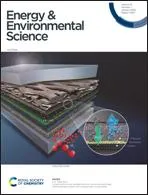
Energy & Environmental Science
CiteScore:
32.34
自己引用率:
3.4%
年間論文数:
481
Energy & Environmental Science is an international journal dedicated to publishing exceptionally important and high quality, agenda-setting research tackling the key global and societal challenges of ensuring the provision of energy and protecting our environment for the future. The scope is intentionally broad and the journal recognises the complexity of issues and challenges relating to energy conversion and storage, alternative fuel technologies and environmental science. For work to be published it must be linked to the energy-environment nexus and be of significant general interest to our community-spanning readership. All scales of studies and analysis, from impactful fundamental advances, to interdisciplinary research across the (bio)chemical, (bio/geo)physical sciences and chemical engineering disciplines are welcomed. Topics include, but are not limited to, the following: Solar energy conversion and photovoltaics Solar fuels and artificial photosynthesis Fuel cells Hydrogen storage and (bio) hydrogen production Materials for energy systems Capture, storage and fate of CO2, including chemicals and fuels from CO2 Catalysis for a variety of feedstocks (for example, oil, gas, coal, biomass and synthesis gas) Biofuels and biorefineries Materials in extreme environments Environmental impacts of energy technologies Global atmospheric chemistry and climate change as related to energy systems Water-energy nexus Energy systems and networks Globally applicable principles of energy policy and techno-economics
おすすめ化合物
おすすめサプライヤー





免責事項
このページに表示される学術雑誌情報は、参考および研究目的のみを目的としています。当社は雑誌出版社とは提携しておらず、投稿の取り扱いも行っておりません。出版に関するお問い合わせは、各雑誌出版社に直接ご連絡ください。
表示されている情報に誤りがある場合は、support@chemtradehub.com までご連絡ください。迅速に確認し、対応いたします。