












A deformable complementary moisture and tribo energy harvester
文献情報
出版日
2023-11-10
DOI
10.1039/D3EE03052K
インパクトファクター
38.532
著者
Gwanho Kim, Jae Won Lee, Kaiying Zhao, Taebin Kim, Woojoong Kim, Jin Woo Oh, Kyuho Lee, Jihye Jang, Guangtao Zan, Jong Woong Park, Seokyeong Lee, Yeonji Kim, Wei Jiang, Shengyou Li, Cheolmin Park
原文を見る
要旨
Although energy harvesting based on moisture-induced electric generators (MEGs) has become popular with the development of numerous moisture and ion-selective materials, the single-cell combination of an MEG with another energy harvester for further boosting the power efficiency has seldom been demonstrated. Herein, we present a single-cell complementary energy harvester capable of simultaneously generating moisture-induced as well as triboelectric power. Our harvester is based on a highly resilient and deformable three-dimensional melamine foam coated with two-dimensional conductive MXene (Ti3C2Tx) nanosheets. One fifth of the MXene-coated foam is additionally covered with an organo-ionic hydrogel as an asymmetric moisture and ion source for the MXene over a broad range of humidity and temperature, producing an MEG operated under a variety of mechanical deformations. Our resilient MXene/organo-ionic hydrogel foam is sufficiently tolerant to repetitive and harsh triboelectric contacts and can be used in a triboelectric nanogenerator (TENG). Our single-cell MXene/organo-ionic hydrogel foam device exhibits a maximum voltage and current of 55 V and 102 μA, respectively, and a high electric power of approximately 83 μW cm−2 with excellent stretchability and compression strength of approximately 30% and 2.1 MPa, respectively. Moreover, based on the unique DC and AC outputs from the complementary MEG and TENG with fast capacitor charging capability, respectively, a novel emergency alarm and guidance system is demonstrated, wherein a constant light emitted from an alarm sensor powered by the MEG is amplified by the self-powered TENG driven by transient human walking motions in an emergency, effectively guiding people to an exit.
関連文献
Stress in titania nanoparticles: an atomistic study
Robert Darkins, Maria L. Sushko, Jun Liu, Dorothy M. Duffy
2014-04-03
Paper
DOI: 10.1039/C3CP54357A
Direct observation of key photoinduced dynamics in a potential nano-delivery vehicle of cancer drugs
Samim Sardar, Siddhi Chaudhuri, Prasenjit Kar, Soumik Sarkar, Samir Kumar Pal
2014-10-28
Paper
DOI: 10.1039/C4CP03749A
Solid state effects on the electronic structure of H2OEP
G. Di Santo, M. Caputo, A. Goldoni, M. Kumar, M. Pedio
2014-11-03
Paper
DOI: 10.1039/C4CP03450C
Electronic structure of positive and negative polarons in functionalized dithienylthiazolo[5,4-d]thiazoles: a combined EPR and DFT study
Yun Ling, Sarah Van Mierloo, Alexander Schnegg, Matthias Fehr, Peter Adriaensens, Laurence Lutsen, Dirk Vanderzande, Wouter Maes, Etienne Goovaerts, Sabine Van Doorslaer
2014-01-23
Paper
DOI: 10.1039/C3CP54635G
Ab initio and metadynamics studies on the role of essential functional groups in biomineralization of calcium carbonate and environmental situations
Moumita Saharay, R. James Kirkpatrick
2014-10-22
Paper
DOI: 10.1039/C4CP03904A
Improved permeability and selectivity in porous graphene for hydrogen purification
Chengxi Huang, Haiping Wu, Kaiming Deng, Weihua Tang
2014-10-24
Communication
DOI: 10.1039/C4CP04385E
Human serum albumin binding to silica nanoparticles – effect of protein fatty acid ligand
Joo Chuan Ang, Mark J. Henderson, Richard A. Campbell, Jhih-Min Lin, Peter N. Yaron, Andrew Nelson, Thomas Faunce, John W. White
2014-02-19
Paper
DOI: 10.1039/C4CP00293H
Tuning spin polarization and spin transport of zigzag graphene nanoribbons by line defects
G. P. Tang, Z. H. Zhang, X. Q. Deng, Z. Q. Fan, H. L. Zhu
2014-10-28
Paper
DOI: 10.1039/C4CP03837A
Unusual electroluminescence from n-ZnO@i-MgO core–shell nanowire color-tunable light-emitting diode at reverse bias
Xiaoming Mo, Guojia Fang, Hao Long, Songzhan Li, Haoning Wang, Zhao Chen, Huihui Huang, Wei Zeng, Yupeng Zhang, Chunxu Pan
2014-02-26
Paper
DOI: 10.1039/C3CP55505D
More stable and more efficient alternatives of Z-907: carbazole-based amphiphilic Ru(ii) sensitizers for dye-sensitized solar cells
Hammad Cheema, Ashraful Islam, Robert Younts, Bhoj Gautam, Idriss Bedja, Ravindra Kumar Gupta, Liyuan Han, Kenan Gundogdu, Ahmed El-Shafei
2014-10-31
Paper
DOI: 10.1039/C4CP04120H
こちらもおすすめ
化合物よくある質問
S-(甲硅烷基丙基)異硫酰氯を取り扱う際の実験室安全事項は何ですか?
取り扱う際にはPPE(防護具)が必要です。特に手袋と面マスクは必須です。ドラフトチャンバーを使用して漏洩処理を行い、温度は常温、湿度は乾燥状態、容器はガラス容器...
84682-36-02-Amino-7,7-dimethox...
化合物よくある質問
8-硝基-咪唑并[1,2-a]吡啶とは何ですか?
8-硝基-咪唑并[1,2-a]吡啶は、CAS番号52310-46-0の化合物で、8-位に硝基を有する咪唑並みの结构をもつ吡啶の化合物です。この化合物は、酸化還元...
52310-46-08-Nitroimidazo[1,2-a...
化合物よくある質問
4-ブロモ-5-メトキシピリジン-2-甲醇の代替品はありますか?
4-ブロモ-5-メトキシピリジン-2-甲醇の代替品には、類似構造を持つ化合物や機能性に等しい代替試薬があります。例えば、4-クロロ-5-メトキシピリジン-2-甲...
1454849-84-3(4-Bromo-5-methoxy-2...
化合物よくある質問
全氟-1,2-二甲基環己烷を含む廃棄物はどのように処理すべきですか?
全氟-1,2-二甲基環己烷(CAS番号:306-98-9)の廃棄物は、特別な処理が必要です。まず、廃棄物を密閉容器に収集し、適切な防漏容器に保管します。次に、専...
306-98-91,1,2,2,3,3,4,4,5,6-...
化合物よくある質問
3-(溴甲基)苯乙酸の主な用途は何ですか?
3-(溴甲基)苯乙酸は主に研究用化学薬品として利用され、有機合成や医薬品の開発に用いられます。また、特定の化合物の合成中間体としても使用されることがあります。
118647-53-32-(3-(Bromomethyl)ph...
化合物よくある質問
5-イドキド-4-メチオキシ-6-メチルピリミジニン-2-アミンはどのように保存すればよいですか?
5-イドキド-4-メチオキシ-6-メチルピリミジニン-2-アミンは冷暗所で密栓の容器に保存し、直射日光を避けて保管することをお勧めします。温度は常温とし、湿気を...
23368-84-55-Iodo-4-methoxy-6-m...
化合物よくある質問
1-(2-溴-6-甲氧基苯基)乙酮を取り扱う際の実験室安全事項は何ですか?
実験室では、1-(2- Bromo-6-methoxyphenyl)ethanoneを取り扱う際には、ゴーグルや面具、手袋などのPPEを使用することが推奨されま...
380225-68-31-(2-Bromo-6-methoxy...
化合物よくある質問
5-(4,4,5,5-テトラメチル-1,3,2-ダイオキサボラロール-2-イル)-1,3-ジヒドロ-2-ベンゾフランは安全ですか?
5-(4,4,5,5-テトラメチル-1,3,2-ダイオキサボラロール-2-イル)-1,3-ジヒドロ-2-ベンゾフランは一般に安全ですが、取扱いには注意が必要です...
1352037-60-55-(4,4,5,5-Tetrameth...
化合物よくある質問
4-溴萘-1-甲酸の代替品はありますか?
4-溴萘-1-甲酸は比較的稀な化合物ですが、類似物としては、4-クロロ-1-ナフホリック酸やその他のブロモ置換ナフホリック酸が挙げられます。ただし、これらの代替...
16650-55-84-Bromo-1-naphthoic ...
化合物よくある質問
ε-白藜芦醇脱氢二聚体の代替品はありますか?
ε-白藜芦醇脱氢二聚体の代替品としては、ε-白藜芦醇、ポリフェノール類、フラボノイド類が挙げられます。これらは類似の化学構造と生物学的活性を持っています。ただし...
62218-08-05-{(2R,3R)-6-Hydroxy...
掲載誌
Energy & Environmental Science

CiteScore:
32.34
自己引用率:
3.4%
年間論文数:
481
Energy & Environmental Science is an international journal dedicated to publishing exceptionally important and high quality, agenda-setting research tackling the key global and societal challenges of ensuring the provision of energy and protecting our environment for the future. The scope is intentionally broad and the journal recognises the complexity of issues and challenges relating to energy conversion and storage, alternative fuel technologies and environmental science. For work to be published it must be linked to the energy-environment nexus and be of significant general interest to our community-spanning readership. All scales of studies and analysis, from impactful fundamental advances, to interdisciplinary research across the (bio)chemical, (bio/geo)physical sciences and chemical engineering disciplines are welcomed. Topics include, but are not limited to, the following: Solar energy conversion and photovoltaics Solar fuels and artificial photosynthesis Fuel cells Hydrogen storage and (bio) hydrogen production Materials for energy systems Capture, storage and fate of CO2, including chemicals and fuels from CO2 Catalysis for a variety of feedstocks (for example, oil, gas, coal, biomass and synthesis gas) Biofuels and biorefineries Materials in extreme environments Environmental impacts of energy technologies Global atmospheric chemistry and climate change as related to energy systems Water-energy nexus Energy systems and networks Globally applicable principles of energy policy and techno-economics
おすすめ化合物
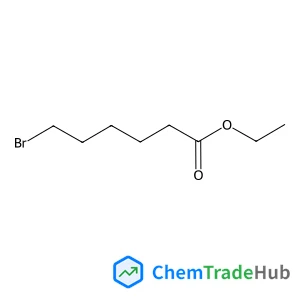
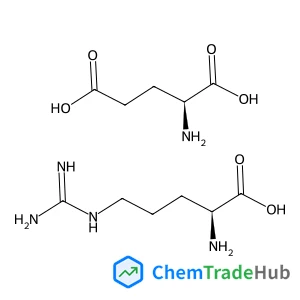
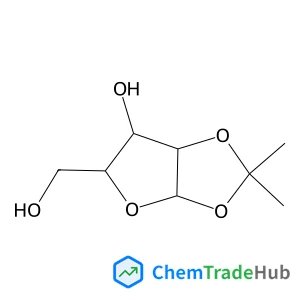
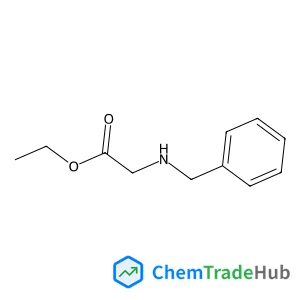
おすすめサプライヤー






免責事項
このページに表示される学術雑誌情報は、参考および研究目的のみを目的としています。当社は雑誌出版社とは提携しておらず、投稿の取り扱いも行っておりません。出版に関するお問い合わせは、各雑誌出版社に直接ご連絡ください。
表示されている情報に誤りがある場合は、support@chemtradehub.com までご連絡ください。迅速に確認し、対応いたします。