



Towards the 4 V-class n-type organic lithium-ion positive electrode materials: the case of conjugated triflimides and cyanamides
文献情報
出版日
2023-11-20
DOI
10.1039/D3EE02897F
インパクトファクター
38.532
著者
Xiaolong Guo, Petru Apostol, Xuan Zhou, Jiande Wang, Xiaodong Lin, Darsi Rambabu, Mengyuan Du, Süleyman Er, Alexandru Vlad
原文を見る
要旨
Organic electrode materials have garnered a great deal of interest owing to their sustainability, cost-efficiency, and design flexibility metrics. Despite numerous endeavors to fine-tune their redox potential, the pool of organic positive electrode materials with a redox potential above 3 V versus Li+/Li0, and maintaining air stability in the Li-reservoir configuration remains limited. This study expands the chemical landscape of organic Li-ion positive electrode chemistries towards the 4 V-class through molecular design based on electron density depletion within the redox center via the mesomeric effect of electron-withdrawing groups (EWGs). This results in the development of novel families of conjugated triflimides and cyanamides as high-voltage electrode materials for organic lithium-ion batteries. These are found to exhibit ambient air stability and demonstrate reversible electrochemistry with redox potentials spanning the range of 3.1 V to 3.8 V (versus Li+/Li0), marking the highest reported values so far within the realm of n-type organic chemistries. Through comprehensive structural analysis and extensive electrochemical studies, we elucidate the relationship between the molecular structure and the ability to fine-tune the redox potential. These findings offer promising opportunities to customize the redox properties of organic electrodes, bridging the gap with their inorganic counterparts for application in sustainable and eco-friendly electrochemical energy storage devices.
おすすめジャーナル

Main Group Chemistry

Journal of Chemical Sciences

Topics in Catalysis

Heteroatom Chemistry

Journal of Asian Natural Products Research

Critical Reviews in Solid State and Materials Sciences

Biocatalysis and Biotransformation

Acta Metallurgica Sinica-English Letters

Bioorganic & Medicinal Chemistry

Journal of the Indian Institute of Science
関連文献
Organolithium-mediated conversion of β-functionalised aziridines into alkynyl amino alcohols and diamines
Jianhui Huang, Peter O'Brien
2005-10-20
Communication
DOI: 10.1039/B510920E
Regiochemical control of the catalytic asymmetric hydroboration of 1,2-diarylalkenes
Antonia Black, John M. Brown, Christophe Pichon
2005-10-05
Communication
DOI: 10.1039/B508292G
Synthesis of pyrroles: reaction of chromium N-alkylaminocarbene complexes with α,β-unsaturated aldehydes
Kohei Fuchibe, Daisuke Ono, Takahiko Akiyama
2006-04-26
Communication
DOI: 10.1039/B602924H
Sensory hybrid host materials for the selective chromo-fluorogenic detection of biogenic amines
Beatriz García-Acosta, María Comes, Julia L. Bricks, Margarita A. Kudinova, Vladimir V. Kurdyukov, Alexei I. Tolmachev, M. Dolores Marcos, Ramón Martínez-Máñez, Ana Moreno, Félix Sancenón, Juan Soto, Luis A. Villaescusa, Knut Rurack, José M. Barat, Isabel Escriche, Pedro Amorós
2006-05-02
Communication
DOI: 10.1039/B602497A
Ag/SiO2: a novel catalyst with high activity and selectivity for hydrogenation of chloronitrobenzenes
Yangying Chen, Chuang Wang, Hongyang Liu, Jieshan Qiu, Xinhe Bao
2005-09-23
Communication
DOI: 10.1039/B509595F
An achiral form of the hexameric resorcin[4]arene capsule sustained by hydrogen bonding with alcohols
Onome Ugono, K. Travis Holman
2006-04-26
Communication
DOI: 10.1039/B604148E
Hosomi–Sakurai reactions of silacyclic allyl silanes
Jonathan D. Sellars, Patrick G. Steel, Michael J. Turner
2006-05-02
Communication
DOI: 10.1039/B602642G
Effect of tetrabutylphosphonium cation on the physico-chemical properties of amino-acid ionic liquids
Junko Kagimoto, Kenta Fukumoto, Hiroyuki Ohno
2006-04-25
Communication
DOI: 10.1039/B600771F
An azido–metal–isonicotinate complex showing long-range ordered ferromagnetic interaction: synthesis, structure and magnetic properties
Yong-Fei Zeng, Fu-Chen Liu, Jiong-Peng Zhao, Shuang Cai, Xian-He Bu, Joan Ribas
2006-04-24
Communication
DOI: 10.1039/B601311B
こちらもおすすめ
化合物よくある質問
S-(甲硅烷基丙基)異硫酰氯を取り扱う際の実験室安全事項は何ですか?
取り扱う際にはPPE(防護具)が必要です。特に手袋と面マスクは必須です。ドラフトチャンバーを使用して漏洩処理を行い、温度は常温、湿度は乾燥状態、容器はガラス容器...
84682-36-02-Amino-7,7-dimethox...
化合物よくある質問
8-硝基-咪唑并[1,2-a]吡啶とは何ですか?
8-硝基-咪唑并[1,2-a]吡啶は、CAS番号52310-46-0の化合物で、8-位に硝基を有する咪唑並みの结构をもつ吡啶の化合物です。この化合物は、酸化還元...
52310-46-08-Nitroimidazo[1,2-a...
化合物よくある質問
4-ブロモ-5-メトキシピリジン-2-甲醇の代替品はありますか?
4-ブロモ-5-メトキシピリジン-2-甲醇の代替品には、類似構造を持つ化合物や機能性に等しい代替試薬があります。例えば、4-クロロ-5-メトキシピリジン-2-甲...
1454849-84-3(4-Bromo-5-methoxy-2...
化合物よくある質問
全氟-1,2-二甲基環己烷を含む廃棄物はどのように処理すべきですか?
全氟-1,2-二甲基環己烷(CAS番号:306-98-9)の廃棄物は、特別な処理が必要です。まず、廃棄物を密閉容器に収集し、適切な防漏容器に保管します。次に、専...
306-98-91,1,2,2,3,3,4,4,5,6-...
化合物よくある質問
3-(溴甲基)苯乙酸の主な用途は何ですか?
3-(溴甲基)苯乙酸は主に研究用化学薬品として利用され、有機合成や医薬品の開発に用いられます。また、特定の化合物の合成中間体としても使用されることがあります。
118647-53-32-(3-(Bromomethyl)ph...
化合物よくある質問
5-イドキド-4-メチオキシ-6-メチルピリミジニン-2-アミンはどのように保存すればよいですか?
5-イドキド-4-メチオキシ-6-メチルピリミジニン-2-アミンは冷暗所で密栓の容器に保存し、直射日光を避けて保管することをお勧めします。温度は常温とし、湿気を...
23368-84-55-Iodo-4-methoxy-6-m...
化合物よくある質問
1-(2-溴-6-甲氧基苯基)乙酮を取り扱う際の実験室安全事項は何ですか?
実験室では、1-(2- Bromo-6-methoxyphenyl)ethanoneを取り扱う際には、ゴーグルや面具、手袋などのPPEを使用することが推奨されま...
380225-68-31-(2-Bromo-6-methoxy...
化合物よくある質問
5-(4,4,5,5-テトラメチル-1,3,2-ダイオキサボラロール-2-イル)-1,3-ジヒドロ-2-ベンゾフランは安全ですか?
5-(4,4,5,5-テトラメチル-1,3,2-ダイオキサボラロール-2-イル)-1,3-ジヒドロ-2-ベンゾフランは一般に安全ですが、取扱いには注意が必要です...
1352037-60-55-(4,4,5,5-Tetrameth...
化合物よくある質問
4-溴萘-1-甲酸の代替品はありますか?
4-溴萘-1-甲酸は比較的稀な化合物ですが、類似物としては、4-クロロ-1-ナフホリック酸やその他のブロモ置換ナフホリック酸が挙げられます。ただし、これらの代替...
16650-55-84-Bromo-1-naphthoic ...
化合物よくある質問
ε-白藜芦醇脱氢二聚体の代替品はありますか?
ε-白藜芦醇脱氢二聚体の代替品としては、ε-白藜芦醇、ポリフェノール類、フラボノイド類が挙げられます。これらは類似の化学構造と生物学的活性を持っています。ただし...
62218-08-05-{(2R,3R)-6-Hydroxy...
掲載誌
Energy & Environmental Science
CiteScore:
32.34
自己引用率:
3.4%
年間論文数:
481
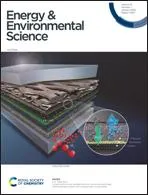
Energy & Environmental Science is an international journal dedicated to publishing exceptionally important and high quality, agenda-setting research tackling the key global and societal challenges of ensuring the provision of energy and protecting our environment for the future. The scope is intentionally broad and the journal recognises the complexity of issues and challenges relating to energy conversion and storage, alternative fuel technologies and environmental science. For work to be published it must be linked to the energy-environment nexus and be of significant general interest to our community-spanning readership. All scales of studies and analysis, from impactful fundamental advances, to interdisciplinary research across the (bio)chemical, (bio/geo)physical sciences and chemical engineering disciplines are welcomed. Topics include, but are not limited to, the following: Solar energy conversion and photovoltaics Solar fuels and artificial photosynthesis Fuel cells Hydrogen storage and (bio) hydrogen production Materials for energy systems Capture, storage and fate of CO2, including chemicals and fuels from CO2 Catalysis for a variety of feedstocks (for example, oil, gas, coal, biomass and synthesis gas) Biofuels and biorefineries Materials in extreme environments Environmental impacts of energy technologies Global atmospheric chemistry and climate change as related to energy systems Water-energy nexus Energy systems and networks Globally applicable principles of energy policy and techno-economics
おすすめ化合物
おすすめサプライヤー






免責事項
このページに表示される学術雑誌情報は、参考および研究目的のみを目的としています。当社は雑誌出版社とは提携しておらず、投稿の取り扱いも行っておりません。出版に関するお問い合わせは、各雑誌出版社に直接ご連絡ください。
表示されている情報に誤りがある場合は、support@chemtradehub.com までご連絡ください。迅速に確認し、対応いたします。