












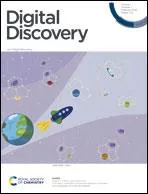
Accelerated chemical science with AI
文献情報
出版日
2023-12-06
DOI
10.1039/D3DD00213F
インパクトファクター
0
著者
Seoin Back, Michele Ceriotti, Geun Ho Gu, Jason Hein, Rodrigo Hormázabal, Seonah Kim, Woo Youn Kim, Seyed Mohamad Moosavi, Juhwan Noh, Changyoung Park, Joshua Schrier, Philippe Schwaller, Tejs Vegge
原文を見る
要旨
In light of the pressing need for practical materials and molecular solutions to renewable energy and health problems, to name just two examples, one wonders how to accelerate research and development in the chemical sciences, so as to address the time it takes to bring materials from initial discovery to commercialization. Artificial intelligence (AI)-based techniques, in particular, are having a transformative and accelerating impact on many if not most, technological domains. To shed light on these questions, the authors and participants gathered in person for the ASLLA Symposium on the theme of ‘Accelerated Chemical Science with AI’ at Gangneung, Republic of Korea. We present the findings, ideas, comments, and often contentious opinions expressed during four panel discussions related to the respective general topics: ‘Data’, ‘New applications’, ‘Machine learning algorithms’, and ‘Education’. All discussions were recorded, transcribed into text using Open AI's Whisper, and summarized using LG AI Research's EXAONE LLM, followed by revision by all authors. For the broader benefit of current researchers, educators in higher education, and academic bodies such as associations, publishers, librarians, and companies, we provide chemistry-specific recommendations and summarize the resulting conclusions.
関連文献
Unveiling the effects of post-deposition treatment with different alkaline elements on the electronic properties of CIGS thin film solar cells
Fabian Pianezzi, Patrick Reinhard, Adrian Chirilă, Benjamin Bissig, Shiro Nishiwaki, Stephan Buecheler, Ayodhya N. Tiwari
2014-03-18
Paper
DOI: 10.1039/C4CP00614C
Stress in titania nanoparticles: an atomistic study
Robert Darkins, Maria L. Sushko, Jun Liu, Dorothy M. Duffy
2014-04-03
Paper
DOI: 10.1039/C3CP54357A
Enhanced visible light photocatalytic activity of Cu2O via cationic–anionic passivated codoping
Yao Jiang, Hongkunag Yuan
2014-11-05
Paper
DOI: 10.1039/C4CP03631J
Enhancement of hydrogen production using photoactive nanoparticles on a photochemically inert photonic macroporous support
Robert Mitchell, Rik Brydson, Richard E. Douthwaite
2014-11-10
Paper
DOI: 10.1039/C4CP04333B
Towards a high thermoelectric performance in rare-earth substituted SrTiO3: effects provided by strongly-reducing sintering conditions
A. V. Kovalevsky, A. A. Yaremchenko, S. Populoh, P. Thiel, D. P. Fagg, J. R. Frade
2014-10-28
Paper
DOI: 10.1039/C4CP04127E
Timescales of water transport in viscous aerosol: measurements on sub-micron particles and dependence on conditioning history
Jessica W. Lu, Andrew M. J. Rickards, Jim S. Walker, Kerry J. Knox, Rachael E. H. Miles, Jonathan P. Reid
2013-11-29
Paper
DOI: 10.1039/C3CP54233E
Improved permeability and selectivity in porous graphene for hydrogen purification
Chengxi Huang, Haiping Wu, Kaiming Deng, Weihua Tang
2014-10-24
Communication
DOI: 10.1039/C4CP04385E
Graphene-mediated surface enhanced Raman scattering in silica mesoporous nanocomposite films
Davide Carboni, Barbara Lasio, Valeria Alzari, Alberto Mariani, Danilo Loche, Maria F. Casula, Luca Malfatti, Plinio Innocenzi
2014-09-18
Paper
DOI: 10.1039/C4CP03582H
こちらもおすすめ
化合物よくある質問
S-(甲硅烷基丙基)異硫酰氯を取り扱う際の実験室安全事項は何ですか?
取り扱う際にはPPE(防護具)が必要です。特に手袋と面マスクは必須です。ドラフトチャンバーを使用して漏洩処理を行い、温度は常温、湿度は乾燥状態、容器はガラス容器...
84682-36-02-Amino-7,7-dimethox...
化合物よくある質問
8-硝基-咪唑并[1,2-a]吡啶とは何ですか?
8-硝基-咪唑并[1,2-a]吡啶は、CAS番号52310-46-0の化合物で、8-位に硝基を有する咪唑並みの结构をもつ吡啶の化合物です。この化合物は、酸化還元...
52310-46-08-Nitroimidazo[1,2-a...
化合物よくある質問
4-ブロモ-5-メトキシピリジン-2-甲醇の代替品はありますか?
4-ブロモ-5-メトキシピリジン-2-甲醇の代替品には、類似構造を持つ化合物や機能性に等しい代替試薬があります。例えば、4-クロロ-5-メトキシピリジン-2-甲...
1454849-84-3(4-Bromo-5-methoxy-2...
化合物よくある質問
全氟-1,2-二甲基環己烷を含む廃棄物はどのように処理すべきですか?
全氟-1,2-二甲基環己烷(CAS番号:306-98-9)の廃棄物は、特別な処理が必要です。まず、廃棄物を密閉容器に収集し、適切な防漏容器に保管します。次に、専...
306-98-91,1,2,2,3,3,4,4,5,6-...
化合物よくある質問
3-(溴甲基)苯乙酸の主な用途は何ですか?
3-(溴甲基)苯乙酸は主に研究用化学薬品として利用され、有機合成や医薬品の開発に用いられます。また、特定の化合物の合成中間体としても使用されることがあります。
118647-53-32-(3-(Bromomethyl)ph...
化合物よくある質問
5-イドキド-4-メチオキシ-6-メチルピリミジニン-2-アミンはどのように保存すればよいですか?
5-イドキド-4-メチオキシ-6-メチルピリミジニン-2-アミンは冷暗所で密栓の容器に保存し、直射日光を避けて保管することをお勧めします。温度は常温とし、湿気を...
23368-84-55-Iodo-4-methoxy-6-m...
化合物よくある質問
1-(2-溴-6-甲氧基苯基)乙酮を取り扱う際の実験室安全事項は何ですか?
実験室では、1-(2- Bromo-6-methoxyphenyl)ethanoneを取り扱う際には、ゴーグルや面具、手袋などのPPEを使用することが推奨されま...
380225-68-31-(2-Bromo-6-methoxy...
化合物よくある質問
5-(4,4,5,5-テトラメチル-1,3,2-ダイオキサボラロール-2-イル)-1,3-ジヒドロ-2-ベンゾフランは安全ですか?
5-(4,4,5,5-テトラメチル-1,3,2-ダイオキサボラロール-2-イル)-1,3-ジヒドロ-2-ベンゾフランは一般に安全ですが、取扱いには注意が必要です...
1352037-60-55-(4,4,5,5-Tetrameth...
化合物よくある質問
4-溴萘-1-甲酸の代替品はありますか?
4-溴萘-1-甲酸は比較的稀な化合物ですが、類似物としては、4-クロロ-1-ナフホリック酸やその他のブロモ置換ナフホリック酸が挙げられます。ただし、これらの代替...
16650-55-84-Bromo-1-naphthoic ...
化合物よくある質問
ε-白藜芦醇脱氢二聚体の代替品はありますか?
ε-白藜芦醇脱氢二聚体の代替品としては、ε-白藜芦醇、ポリフェノール類、フラボノイド類が挙げられます。これらは類似の化学構造と生物学的活性を持っています。ただし...
62218-08-05-{(2R,3R)-6-Hydroxy...
掲載誌
おすすめ化合物
おすすめサプライヤー





免責事項
このページに表示される学術雑誌情報は、参考および研究目的のみを目的としています。当社は雑誌出版社とは提携しておらず、投稿の取り扱いも行っておりません。出版に関するお問い合わせは、各雑誌出版社に直接ご連絡ください。
表示されている情報に誤りがある場合は、support@chemtradehub.com までご連絡ください。迅速に確認し、対応いたします。