



What is missing in autonomous discovery: open challenges for the community
文献情報
出版日
2023-10-16
DOI
10.1039/D3DD00143A
インパクトファクター
0
著者
Sterling G. Baird, Keith A. Brown, Stuart I. Campbell, Orion A. Cohen, Rebecca L. Davis, Navid Haghmoradi, Howie Joress, Nicole Jung, Ha-Kyung Kwon, Gabriella Pizzuto, Jacob Rintamaki, Casper Steinmann, Luca Torresi
原文を見る
要旨
Self-driving labs (SDLs) leverage combinations of artificial intelligence, automation, and advanced computing to accelerate scientific discovery. The promise of this field has given rise to a rich community of passionate scientists, engineers, and social scientists, as evidenced by the development of the Acceleration Consortium and recent Accelerate Conference. Despite its strengths, this rapidly developing field presents numerous opportunities for growth, challenges to overcome, and potential risks of which to remain aware. This community perspective builds on a discourse instantiated during the first Accelerate Conference, and looks to the future of self-driving labs with a tempered optimism. Incorporating input from academia, government, and industry, we briefly describe the current status of self-driving labs, then turn our attention to barriers, opportunities, and a vision for what is possible. Our field is delivering solutions in technology and infrastructure, artificial intelligence and knowledge generation, and education and workforce development. In the spirit of community, we intend for this work to foster discussion and drive best practices as our field grows.
おすすめジャーナル

Biocatalysis and Biotransformation

Main Group Chemistry

Bioorganic & Medicinal Chemistry Letters

Colloid Journal

Chinese Journal of Chemistry

Acta Metallurgica Sinica-English Letters

Journal of the Indian Institute of Science

Heteroatom Chemistry

Critical Reviews in Solid State and Materials Sciences

Bioorganic & Medicinal Chemistry
関連文献
Easy access to the family of thiazole N-oxides using HOF·CH3CN
Elizabeta Amir, Shlomo Rozen
2006-04-25
Communication
DOI: 10.1039/B602594C
Hemiaminals as substrates for sulfur ylides: Direct asymmetric syntheses of functionalised pyrrolidines and piperidines
Christoforos G. Kokotos, Varinder K. Aggarwal
2006-04-13
Communication
DOI: 10.1039/B602226J
The pentanuclear Feii cluster [(C5H4)6Fe5]2−: bringing together ferrocene sandwiches and homoleptic Feii-cyclopentadienyl σ-complexes
Ingeborg Sänger, Julia B. Heilmann, Michael Bolte, Hans-Wolfram Lerner, Matthias Wagner
2006-04-07
Communication
DOI: 10.1039/B602359B
Samarium diiodide-induced intramolecular pinacol coupling of dinitrones: synthesis of cyclic cis-vicinal diamines
Jean-Philippe Ebran, Rita G. Hazell, Troels Skrydstrup
2005-09-30
Communication
DOI: 10.1039/B511491H
Bergman cyclopolymerization within the channels of functional hybrid nanocomposites formed by co-assembly of silica and polymerizable surfactant monomer
Chetan Jagdish Bhongale, Chung-He Yang, Chain-Shu Hsu
2006-04-26
Communication
DOI: 10.1039/B603195A
Platinum–acetylide polymer based solar cells: involvement of the triplet state for energy conversion
Fengqi Guo, Young-Gi Kim, John R. Reynolds, Kirk S. Schanze
2006-03-21
Communication
DOI: 10.1039/B516086C
Sandwich-shaped silver(i) metallomacrocycles encapsulating a XF62− (X = Si, Ge and Sn) anion
Masahiko Maekawa, Susumu Kitagawa, Takayoshi Kuroda-Sowa, Megumu Munakata
2006-03-17
Communication
DOI: 10.1039/B518411H
Supramolecular cruciforms
Warren W. Gerhardt, Anthony J. Zucchero, James N. Wilson, Clinton R. South, Uwe H. F. Bunz, Marcus Weck
2006-03-21
Communication
DOI: 10.1039/B602087A
On the influence of porphyrin π–π stacking on supramolecular chirality created in the porphyrin-based twisted tape structure
Masayuki Takeuchi, Satoshi Tanaka, Seiji Shinkai
2005-10-04
Communication
DOI: 10.1039/B512128K
こちらもおすすめ
化合物よくある質問
S-(甲硅烷基丙基)異硫酰氯を取り扱う際の実験室安全事項は何ですか?
取り扱う際にはPPE(防護具)が必要です。特に手袋と面マスクは必須です。ドラフトチャンバーを使用して漏洩処理を行い、温度は常温、湿度は乾燥状態、容器はガラス容器...
84682-36-02-Amino-7,7-dimethox...
化合物よくある質問
8-硝基-咪唑并[1,2-a]吡啶とは何ですか?
8-硝基-咪唑并[1,2-a]吡啶は、CAS番号52310-46-0の化合物で、8-位に硝基を有する咪唑並みの结构をもつ吡啶の化合物です。この化合物は、酸化還元...
52310-46-08-Nitroimidazo[1,2-a...
化合物よくある質問
4-ブロモ-5-メトキシピリジン-2-甲醇の代替品はありますか?
4-ブロモ-5-メトキシピリジン-2-甲醇の代替品には、類似構造を持つ化合物や機能性に等しい代替試薬があります。例えば、4-クロロ-5-メトキシピリジン-2-甲...
1454849-84-3(4-Bromo-5-methoxy-2...
化合物よくある質問
全氟-1,2-二甲基環己烷を含む廃棄物はどのように処理すべきですか?
全氟-1,2-二甲基環己烷(CAS番号:306-98-9)の廃棄物は、特別な処理が必要です。まず、廃棄物を密閉容器に収集し、適切な防漏容器に保管します。次に、専...
306-98-91,1,2,2,3,3,4,4,5,6-...
化合物よくある質問
3-(溴甲基)苯乙酸の主な用途は何ですか?
3-(溴甲基)苯乙酸は主に研究用化学薬品として利用され、有機合成や医薬品の開発に用いられます。また、特定の化合物の合成中間体としても使用されることがあります。
118647-53-32-(3-(Bromomethyl)ph...
化合物よくある質問
5-イドキド-4-メチオキシ-6-メチルピリミジニン-2-アミンはどのように保存すればよいですか?
5-イドキド-4-メチオキシ-6-メチルピリミジニン-2-アミンは冷暗所で密栓の容器に保存し、直射日光を避けて保管することをお勧めします。温度は常温とし、湿気を...
23368-84-55-Iodo-4-methoxy-6-m...
化合物よくある質問
1-(2-溴-6-甲氧基苯基)乙酮を取り扱う際の実験室安全事項は何ですか?
実験室では、1-(2- Bromo-6-methoxyphenyl)ethanoneを取り扱う際には、ゴーグルや面具、手袋などのPPEを使用することが推奨されま...
380225-68-31-(2-Bromo-6-methoxy...
化合物よくある質問
5-(4,4,5,5-テトラメチル-1,3,2-ダイオキサボラロール-2-イル)-1,3-ジヒドロ-2-ベンゾフランは安全ですか?
5-(4,4,5,5-テトラメチル-1,3,2-ダイオキサボラロール-2-イル)-1,3-ジヒドロ-2-ベンゾフランは一般に安全ですが、取扱いには注意が必要です...
1352037-60-55-(4,4,5,5-Tetrameth...
化合物よくある質問
4-溴萘-1-甲酸の代替品はありますか?
4-溴萘-1-甲酸は比較的稀な化合物ですが、類似物としては、4-クロロ-1-ナフホリック酸やその他のブロモ置換ナフホリック酸が挙げられます。ただし、これらの代替...
16650-55-84-Bromo-1-naphthoic ...
化合物よくある質問
ε-白藜芦醇脱氢二聚体の代替品はありますか?
ε-白藜芦醇脱氢二聚体の代替品としては、ε-白藜芦醇、ポリフェノール類、フラボノイド類が挙げられます。これらは類似の化学構造と生物学的活性を持っています。ただし...
62218-08-05-{(2R,3R)-6-Hydroxy...
掲載誌
おすすめ化合物
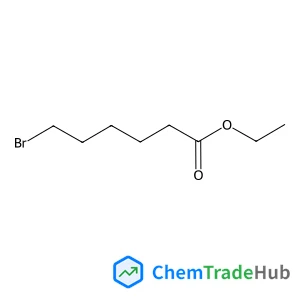
![N-[(9H-Fluoren-9-ylmethoxy)carbonyl]serine structure](https://static.chemtradehub.com/structs/737/73724-45-5-b0dc.webp "N-[(9H-Fluoren-9-ylmethoxy)carbonyl]serine structure")
おすすめサプライヤー




免責事項
このページに表示される学術雑誌情報は、参考および研究目的のみを目的としています。当社は雑誌出版社とは提携しておらず、投稿の取り扱いも行っておりません。出版に関するお問い合わせは、各雑誌出版社に直接ご連絡ください。
表示されている情報に誤りがある場合は、support@chemtradehub.com までご連絡ください。迅速に確認し、対応いたします。