












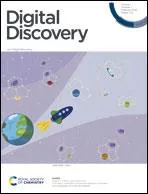

Machine learning based feature engineering for thermoelectric materials by design
文献情報
出版日
2024-01-03
DOI
10.1039/D3DD00131H
インパクトファクター
0
著者
U. S. Vaitesswar, Tan Huang, Jose Recatala-Gomez, Shuo-Wang Yang
原文を見る
要旨
Availability of material datasets through high performance computing has enabled the use of machine learning to not only discover correlations and employ materials informatics to perform screening, but also to take the first steps towards materials by design. Computational materials databases are well-labelled and provide a fertile ground for predicting both ground-state and functional properties of materials. However, a clear design approach that allows prediction of materials with the desired functional performance does not yet exist. In this work, we train various machine learning models on a dataset curated from a combination of Materials Project as well as computationally calculated thermoelectric electronic power factor using a constant relaxation time Boltzmann transport equation (BoltzTrap). We show that simple random forest-based machine learning models outperform more complex neural network-based approaches on the moderately sized dataset and also allow for interpretability. In addition, when trained on only cubic material systems, the best performing machine learning model employs a perturbative scanning approach to find new candidates in Materials Project that it has never seen before, and automatically converges upon half-Heusler alloys as promising thermoelectric materials. We validate this prediction by performing density functional theory and BoltzTrap calculations to reveal accurate matching. One of those predicted to be a good material, NbFeSb, has been studied recently by the thermoelectric community; from this study, we propose four new half-Heusler compounds as promising thermoelectric materials – TiGePt, ZrInAu, ZrSiPd and ZrSiPt. Our approach is generalizable to extrapolate into previously unexplored material spaces and establishes an automated pipeline for the development of high-throughput functional materials.
関連文献
Synthesis and spectroscopic observation of dendrimer-encapsulated gold nanoclusters
M. Linh Tran, Andrei V. Zvyagin, Taras Plakhotnik
2006-05-03
Communication
DOI: 10.1039/B602079H
Efficient dynamic kinetic resolution of secondary amines with Pd on alkaline earth salts and a lipase
Andrei Parvulescu, Dirk De Vos, Pierre Jacobs
2005-09-23
Communication
DOI: 10.1039/B509747A
A novel mediatorless microbial fuel cell based on direct biocatalysis of Escherichia coli
Tian Zhang, Changzheng Cui, Shengli Chen, Xinping Ai, Hanxi Yang, Ping Shen, Zhenrong Peng
2006-04-25
Communication
DOI: 10.1039/B600876C
Metal complexes of selenophosphinates from reactions with (R2PSe)2Se: [M(R2PSe2)n] (M = ZnII, CdII, PbII, InIII, GaIII, CuI, BiIII, NiII; R = iPr, Ph) and [MoV2O2Se2(Se2PiPr2)2]
Chinh Q. Nguyen, Adekunle Adeogun, Mohammad Afzaal, Mohammad A. Malik, Paul O'Brien
2006-04-21
Communication
DOI: 10.1039/B603198F
Sandwich-shaped silver(i) metallomacrocycles encapsulating a XF62− (X = Si, Ge and Sn) anion
Masahiko Maekawa, Susumu Kitagawa, Takayoshi Kuroda-Sowa, Megumu Munakata
2006-03-17
Communication
DOI: 10.1039/B518411H
Monitoring the formation of TTF dimers by Na+ complexation
Marc Sallé, Jean-Yves Balandier, Franck Le Derf, Eric Levillain, Magali Allain, Pascal Viel, Serge Palacin
2006-03-30
Communication
DOI: 10.1039/B518275A
Insulated conducting polymers: manipulating charge transport using supramolecular complexes
Phoebe H. Kwan, Timothy M. Swager
2005-09-21
Communication
DOI: 10.1039/B508399K
Synthesis of pyrroles: reaction of chromium N-alkylaminocarbene complexes with α,β-unsaturated aldehydes
Kohei Fuchibe, Daisuke Ono, Takahiko Akiyama
2006-04-26
Communication
DOI: 10.1039/B602924H
こちらもおすすめ
化合物よくある質問
S-(甲硅烷基丙基)異硫酰氯を取り扱う際の実験室安全事項は何ですか?
取り扱う際にはPPE(防護具)が必要です。特に手袋と面マスクは必須です。ドラフトチャンバーを使用して漏洩処理を行い、温度は常温、湿度は乾燥状態、容器はガラス容器...
84682-36-02-Amino-7,7-dimethox...
化合物よくある質問
8-硝基-咪唑并[1,2-a]吡啶とは何ですか?
8-硝基-咪唑并[1,2-a]吡啶は、CAS番号52310-46-0の化合物で、8-位に硝基を有する咪唑並みの结构をもつ吡啶の化合物です。この化合物は、酸化還元...
52310-46-08-Nitroimidazo[1,2-a...
化合物よくある質問
4-ブロモ-5-メトキシピリジン-2-甲醇の代替品はありますか?
4-ブロモ-5-メトキシピリジン-2-甲醇の代替品には、類似構造を持つ化合物や機能性に等しい代替試薬があります。例えば、4-クロロ-5-メトキシピリジン-2-甲...
1454849-84-3(4-Bromo-5-methoxy-2...
化合物よくある質問
全氟-1,2-二甲基環己烷を含む廃棄物はどのように処理すべきですか?
全氟-1,2-二甲基環己烷(CAS番号:306-98-9)の廃棄物は、特別な処理が必要です。まず、廃棄物を密閉容器に収集し、適切な防漏容器に保管します。次に、専...
306-98-91,1,2,2,3,3,4,4,5,6-...
化合物よくある質問
3-(溴甲基)苯乙酸の主な用途は何ですか?
3-(溴甲基)苯乙酸は主に研究用化学薬品として利用され、有機合成や医薬品の開発に用いられます。また、特定の化合物の合成中間体としても使用されることがあります。
118647-53-32-(3-(Bromomethyl)ph...
化合物よくある質問
5-イドキド-4-メチオキシ-6-メチルピリミジニン-2-アミンはどのように保存すればよいですか?
5-イドキド-4-メチオキシ-6-メチルピリミジニン-2-アミンは冷暗所で密栓の容器に保存し、直射日光を避けて保管することをお勧めします。温度は常温とし、湿気を...
23368-84-55-Iodo-4-methoxy-6-m...
化合物よくある質問
1-(2-溴-6-甲氧基苯基)乙酮を取り扱う際の実験室安全事項は何ですか?
実験室では、1-(2- Bromo-6-methoxyphenyl)ethanoneを取り扱う際には、ゴーグルや面具、手袋などのPPEを使用することが推奨されま...
380225-68-31-(2-Bromo-6-methoxy...
化合物よくある質問
5-(4,4,5,5-テトラメチル-1,3,2-ダイオキサボラロール-2-イル)-1,3-ジヒドロ-2-ベンゾフランは安全ですか?
5-(4,4,5,5-テトラメチル-1,3,2-ダイオキサボラロール-2-イル)-1,3-ジヒドロ-2-ベンゾフランは一般に安全ですが、取扱いには注意が必要です...
1352037-60-55-(4,4,5,5-Tetrameth...
化合物よくある質問
4-溴萘-1-甲酸の代替品はありますか?
4-溴萘-1-甲酸は比較的稀な化合物ですが、類似物としては、4-クロロ-1-ナフホリック酸やその他のブロモ置換ナフホリック酸が挙げられます。ただし、これらの代替...
16650-55-84-Bromo-1-naphthoic ...
化合物よくある質問
ε-白藜芦醇脱氢二聚体の代替品はありますか?
ε-白藜芦醇脱氢二聚体の代替品としては、ε-白藜芦醇、ポリフェノール類、フラボノイド類が挙げられます。これらは類似の化学構造と生物学的活性を持っています。ただし...
62218-08-05-{(2R,3R)-6-Hydroxy...
掲載誌
おすすめ化合物

おすすめサプライヤー




免責事項
このページに表示される学術雑誌情報は、参考および研究目的のみを目的としています。当社は雑誌出版社とは提携しておらず、投稿の取り扱いも行っておりません。出版に関するお問い合わせは、各雑誌出版社に直接ご連絡ください。
表示されている情報に誤りがある場合は、support@chemtradehub.com までご連絡ください。迅速に確認し、対応いたします。