












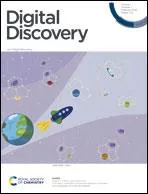

Autonomous biomimetic solid dispensing using a dual-arm robotic manipulator
文献情報
出版日
2023-06-28
DOI
10.1039/D3DD00075C
インパクトファクター
0
著者
Ying Jiang, Hatem Fakhruldeen, Gabriella Pizzuto, Louis Longley, Tianwei Dai, Rob Clowes, Nicola Rankin, Andrew I. Cooper
原文を見る
要旨
Automation and robotics have the potential to transform the landscape of chemistry and materials research. However, there are still many repetitive manual processes in the laboratory that are challenging to automate. Solid dispensing is a key technique that underpins chemistry and materials science. Conventionally, a scientist weighs samples using a spatula and balance. While there are commercial implementations that automate solid dispensing, these can be costly and the methods suffer from certain limitations in terms of breadth of application, scale, and accuracy. Here, we demonstrate an automated solid dispensing system that uses a highly dexterous dual-arm robotic manipulator. The system can transfer milligram up to gram quantities of solids in a bio-mimetic fashion, mimicking the way that a scientist uses a spatula and an analytical balance. The core of this automated system is the dual-arm robot coupled with a fuzzy logic control algorithm to select the appropriate motion parameters and to manipulate spatulas of various sizes to dispense solids. Our early results suggest that this weighing method could have improved generality across a wide range of solid materials, including solids that abrade or block solid dispensing units that have moving parts. The dual-arm robot is also significantly cheaper than most commercially available solid dispensing platforms. Experiments indicate that our platform can automatically dispense solids with an accuracy as low as 2 mg, with the added functionality of resetting and dispensing again if the sample weight exceeds a predefined tolerance.
関連文献
Towards a high thermoelectric performance in rare-earth substituted SrTiO3: effects provided by strongly-reducing sintering conditions
A. V. Kovalevsky, A. A. Yaremchenko, S. Populoh, P. Thiel, D. P. Fagg, J. R. Frade
2014-10-28
Paper
DOI: 10.1039/C4CP04127E
Exploring zinc coordination in novel zinc battery electrolytes
Mega Kar, Bjorn Winther-Jensen, Maria Forsyth, Douglas R. MacFarlane
2014-04-24
Paper
DOI: 10.1039/C4CP00749B
Di- and tri-oxalkyl derivatives of a boron dipyrromethene (BODIPY) rotor dye in lipid bilayers
Marie Olšinová, Piotr Jurkiewicz, Michal Pozník, Radek Šachl, Tereza Prausová, Martin Hof, Václav Kozmík, Filip Teplý, Jiří Svoboda, Marek Cebecauer
2014-04-10
Paper
DOI: 10.1039/C4CP00888J
Lithium conductivity in glasses of the Li2O–Al2O3–SiO2 system
Sebastian Ross
2014-11-03
Paper
DOI: 10.1039/C4CP03609C
Structural dynamics effects on the ultrafast chemical bond cleavage of a photodissociation reaction
María E. Corrales, Garikoitz Balerdi, Rebeca de Nalda, Luis Bañares, Ahmed H. Zewail
2013-12-24
Paper
DOI: 10.1039/C3CP54677B
Dimeric phenanthroimidazole for blue electroluminescent materials: the effect of substituted position attached to biphenyl center
Zhiming Wang, Ying Feng, Hui Li, Zhao Gao, Xiaojuan Zhang, Ping Lu, Ping Chen, Yuguang Ma, Shiyong Liu
2014-03-07
Paper
DOI: 10.1039/C4CP00209A
Effects on electrochemical performances for host material caused by structure change of modifying material
Yantao Zhang, Enlou Zhou, Dawei Song, Xixi Shi, Xiaoqing Wang, Jian Guo, Lianqi Zhang
2014-06-18
Paper
DOI: 10.1039/C4CP01897D
Systematic study on novel catalytic activity of CO oxidation driven by strong electronic interaction between the monatomic-layered Pt30 cluster disk and the Si substrate
Hisato Yasumatsu, Nobuyuki Fukui
2014-07-03
Paper
DOI: 10.1039/C4CP02221A
Ab initio and metadynamics studies on the role of essential functional groups in biomineralization of calcium carbonate and environmental situations
Moumita Saharay, R. James Kirkpatrick
2014-10-22
Paper
DOI: 10.1039/C4CP03904A
PICVib: an accurate, fast and simple procedure to investigate selected vibrational modes and evaluate infrared intensities
Marcus V. P. dos Santos, Yaicel G. Proenza, Ricardo L. Longo
2014-07-07
Paper
DOI: 10.1039/C4CP02279C
こちらもおすすめ
化合物よくある質問
S-(甲硅烷基丙基)異硫酰氯を取り扱う際の実験室安全事項は何ですか?
取り扱う際にはPPE(防護具)が必要です。特に手袋と面マスクは必須です。ドラフトチャンバーを使用して漏洩処理を行い、温度は常温、湿度は乾燥状態、容器はガラス容器...
84682-36-02-Amino-7,7-dimethox...
化合物よくある質問
8-硝基-咪唑并[1,2-a]吡啶とは何ですか?
8-硝基-咪唑并[1,2-a]吡啶は、CAS番号52310-46-0の化合物で、8-位に硝基を有する咪唑並みの结构をもつ吡啶の化合物です。この化合物は、酸化還元...
52310-46-08-Nitroimidazo[1,2-a...
化合物よくある質問
4-ブロモ-5-メトキシピリジン-2-甲醇の代替品はありますか?
4-ブロモ-5-メトキシピリジン-2-甲醇の代替品には、類似構造を持つ化合物や機能性に等しい代替試薬があります。例えば、4-クロロ-5-メトキシピリジン-2-甲...
1454849-84-3(4-Bromo-5-methoxy-2...
化合物よくある質問
全氟-1,2-二甲基環己烷を含む廃棄物はどのように処理すべきですか?
全氟-1,2-二甲基環己烷(CAS番号:306-98-9)の廃棄物は、特別な処理が必要です。まず、廃棄物を密閉容器に収集し、適切な防漏容器に保管します。次に、専...
306-98-91,1,2,2,3,3,4,4,5,6-...
化合物よくある質問
3-(溴甲基)苯乙酸の主な用途は何ですか?
3-(溴甲基)苯乙酸は主に研究用化学薬品として利用され、有機合成や医薬品の開発に用いられます。また、特定の化合物の合成中間体としても使用されることがあります。
118647-53-32-(3-(Bromomethyl)ph...
化合物よくある質問
5-イドキド-4-メチオキシ-6-メチルピリミジニン-2-アミンはどのように保存すればよいですか?
5-イドキド-4-メチオキシ-6-メチルピリミジニン-2-アミンは冷暗所で密栓の容器に保存し、直射日光を避けて保管することをお勧めします。温度は常温とし、湿気を...
23368-84-55-Iodo-4-methoxy-6-m...
化合物よくある質問
1-(2-溴-6-甲氧基苯基)乙酮を取り扱う際の実験室安全事項は何ですか?
実験室では、1-(2- Bromo-6-methoxyphenyl)ethanoneを取り扱う際には、ゴーグルや面具、手袋などのPPEを使用することが推奨されま...
380225-68-31-(2-Bromo-6-methoxy...
化合物よくある質問
5-(4,4,5,5-テトラメチル-1,3,2-ダイオキサボラロール-2-イル)-1,3-ジヒドロ-2-ベンゾフランは安全ですか?
5-(4,4,5,5-テトラメチル-1,3,2-ダイオキサボラロール-2-イル)-1,3-ジヒドロ-2-ベンゾフランは一般に安全ですが、取扱いには注意が必要です...
1352037-60-55-(4,4,5,5-Tetrameth...
化合物よくある質問
4-溴萘-1-甲酸の代替品はありますか?
4-溴萘-1-甲酸は比較的稀な化合物ですが、類似物としては、4-クロロ-1-ナフホリック酸やその他のブロモ置換ナフホリック酸が挙げられます。ただし、これらの代替...
16650-55-84-Bromo-1-naphthoic ...
化合物よくある質問
ε-白藜芦醇脱氢二聚体の代替品はありますか?
ε-白藜芦醇脱氢二聚体の代替品としては、ε-白藜芦醇、ポリフェノール類、フラボノイド類が挙げられます。これらは類似の化学構造と生物学的活性を持っています。ただし...
62218-08-05-{(2R,3R)-6-Hydroxy...
掲載誌
おすすめ化合物

![(1S)-1,5-Anhydro-1-[3-(1-benzothiophen-2-ylmethyl)-4-fluorophenyl]-D-glucitol structure](https://static.chemtradehub.com/structs/761/761423-87-4-dbeb.webp "(1S)-1,5-Anhydro-1-[3-(1-benzothiophen-2-ylmethyl)-4-fluorophenyl]-D-glucitol structure")
(1S)-1,5-Anhydro-1-[3-(1-benzothiophen-2-ylmethyl)-4-fluorophenyl]-D-glucitol
CAS番号:
761423-87-4
分子式:
C21H21FO5S

おすすめサプライヤー



免責事項
このページに表示される学術雑誌情報は、参考および研究目的のみを目的としています。当社は雑誌出版社とは提携しておらず、投稿の取り扱いも行っておりません。出版に関するお問い合わせは、各雑誌出版社に直接ご連絡ください。
表示されている情報に誤りがある場合は、support@chemtradehub.com までご連絡ください。迅速に確認し、対応いたします。