












Front cover
文献情報
出版日
2023-08-02
DOI
10.1039/D3CP90162A
インパクトファクター
3.676
著者
原文を見る
要旨
A graphical abstract is available for this content
関連文献
Fungi-enabled pore channel regulation and defect engineering of a novel micro-reactor for treating complex effluents
Xiaoying Jiang, Yan Zhang, Feiyang Zhang, Jiashuo Tian, Liuping Zhang, Xinrui Zhao, Fengling Cui
2023-03-08
Paper
DOI: 10.1039/D2CP05608A
Tuning of the electronic and photocatalytic properties of Janus WSiGeZ4 (Z = N, P, and As) monolayers via strain engineering
Ming-Yang Liu, Yao He, Xuan Li, Kai Xiong
2023-02-03
Paper
DOI: 10.1039/D2CP05224E
Insight into the structural and electrochemical properties of the interface between a Na6SOI2 solid electrolyte and a metallic Na anode
Song-Hyok Choe, Won-Hyok Hong, Kum-Chol Kim, Chol-Jun Yu
2023-02-22
Paper
DOI: 10.1039/D2CP05290C
Efficient photocatalytic hydrogen evolution and CO2 reduction by HfSe2/GaAs3 and ZrSe2/GaAs3 heterostructures with direct Z-schemes
Xue-Qing Wan, Chuan-Lu Yang, Mei-Shan Wang, Xiao-Guang Ma
2023-03-01
Paper
DOI: 10.1039/D2CP05902A
Surface specific adsorption of glucose to ZnO
Sasthi Charan Mandal, Jaydeb Chakrabarti
2023-02-15
Paper
DOI: 10.1039/D2CP05749B
Triplet generation at the CdTe quantum dot/anthracene interface mediated by hot and thermalized electron exchange for enhanced production of singlet oxygen
Zhen Chi, Jia Xu, Shida Luo, Xia Ran, Xiaojuan Wang, Pingan Liu, Yulu He, Yanmin Kuang, Lijun Guo
2023-03-04
Paper
DOI: 10.1039/D3CP00021D
Phenediamine bridging phthalocyanine-based covalent organic framework polymers used as anode materials for lithium-ion batteries
Luyi Wang, Jianjun Zhao, Tingting Jiang, Shengwen Zhong, Sydorov Dmytro
2023-02-17
Paper
DOI: 10.1039/D3CP00007A
Chemical similarity of dialkyl carbonates and carbon dioxide opens an avenue for novel greenhouse gas scavengers: cheap recycling and low volatility via experiments and simulations
Vitaly V. Chaban, Franciele L. Bernard, Leonardo M. dos Santos
2023-02-22
Paper
DOI: 10.1039/D2CP06089B
Thermodynamic and optical properties of HCOOH(H2O)n and HCOOH(NH3)(H2O)(n−1) clusters at various temperatures and pressures: a computational study
Arnab Patla, Ranga Subramanian
2023-02-10
Paper
DOI: 10.1039/D2CP03908G
こちらもおすすめ
化合物よくある質問
S-(甲硅烷基丙基)異硫酰氯を取り扱う際の実験室安全事項は何ですか?
取り扱う際にはPPE(防護具)が必要です。特に手袋と面マスクは必須です。ドラフトチャンバーを使用して漏洩処理を行い、温度は常温、湿度は乾燥状態、容器はガラス容器...
84682-36-02-Amino-7,7-dimethox...
化合物よくある質問
8-硝基-咪唑并[1,2-a]吡啶とは何ですか?
8-硝基-咪唑并[1,2-a]吡啶は、CAS番号52310-46-0の化合物で、8-位に硝基を有する咪唑並みの结构をもつ吡啶の化合物です。この化合物は、酸化還元...
52310-46-08-Nitroimidazo[1,2-a...
化合物よくある質問
4-ブロモ-5-メトキシピリジン-2-甲醇の代替品はありますか?
4-ブロモ-5-メトキシピリジン-2-甲醇の代替品には、類似構造を持つ化合物や機能性に等しい代替試薬があります。例えば、4-クロロ-5-メトキシピリジン-2-甲...
1454849-84-3(4-Bromo-5-methoxy-2...
化合物よくある質問
全氟-1,2-二甲基環己烷を含む廃棄物はどのように処理すべきですか?
全氟-1,2-二甲基環己烷(CAS番号:306-98-9)の廃棄物は、特別な処理が必要です。まず、廃棄物を密閉容器に収集し、適切な防漏容器に保管します。次に、専...
306-98-91,1,2,2,3,3,4,4,5,6-...
化合物よくある質問
3-(溴甲基)苯乙酸の主な用途は何ですか?
3-(溴甲基)苯乙酸は主に研究用化学薬品として利用され、有機合成や医薬品の開発に用いられます。また、特定の化合物の合成中間体としても使用されることがあります。
118647-53-32-(3-(Bromomethyl)ph...
化合物よくある質問
5-イドキド-4-メチオキシ-6-メチルピリミジニン-2-アミンはどのように保存すればよいですか?
5-イドキド-4-メチオキシ-6-メチルピリミジニン-2-アミンは冷暗所で密栓の容器に保存し、直射日光を避けて保管することをお勧めします。温度は常温とし、湿気を...
23368-84-55-Iodo-4-methoxy-6-m...
化合物よくある質問
1-(2-溴-6-甲氧基苯基)乙酮を取り扱う際の実験室安全事項は何ですか?
実験室では、1-(2- Bromo-6-methoxyphenyl)ethanoneを取り扱う際には、ゴーグルや面具、手袋などのPPEを使用することが推奨されま...
380225-68-31-(2-Bromo-6-methoxy...
化合物よくある質問
5-(4,4,5,5-テトラメチル-1,3,2-ダイオキサボラロール-2-イル)-1,3-ジヒドロ-2-ベンゾフランは安全ですか?
5-(4,4,5,5-テトラメチル-1,3,2-ダイオキサボラロール-2-イル)-1,3-ジヒドロ-2-ベンゾフランは一般に安全ですが、取扱いには注意が必要です...
1352037-60-55-(4,4,5,5-Tetrameth...
化合物よくある質問
4-溴萘-1-甲酸の代替品はありますか?
4-溴萘-1-甲酸は比較的稀な化合物ですが、類似物としては、4-クロロ-1-ナフホリック酸やその他のブロモ置換ナフホリック酸が挙げられます。ただし、これらの代替...
16650-55-84-Bromo-1-naphthoic ...
化合物よくある質問
ε-白藜芦醇脱氢二聚体の代替品はありますか?
ε-白藜芦醇脱氢二聚体の代替品としては、ε-白藜芦醇、ポリフェノール類、フラボノイド類が挙げられます。これらは類似の化学構造と生物学的活性を持っています。ただし...
62218-08-05-{(2R,3R)-6-Hydroxy...
掲載誌
Physical Chemistry Chemical Physics

CiteScore:
5.5
自己引用率:
10.3%
年間論文数:
3036
Physical Chemistry Chemical Physics (PCCP) is an international journal co-owned by 19 physical chemistry and physics societies from around the world. This journal publishes original, cutting-edge research in physical chemistry, chemical physics and biophysical chemistry. To be suitable for publication in PCCP, articles must include significant innovation and/or insight into physical chemistry; this is the most important criterion that reviewers and Editors will judge against when evaluating submissions. The journal has a broad scope and welcomes contributions spanning experiment, theory, computation and data science. Topical coverage includes spectroscopy, dynamics, kinetics, statistical mechanics, thermodynamics, electrochemistry, catalysis, surface science, quantum mechanics, quantum computing and machine learning. Interdisciplinary research areas such as polymers and soft matter, materials, nanoscience, energy, surfaces/interfaces, and biophysical chemistry are welcomed if they demonstrate significant innovation and/or insight into physical chemistry. Joined experimental/theoretical studies are particularly appreciated when complementary and based on up-to-date approaches.
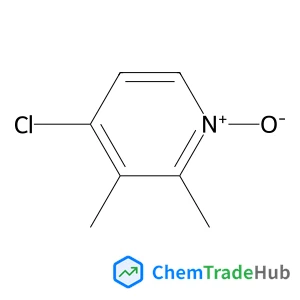
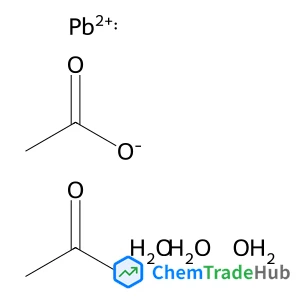
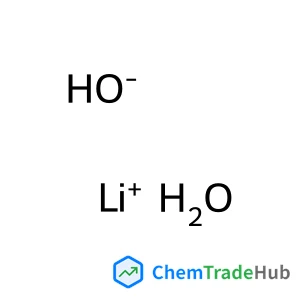
おすすめ化合物
おすすめサプライヤー




免責事項
このページに表示される学術雑誌情報は、参考および研究目的のみを目的としています。当社は雑誌出版社とは提携しておらず、投稿の取り扱いも行っておりません。出版に関するお問い合わせは、各雑誌出版社に直接ご連絡ください。
表示されている情報に誤りがある場合は、support@chemtradehub.com までご連絡ください。迅速に確認し、対応いたします。