













Theoretical insights into surface-phase transition and ion competition during alkali ion intercalation on the Cu4Se4 nanosheet
文献情報
出版日
2023-11-21
DOI
10.1039/D3CP05423C
インパクトファクター
3.676
著者
Yang-Xin Yu
原文を見る
要旨
The development of stable and efficient electrode materials is imperative and also indispensable for further commercialization of sodium/potassium-ion batteries (SIBs/PIBs) and new detrimental issues such as proton intercalation arise when utilizing aqueous electrolytes. Herein the electrochemical performance of the Cu4Se4 nanosheet was determined for both organic and aqueous SIBs and PIBs. By means of density functional theory calculation, Na+, K+ and H+ intercalations onto both sides of the Cu4Se4 nanosheet were revealed. The Cu4Se4 nanosheet well maintains its metallic electronic conductivity and the changes in lateral lattice parameters are within 4.66% during the whole Na+/K+ intercalation process for both SIBS and PIBs. The theoretical maximum Na/K storage capacity of 188.07 mA h g−1 can be achieved by stabilized second-layer adsorption of Na+/K+. The migration barriers of Na and K atoms on the Cu4Se4 nanosheet are 0.270 and 0.173 eV, respectively. It was discovered that Na/K- intercalation in the first layer is accompanied by a first-order surface phase transition, resulting in an intercalation voltage plateau of 0.659/0.756 V, respectively. The region of the two-surface phase coexistence for PIBs, is shifted toward a lower coverage when compared with that for SIBs. The partially protonated Cu4Se4 nanosheet (HxCu4Se4, x ≤ 10/9) was revealed to be structurally and thermodynamically stable. While the partially protonated Cu4Se4 nanosheet is favorable in acidic electrolytes (pH = 0) when protons and Na/K ions compete, we showed that Na+/K+ intercalated products may be preferred over H+ at low coverages in alkali electrolyte (pH = 14). However, the proton intercalation substantially decreases the battery capacity in aqueous SIBs and PIBs. Our work not only identifies the promising performance of Cu4Se4 nanosheets as an electrode material of SIBs and PIBs, but also provides a computational method for aqueous metal-ion batteries.
関連文献
A highly sensitive and versatile chiral sensor based on a top-gate organic field effect transistor functionalized with thiolated β-cyclodextrin
Xuepeng Wang, Yifan Wu, Yin Xiao
2019-02-20
Paper
DOI: 10.1039/C8AN02339E
Paper-based nucleic acid amplification tests for point-of-care diagnostics
Navjot Kaur, Bhushan J. Toley
2018-04-07
Critical Review
DOI: 10.1039/C7AN01943B
Short-chain lipid-conjugated pH sensors for imaging of transporter activities in reconstituted systems and living cells
Ronja Marie Kühnel, Gerdi Christine Kemmer, Jürgen Schiller, Michael Palmgren, Bo Højen Justesen
2019-03-11
Paper
DOI: 10.1039/C8AN02161A
A ratiometric strategy -based electrochemical sensing interface for the sensitive and reliable detection of imidacloprid
Xueyan Li, Xianwen Kan
2018-04-06
Paper
DOI: 10.1039/C8AN00111A
Voltammetric determination of N-hydroxysuccinimide at conductive diamond electrodes
Tanta Spataru, Mihai Marian Radu, Nicolae Spataru, Akira Fujishima
2018-04-18
Paper
DOI: 10.1039/C8AN00281A
Novel magnetic hollow zein nanoparticles for preconcentration of chlorpyrifos from water and soil samples prior to analysis via high-performance liquid chromatography (HPLC)
Mojtaba Rahimi Moghadam, Behrooz Zargar, Saadat Rastegarzadeh
2018-04-03
Paper
DOI: 10.1039/C7AN01526G
Identification and characterization of different tissues in blood vessel by multiplexed fluorescence lifetimes
Teng Luo, Danying Lin, Ting Zhou, Yuan Lu, Shaoxiong Liu, Junle Qu
2018-03-27
Paper
DOI: 10.1039/C8AN00392K
Metal ions induced secondary structure rearrangements: mechanically interlocked lasso vs. unthreaded branched-cyclic topoisomers
Kevin Jeanne Dit Fouque, Javier Moreno, Julian D. Hegemann, Séverine Zirah, Sylvie Rebuffat, Francisco Fernandez-Lima
2018-04-24
Paper
DOI: 10.1039/C8AN00138C
Hydrothermal synthesis of N-doped carbon dots from an ethanolamine–ionic liquid gel to construct label-free multifunctional fluorescent probes for Hg2+, Cu2+ and S2O32−
Baogang Wang, Hui Tan, Tailiang Zhang, Wenmeng Duan, Yuanqiang Zhu
2019-03-06
Paper
DOI: 10.1039/C9AN00116F
こちらもおすすめ
化合物よくある質問
2,3-スチオエポキシマドルを取り扱う際の実験室安全事項は何ですか?
取り扱いにはPPE(プロテクティブ・パーソナル・エイド)が必要で、防ぐ手袋と保護眼鏡を着用してください。ドラフトチャンバーの使用を推奨します。漏洩した場合は、適...
4267-80-52,3-Thioepoxy Madol
53981-25-22-Amino-6-fluorophen...
化合物よくある質問
BOC-S-3-アミニ-4-(4-メチオキシベンチル)-ブタン酸の代替品はありますか?
この化合物の代替品としては、BOC保護基を有さないアミノ酸やその他の保護基化合物が考えられます。また、メチオキシ基を有しない他の芳香族アミノ酸も代替品として挙げ...
126800-59-7(3S)-4-(4-Methoxyphe...
化合物よくある質問
Methyl 2-(chloromethyl)-3-nitrobenzoate(1218910-61-2)の代替品はありますか?
Methyl 2-(chloromethyl)-3-nitrobenzoate(1218910-61-2)の代替品としては、化学組成を変えることで効果を達成する...
1218910-61-2Methyl 2-(chlorometh...
化合物よくある質問
(2R)-2-アミノ-N-ベンジル-3-ヒドロキシプロパナミドを含む廃棄物はどのように処理すべきですか?
(2R)-2-アミノ-N-ベンジル-3-ヒドロキシプロパナミドを含む廃棄物は、適切な廃棄物管理ガイドラインに基づき処理する必要があります。まず、廃棄物を適切に収...
175481-39-7(2R)-2-amino-N-benzy...
化合物よくある質問
6,7-二氢-咪唑並[1,2-a]ピリドイン-8(5h)-酮はどのように合成されますか?
6,7-二氢-咪唑並[1,2-a]ピリドイン-8(5h)-酮は、2-ブロモフェニルアセトインとリン酸ハロゲン化物を反応させることで合成できます。この反応は高温で...
457949-09-66,7-Dihydroimidazo[1...
化合物よくある質問
エチル(3R)-3-ピロリジニル酢酸水和塩とは何ですか?
エチル(3R)-3-ピロリジニル酢酸水和塩は、CAS番号1332459-32-1の化合物で、(R)-乙基2-(ピロリジン-3-基)酢酸塩水和塩と呼ばれます。この...
1332459-32-1Ethyl (3R)-3-pyrroli...
化合物よくある質問
(2S)-{[(2-メチルエチルオキシ]カルボニル}アミノ)[2-(トリアフルオロメチルフェニル]エチカシック酸の物理化学的性質は何ですか?
(2S)-{[(2-メチルエチルオキシ]カルボニル}アミノ)[2-(トリアフルオロメチルフェニル]エチカシック酸のCAS番号は1203454-45-8です。この...
1203454-45-8(2S)-({[(2-Methyl-2-...
化合物よくある質問
2-ブロモ-1-(2-メチル-2-プロパニル)-4-ニトロベンゼンはどのように保存すればよいですか?
2-ブロモ-1-(2-メチル-2-プロパニル)-4-ニトロベンゼンは、直射日光を避けて暗所で、室温(約15℃〜25℃)、乾燥した場所に保存する必要があります。ま...
6310-17-42-Bromo-1-(2-methyl-...
化合物よくある質問
1-[(4-硝基フェニル)スルホニル]-1H-1,2,4-三唑の市場動向や研究トレンドはどうですか?
市場動向としては、1-[(4-硝基フェニル)スルホニル]-1H-1,2,4-三唑は主に農業用除草剤や合成化学製品の原料として利用されています。研究トレンドとして...
57777-84-11-[(4-Nitrophenyl)su...
掲載誌
Physical Chemistry Chemical Physics

CiteScore:
5.5
自己引用率:
10.3%
年間論文数:
3036
Physical Chemistry Chemical Physics (PCCP) is an international journal co-owned by 19 physical chemistry and physics societies from around the world. This journal publishes original, cutting-edge research in physical chemistry, chemical physics and biophysical chemistry. To be suitable for publication in PCCP, articles must include significant innovation and/or insight into physical chemistry; this is the most important criterion that reviewers and Editors will judge against when evaluating submissions. The journal has a broad scope and welcomes contributions spanning experiment, theory, computation and data science. Topical coverage includes spectroscopy, dynamics, kinetics, statistical mechanics, thermodynamics, electrochemistry, catalysis, surface science, quantum mechanics, quantum computing and machine learning. Interdisciplinary research areas such as polymers and soft matter, materials, nanoscience, energy, surfaces/interfaces, and biophysical chemistry are welcomed if they demonstrate significant innovation and/or insight into physical chemistry. Joined experimental/theoretical studies are particularly appreciated when complementary and based on up-to-date approaches.
おすすめ化合物


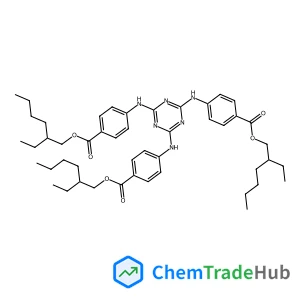
Tris(2-ethylhexyl) 4,4',4''-(1,3,5-triazine-2,4,6-triyltriimino)tribenzoate
CAS番号:
88122-99-0
分子式:
C48H66N6O6
おすすめサプライヤー




免責事項
このページに表示される学術雑誌情報は、参考および研究目的のみを目的としています。当社は雑誌出版社とは提携しておらず、投稿の取り扱いも行っておりません。出版に関するお問い合わせは、各雑誌出版社に直接ご連絡ください。
表示されている情報に誤りがある場合は、support@chemtradehub.com までご連絡ください。迅速に確認し、対応いたします。