



Supporting coordination through hydrogen bonding in lanthanide complexes of 7-azaindole-N-oxide
文献情報
出版日
2023-11-01
DOI
10.1039/D3CE00985H
インパクトファクター
3.545
著者
Oskar G. Wood, Leanne Jones, Chris S. Hawes
原文を見る
要旨
Ligands capable of simultaneous metal coordination and hydrogen bond donation provide useful structural features to enhance cooperativity and favour specific geometries within the coordination sphere. Here we present the first structurally characterised examples of coordination compounds containing protonated 7-azaindole-N-oxide HL, bearing a neutral oxo donor capable of terminal or bridging coordination modes adjacent to a convergent hydrogen bond donor. The ligand itself shows a strong tendency for dimeric assembly in the solid state, but is easily deprotonated to give the chelate complex [CuL2] 1. In the presence of lanthanide ions, however, four new complexes [Eu(NO3)3(HL)3] 2, [Gd(NO3)3(HL)3] 3, [Eu2(μ2-HL)2(HL)4Cl6] 4 and [YbCl3(HL)3][YbCl(HL)5OH2]2Cl 5 were prepared and crystallographically characterised. All four species show strong tendencies for hydrogen bonding from the ligand to impact their overall structures, including a C3 propellor-like macrocyclic motif in 2 and 3 and a combination of intramolecular N–H⋯Cl contacts, and intermolecular tridentate anion binding in 5. Solution studies including HRMS and phosphorescence emission spectroscopy reveal persistence of the europium complex 2 in solution, despite the multiple possible binding modes of this ligand, hinting at a degree of cooperativity in these systems. These results show the utility of hydrogen bonding within the coordination sphere for influencing structural outcomes, relevant to the construction of stable higher-order crystalline assemblies.
おすすめジャーナル

Nature Reviews Drug Discovery

Journal of Enzyme inhibition and Medicinal Chemistry

Photochemical & Photobiological Sciences

Physical Chemistry Chemical Physics

Contact Lens & Anterior Eye

Advanced Engineering Materials

Journal of Medical Biochemistry

Molecular Diversity

Current Pharmaceutical Biotechnology

Mini-Reviews in Medicinal Chemistry
関連文献
Photoinitiated polymerisation of monolithic stationary phases in polyimide coated capillaries using visible region LEDs
Zarah Walsh, Silvija Abele, Brian Lawless, Dominik Heger, Petr Klán, Michael C. Breadmore, Brett Paull, Mirek Macka
2008-11-07
Communication
DOI: 10.1039/B816958F
Disulfide-cross-linked PEG-poly(amino acid)s copolymer micelles for glutathione-mediated intracellular drug delivery
Ahn Na Koo, Hong Jae Lee, Sung Eun Kim, Jeong Ho Chang, Chiyoung Park, Chulhee Kim, Jae Hyung Park, Sang Cheon Lee
2008-11-12
Communication
DOI: 10.1039/B815918A
A cavitand with a fluorous rim acts as an amine receptor
Richard J. Hooley, Per Restorp, Julius Rebek Jr
2008-11-06
Communication
DOI: 10.1039/B814069C
Preparation of a self-standing mesoporous carbon membrane with perpendicularly-ordered pore structures
Ken’ichi Kimijima, Akari Hayashi, Ichizo Yagi
2008-10-01
Communication
DOI: 10.1039/B812982G
Post-assembly error-checking in subphthalocyanine based M3L2 metallosupramolecular capsules‡
Christian G. Claessens, M. Jesús Vicente-Arana, Tomás Torres
2008-11-04
Communication
DOI: 10.1039/B815898C
A modular and organocatalytic approach to γ-butyrolactone autoregulators from Streptomycetes
Petteri Elsner, Hao Jiang, Johanne B. Nielsen, Filippo Pasi, Karl Anker Jørgensen
2008-10-03
Communication
DOI: 10.1039/B812698D
Absolute helicity induction in three-dimensional homochiral frameworks
Jian Zhang, Xianhui Bu
2008-11-13
Communication
DOI: 10.1039/B816742G
Formation of dodecaphenylporphodimethenevia facile protonation of saddle-distorted dodecaphenylporphyrin
Takahiko Kojima, Kakeru Hanabusa, Kei Ohkubo, Motoo Shiro, Shunichi Fukuzumi
2008-11-05
Communication
DOI: 10.1039/B816063E
Simplified methods for the functionalisation of 3-hexoxythiophenes at the 5-position and further reactions to alkynyl and vinyl derivatives
Mike Joachim Zöllner, Ullrich Jahn, Eike Becker, Wolfgang Kowalsky, Hans-Hermann Johannes
2008-12-02
Communication
DOI: 10.1039/B817089D
Mercury or silver atoms bridging trinuclear titanium imido–nitrido systems
Avelino Martín, Noelia Martínez-Espada, Miguel Mena, Marta E. G. Mosquera, Adrián Pérez-Redondo, Carlos Yélamos
2008-11-11
Communication
DOI: 10.1039/B814982H
こちらもおすすめ
化合物よくある質問
1-{3-[5-(エチルカルボンイル)-2,4-ジメチル-1H-ピロロール-3-基]プロパニル}ピペリジン-4-カルボン酸について、適用される法規ガイドラインは何ですか?
この化合物はCAS番号1142209-81-1であり、GHS分類では corrosive (腐食性物質) と classified (分類物質) として指定され...
1142209-81-11-{3-[5-(Ethoxycarbo...
化合物よくある質問
2,2-二氟-1,3-ベンゾジオキサン-5-カルボキシlic酸とは何ですか?
2,2-二氟-1,3-ベンゾジオキサン-5-カルボキシlic酸は、CAS番号656-46-2の化合物で、化学式はC8H4F2O4です。この化合物は白色の結晶性粉...
656-46-22,2-Difluoro-1,3-ben...
化合物よくある質問
8-氯-4-色原酮の代替品はありますか?
8-氯-4-色原酮(CAS番号: 49701-11-3)の代替品には、他の色原酮類似物や、構造が似ている化合物があります。例えば、8-メチル-4-色原酮や、他の...
49701-11-38-Chloro-2,3-dihydro...
化合物よくある質問
エチル6,6-ジメチル-4,5,6,7-テトラヒドロ-1H-インドアゼー-3-カルボキシレートとは何ですか?
エチル6,6-ジメチル-4,5,6,7-テトラヒドロ-1H-インドアゼー-3-カルボキシレートは、CAS番号1233243-56-5を有する化合物です。これは有...
1233243-56-5Ethyl 6,6-dimethyl-4...
化合物よくある質問
4-叔丁基-6-氯-嘧啶に適用される法規ガイドラインは何ですか?
4-叔丁基-6-氯-嘧啶はCAS番号3435-24-3で、GHS分類では毒性物質とみなし、GHSの危険性分類が適用されます。REACH規則では登録が必要で、Eu...
3435-24-34-Tert-butyl-6-chlor...
化合物よくある質問
維库溴铵杂质Bはどのように合成されますか?
維库溴铵杂质Bは、アンドロステンデンから始まり、一連の合成反応、包括的な選択性と高い収率で合成されます。具体的には、ブロミド化、酸化、ジマーゼ反応、アミド化など...
50587-95-6(2beta,3alpha,5alpha...
化合物よくある質問
2-(4-氟苄基)-吡咯烷の物理化学的性質は何ですか?
CAS番号350017-04-8の2-(4-氟苄基)-吡咯烷は、結晶性の白色粉末です。分子量は199.17 g/molで、水に溶けにくいです。化学反応では比較的...
350017-04-82-(4-Fluorobenzyl)py...
化合物よくある質問
3-喹啉甲醛(2-チロール-8-エチル)は安全ですか?
3-喹啉甲醛(2-チロール-8-エチル)は一定の毒性を持つため、取扱には注意が必要です。使用する際は適切な防護具を着用し、密閉容器で保管・搬送し、直接的な接触を...
335196-05-92-Chloro-8-ethyl-3-q...
化合物よくある質問
エチル3-(ヒドロキシメチル)-1H-ピロール-2-カルボキシレートはどのように保存すればよいですか?
エチル3-(ヒドロキシメチル)-1H-ピロール-2-カルボキシレートは、室温(25℃)以下で保存し、直射日光を避け、乾燥した環境で保管することが推奨されます。ま...
75448-69-0Ethyl 3-(hydroxymeth...
119410-05-88-Chloro-11-(4-piper...
掲載誌
CrystEngComm

CiteScore:
5.5
自己引用率:
7.7%
年間論文数:
643
CrystEngComm is the forum for the design and understanding of crystalline materials. We welcome studies on the investigation of molecular behaviour within crystals, control of nucleation and crystal growth, engineering of crystal structures, and construction of crystalline materials with tuneable properties and functions. We publish hypothesis-driven research into… how crystal design affects thermodynamics, phase transitional behaviours, polymorphism, morphology control, solid state reactivity (crystal-crystal solution-crystal, and gas-crystal reactions), optoelectronics, ferroelectric materials, non-linear optics, molecular and bulk magnetism, conductivity and quantum computing, catalysis, absorption and desorption, and mechanical properties. Using Techniques and methods including… Single crystal and powder X-ray, electron, and neutron diffraction, solid-state spectroscopy, spectrometry, and microscopy, modelling and data mining, and empirical, semi-empirical and ab-initio theoretical evaluations. On crystalline and solid-state materials. We particularly welcome work on MOFs, coordination polymers, nanocrystals, host-guest and multi-component molecular materials. We also accept work on peptides and liquid crystals. All papers should involve the use or development of a design or optimisation strategy. Routine structural reports or crystal morphology descriptions, even when combined with an analysis of properties or potential applications, are generally considered to be outside the scope of the journal and are unlikely to be accepted.
おすすめ化合物


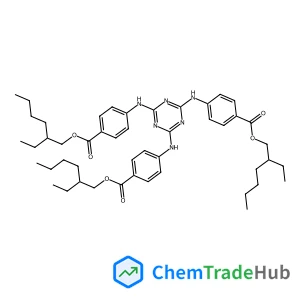
Tris(2-ethylhexyl) 4,4',4''-(1,3,5-triazine-2,4,6-triyltriimino)tribenzoate
CAS番号:
88122-99-0
分子式:
C48H66N6O6

おすすめサプライヤー





免責事項
このページに表示される学術雑誌情報は、参考および研究目的のみを目的としています。当社は雑誌出版社とは提携しておらず、投稿の取り扱いも行っておりません。出版に関するお問い合わせは、各雑誌出版社に直接ご連絡ください。
表示されている情報に誤りがある場合は、support@chemtradehub.com までご連絡ください。迅速に確認し、対応いたします。