












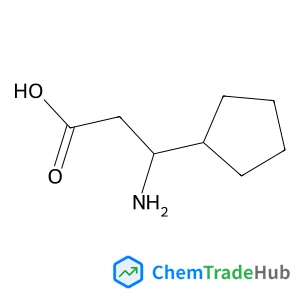
A summary of calixarene-based fluorescent sensors developed during the past five years
文献情報
出版日
2023-10-24
DOI
10.1039/D3CC04179D
インパクトファクター
6.222
著者
Haixian Ren, Hongliang Wang, Wei Wen, Sha Li, Nana Li, Fangjun Huo
原文を見る
要旨
Calixarenes are “chalice like” phenol-based macrocycles that are one of the most fascinating studied scaffolds in supramolecular chemistry. Their preorganized nonpolar cavities and ion binding sites, and their well-defined conformations all lay important foundations for forming host–guest complexes. Conjugation of calixarene scaffolds with various fluorophores at either upper or lower rims has led to the development of smart fluorescent probes for inorganic molecules or ions, aliphatic or aromatic compounds, biomolecules, temperature and hypoxia, even multi-component traditional Chinese medicine (TCM). Moreover, significant advancements have been made for biological applications. This review critically summarizes the recent advances made in these areas.
関連文献
Single-scan measurements of nuclear spin singlet order decay rates
Giulia Melchiorre, Ciara Nelder, Lynda J. Brown, Jean-Nicolas Dumez, Giuseppe Pileio
2021-03-26
Paper
DOI: 10.1039/D1CP00807B
The freezing behavior of aqueous n-alcohol nanodroplets
Tong Sun, Dor Ben-Amotz
2021-04-19
Paper
DOI: 10.1039/D0CP06131J
“Vitruvian” precursor for gas phase deposition: structural insights into iridium β-diketonate volatilities
Evgeniia S. Vikulova, Ksenya I. Karakovskaya, Igor Yu. Ilyin, Evgenia A. Kovaleva, Dmitry A. Piryazev, Ludmila N. Zelenina, Sergey V. Sysoev, Natalia B. Morozova, Kseniya V. Zherikova
2021-04-15
Paper
DOI: 10.1039/D1CP00464F
Tunable electronic properties of BSe–MoS2/WS2 heterostructures for promoted light utilization
Honglin Li, Lijuan Ye, Yuanqiang Xiong, Hong Zhang, Shuren Zhou, Wanjun Li
2021-04-19
Paper
DOI: 10.1039/D1CP00709B
Protein–ligand free energies of binding from full-protein DFT calculations: convergence and choice of exchange–correlation functional
Lennart Gundelach, Thomas Fox, Christofer S. Tautermann, Chris-Kriton Skylaris
2021-03-30
Paper
DOI: 10.1039/D1CP00206F
The role of the three body photodissociation channel of water in the evolution of dioxygen in astrophysical applications
Suming An, Kaijun Yuan, Rex T. Skodje
2021-04-06
Paper
DOI: 10.1039/D1CP00565K
Understanding of the C–H stretch region of infra-red spectroscopy: an analysis of the final state wavefunctions
Swati Yadav, Subrata Banik, M. Durga Prasad
2021-03-18
Paper
DOI: 10.1039/D0CP01157F
Computational predictions of metal–macrocycle stability constants require accurate treatments of local solvent and pH effects
Brian M. Gentry, Tae Hoon Choi, William S. Belfield, John A. Keith
2021-03-31
Paper
DOI: 10.1039/D1CP00611H
Retraction: Polycaprolactone composites with TiO2 for potential nanobiomaterials: tunable properties using different phases
2021-04-08
Retraction
DOI: 10.1039/D1CP90056K
Reversed selectivity of photocatalytic CO2 reduction over metallic Pt and Pt(ii) oxide cocatalysts
Junyi Wang, Youzi Li, Jiangting Zhao, Zhuo Xiong, Junying Zhang, Yongchun Zhao
2021-03-31
Paper
DOI: 10.1039/D1CP00407G
こちらもおすすめ
化合物よくある質問
オステニ二甲磺酸塩に適用される法規ガイドラインは何ですか?
オステニ二甲磺酸塩は、GHS分類に基づき corrosive 物質として分類されます。REACH規則では、該当物質の登録が要求される可能性があります。また、FD...
2070014-82-1N-(2-{[2-(Dimethylam...
化合物よくある質問
環丁基肼盐酸盐は安全ですか?
環丁基肼盐酸盐は毒性があり、吸入や皮膚接触は有害です。使用時の安全対策として、密閉システムを使用し、適切な排気設備を備えた場所で作業することが推奨されます。
1156980-49-2Cyclobutylhydrazine ...
化合物よくある質問
N-(4-パリドン基ソニルフェニル)硫代イソシアネートを取り扱う際の実験室安全事項は何ですか?
N-(4-パリドン基ソニルフェニル)硫代イソシアネートは高毒性で、皮膚や吸入による毒性があります。取り扱う際は防毒マスク、保護用手袋、保護眼鏡などのPPEを着用...
7356-55-01-[(4-Isothiocyanato...
化合物よくある質問
5-ヒドロキシ-1,3-ジヒドロ-2H-インドン-2-酮の物理化学的性質は何ですか?
CAS番号3416-18-0の5-ヒドロキシ-1,3-ジヒドロ-2H-インドン-2-酮は、結晶性の白色粉末です。分子量は228.25であり、 aqueous m...
3416-18-05-Hydroxy-1,3-dihydr...
化合物よくある質問
O-苄基-D-丝氨醇はどのように合成されますか?
O-苄基-D-丝氨醇は、D-アミノ酸とベンゼン環の経由で合成されます。触媒としてジメチルアミノピリジンが使用され、選択性は高いです。一般的な収率は約90%です。
58577-88-1(s)-2-Amino-3-benzyl...
化合物よくある質問
ナトリウム3-ヒドロキシbutano酸とは何ですか?
ナトリウム3-ヒドロキシbutano酸は、CAS番号13613-65-5で登録されている化合物です。この化合物は、(3R)-3-ヒドロキシbutano酸とナトリ...
13613-65-5sodium;(3R)-3-hydrox...
化合物よくある質問
1-(二苯甲基)-4-甲基ベンゼンの物理化学的性質は何ですか?
CAS番号603-37-2の1-(二苯甲基)-4-甲基ベンゼンは、結晶性の固体で、分子量は244.28であり、水中的には微溶です。この化合物は有機反応において中...
603-37-21-(Diphenylmethyl)-4...
化合物よくある質問
ネアミン塩酸塩の物理化学的性質は何ですか?
ネアミン塩酸塩の分子量は321.19であり、結晶性の白色粉末です。この化合物は水に溶けやすく、pHが低くなると不溶性になります。反応活性は高く、水溶液中の酸化還...
15446-43-2NEAMINE HYDROCHLORID...
化合物よくある質問
偶氮二甲酰二哌啶の主な用途は何ですか?
偶氮二甲酰二哌啶は、医薬品、染料、高 Então 剤、触媒、溶媒、量論試薬など、様々な分野で使用されています。特に、高 Enough 反応において、グリコール酸...
10465-81-3(E)-1,2-Diazenediylb...
664969-54-44-[(2E)-3-Phenyl-2-p...
掲載誌
Chemical Communications

CiteScore:
8.6
自己引用率:
4.7%
年間論文数:
2458
ChemComm publishes urgent research which is of outstanding significance and interest to experts in the field, while also appealing to the journal’s broad chemistry readership. Our communication format is ideally suited to short, urgent studies that are of such importance that they require accelerated publication. Our scope covers all topics in chemistry, and research at the interface of chemistry and other disciplines (such as materials science, nanoscience, physics, engineering and biology) where there is a significant novelty in the chemistry aspects. Major topic areas covered include: Analytical Chemistry Catalysis Chemical Biology and medicinal chemistry Computational Chemistry and Machine Learning Energy and sustainable chemistry Environmental Chemistry Green Chemistry Inorganic Chemistry Materials Chemistry Nanoscience Organic Chemistry Physical Chemistry Polymer Chemistry Supramolecular Chemistry
おすすめ化合物
おすすめサプライヤー






免責事項
このページに表示される学術雑誌情報は、参考および研究目的のみを目的としています。当社は雑誌出版社とは提携しておらず、投稿の取り扱いも行っておりません。出版に関するお問い合わせは、各雑誌出版社に直接ご連絡ください。
表示されている情報に誤りがある場合は、support@chemtradehub.com までご連絡ください。迅速に確認し、対応いたします。