













Tris(2-ethylhexyl) 4,4',4''-(1,3,5-triazine-2,4,6-triyltriimino)tribenzoate
CAS番号:
88122-99-0
分子式:
C48H66N6O6
Anton Kozyryev, Petrina A. Boucher, Carla M. Quiñones-Jurgensen, Steven E. Rokita
The isoalloxazine ring system of the flavin cofactor is responsible for much of the catalytic power and diversity associated with flavoproteins. While the specificity of these enzymes is greatly influenced by the surrounding protein environment, the ribityl group of the cofactor may also participate in stabilizing transient intermediates formed by substrates and flavin. A conserved interaction between the phenolate oxygen of L-iodotyrosine and the 2′-hydroxy group of flavin mononucleotide (FMN) bound to iodotyrosine deiodianase (IYD) implied such a contribution to catalysis. Reconstitution of this deiodinase with 2′-deoxyflavin mononucleotide (2′-deoxyFMN) decreased the overall catalytic efficiency of L-iodotyrosine dehalogenation (kcat/Km) by more than 5-fold but increased kcat by over 2-fold. These affects are common to human IYD and its homolog from Thermotoga neapolitana and are best explained by an ability of the 2′-hydroxy group of FMN to stabilize association of the substrate in its phenolate form. Loss of this 2′-hydroxy group did not substantially affect the formation of the one electron reduced semiquinone form of FMN but its absence released constraints that otherwise suppresses the ability of IYD to promote hydride transfer as measured by a competing nitroreductase activity. Generation of IYD containing 2′-deoxyFMN also removed steric constraints that had previously limited the use of certain mechanistic probes. For example, L-O-methyl iodotyrosine could be accommodated in the active site lacking the 2′-hydroxy of FMN and shown to be inert to dehalogenation as predicted from a mechanism requiring ketonization of the phenolic oxygen. In the future, ancillary sites within a cofactor should now be considered when engineering new functions within existing protein architectures as demonstrated by the ability of IYD to promote nitroreduction after loss of the 2′-hydroxy group of FMN.
William Guerin, Jean-François Carpentier, Martine Slawinski, Jean-Michel Brusson, Sophie M. Guillaume
DOI: 10.1039/C2PY20859H
Hitoshi Ogihara, Hiroki Tajima, Hideki Kurokawa
DOI: 10.1039/C9RE00400A
Paul H. M. Van Steenberge
DOI: 10.1039/C9RE00218A
Sébastien Cajot, Philippe Lecomte, Christine Jérôme, Raphaël Riva
DOI: 10.1039/C2PY20528A
Martin E. Levere, Nga H. Nguyen, Xuefei Leng, Virgil Percec
DOI: 10.1039/C2PY21084C
Zongbao Wang, Bingjie Wang, Quting Gou, Junwu Zhang, Jian Zhou, Peng Chen, Qun Gu
DOI: 10.1039/C2PY20847D
Christian P. Haas, Simon Biesenroth, Stephan Buckenmaier, Tom van de Goor, Ulrich Tallarek
DOI: 10.1039/D0RE00066C
Xin Gao, Qiuyan Ding, Yan Wu, Yilai Jiao, Jinsong Zhang, Xingang Li, Hong Li
DOI: 10.1039/C9RE00445A
Xiao Liu, Zhicheng Tian, Chen Chen, Harry R. Allcock
DOI: 10.1039/C2PY20825C
この化合物はCAS番号1142209-81-1であり、GHS分類では corrosive (腐食性物質) と classified (分類物質) として指定され...
2,2-二氟-1,3-ベンゾジオキサン-5-カルボキシlic酸は、CAS番号656-46-2の化合物で、化学式はC8H4F2O4です。この化合物は白色の結晶性粉...
8-氯-4-色原酮(CAS番号: 49701-11-3)の代替品には、他の色原酮類似物や、構造が似ている化合物があります。例えば、8-メチル-4-色原酮や、他の...
エチル6,6-ジメチル-4,5,6,7-テトラヒドロ-1H-インドアゼー-3-カルボキシレートは、CAS番号1233243-56-5を有する化合物です。これは有...
4-叔丁基-6-氯-嘧啶はCAS番号3435-24-3で、GHS分類では毒性物質とみなし、GHSの危険性分類が適用されます。REACH規則では登録が必要で、Eu...
維库溴铵杂质Bは、アンドロステンデンから始まり、一連の合成反応、包括的な選択性と高い収率で合成されます。具体的には、ブロミド化、酸化、ジマーゼ反応、アミド化など...
CAS番号350017-04-8の2-(4-氟苄基)-吡咯烷は、結晶性の白色粉末です。分子量は199.17 g/molで、水に溶けにくいです。化学反応では比較的...
3-喹啉甲醛(2-チロール-8-エチル)は一定の毒性を持つため、取扱には注意が必要です。使用する際は適切な防護具を着用し、密閉容器で保管・搬送し、直接的な接触を...
エチル3-(ヒドロキシメチル)-1H-ピロール-2-カルボキシレートは、室温(25℃)以下で保存し、直射日光を避け、乾燥した環境で保管することが推奨されます。ま...
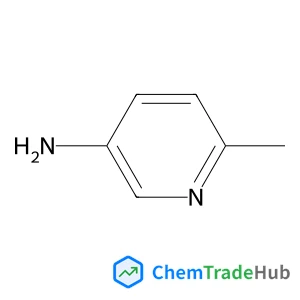

![3-[(4-Nitrobenzyl)oxy]-3-oxopropanoic Acid structure](https://static.chemtradehub.com/structs/773/77359-11-6-0d04.webp "3-[(4-Nitrobenzyl)oxy]-3-oxopropanoic Acid structure")





