













An antibacterial and healing-promoting collagen fibril constructed by the simultaneous strategy of fibril reconstitution and ε-polylysine anchoring for infected wound repair
文献情報
出版日
2023-09-22
DOI
10.1039/D3BM01181J
インパクトファクター
6.843
著者
原文を見る
要旨
The development of antibacterial dressings has attracted much attention to address the disordered wound healing caused by bacterial infection. Constructing dressings that have desirable antibacterial activity and could promote wound healing is important for infected wound repair. Inspired by the role of the key regulator collagen fibrils with D-periodic functional domains in the physiological wound healing process, we developed an antibacterial and wound healing-promoting collagen fibril with a structure highly similar to natural collagen in ECM and inherent antibacterial activity by the simultaneous strategy of fibril reconstitution and the antibacterial agent ε-polylysine (ε-PL) anchoring. Accompanied by the fibrillogenesis of collagen molecules, the anchorage of ε-PL into collagen fibrils was actualized through the formation of the covalent bond catalyzed by transglutaminase (TGase) between ε-PL and collagen. The collagen fibril possessed natural D-periodicity and achieved 20% ε-PL graft yield by co-assembling collagen/ε-PL mediated by 25 U g−1 TGase, which showed a satisfactory proliferation of L929 fibroblasts and sustained inhibition rates above 90% against E. coli and S. aureus. The rat S. aureus-infected dermal wound model further demonstrated that the reconstituted antibacterial collagen fibril visibly promoted re-epithelialization, new collagen deposition, and angiogenesis by down-regulating the inflammatory-relative gene IL-6 and up-regulating the relative activity factor expression of CD31, achieving accelerated infected wound healing with 61.89% ± 3.96% wound closure on postoperative day 7 and full closure on day 14.
関連文献
Origin of surface trap states in CdS quantum dots: relationship between size dependent photoluminescence and sulfur vacancy trap states
Aisea Veamatahau, Bo Jiang, Tom Seifert, Satoshi Makuta, Kay Latham, Masayuki Kanehara, Toshiharu Teranishi
2014-12-05
Paper
DOI: 10.1039/C4CP04761C
Exploring the complexity of quantum control optimization trajectories
Arun Nanduri, Ofer M. Shir, Ashley Donovan, Tak-San Ho, Herschel Rabitz
2014-11-07
Paper
DOI: 10.1039/C4CP03853C
An approach to classification and capacitance expressions in electrochemical capacitors technology
Silvia Roldán, Daniel Barreda, Marcos Granda, Rosa Menéndez, Ricardo Santamaría, Clara Blanco
2014-11-12
Paper
DOI: 10.1039/C4CP05124F
Pentaglyme–K salt binary mixtures: phase behavior, solvate structures, and physicochemical properties
Seiji Tsuzuki, Kazuhide Ueno, Masayoshi Watanabe
2014-12-05
Paper
DOI: 10.1039/C4CP05017G
Durability, inactivation and regeneration of silver tetratantalate in photocatalytic H2 evolution
Gang Chen, Jingxue Sun, Chunmei Li, Chade Lv, Yidong Hu
2014-11-11
Communication
DOI: 10.1039/C4CP04273E
Influence of dispersive forces on the final shape of a reverse micelle
I. León, R. Montero, A. Longarte, José A. Fernández
2014-12-02
Paper
DOI: 10.1039/C4CP03667K
Ab initio quantum dynamical analysis of ultrafast nonradiative transitions via conical intersections in pyrazine
Manabu Kanno, Yuta Ito, Noriyuki Shimakura, Shiro Koseki, Hirohiko Kono
2014-11-26
Paper
DOI: 10.1039/C4CP04807E
The photochemistry of inverse dithienylethene switches understood
Stéphane Aloïse, Ruan Yibin, Ismail Hamdi, Guy Buntinx, Aurélie Perrier, François Maurel, Denis Jacquemin, Michinori Takeshita
2014-10-22
Paper
DOI: 10.1039/C4CP03641G
Alkane separation using nanoporous graphene membranes
Krzysztof Nieszporek, Mateusz Drach
2014-11-11
Paper
DOI: 10.1039/C4CP02745K
Electronic structure aspects of the complete O2 transfer reaction between Ni(ii) and Mn(ii) complexes with cyclam ligands
Jhon Zapata-Rivera, Rosa Caballol, Carmen J. Calzado
2014-12-05
Paper
DOI: 10.1039/C4CP05127K
こちらもおすすめ
化合物よくある質問
1-{3-[5-(エチルカルボンイル)-2,4-ジメチル-1H-ピロロール-3-基]プロパニル}ピペリジン-4-カルボン酸について、適用される法規ガイドラインは何ですか?
この化合物はCAS番号1142209-81-1であり、GHS分類では corrosive (腐食性物質) と classified (分類物質) として指定され...
1142209-81-11-{3-[5-(Ethoxycarbo...
化合物よくある質問
2,2-二氟-1,3-ベンゾジオキサン-5-カルボキシlic酸とは何ですか?
2,2-二氟-1,3-ベンゾジオキサン-5-カルボキシlic酸は、CAS番号656-46-2の化合物で、化学式はC8H4F2O4です。この化合物は白色の結晶性粉...
656-46-22,2-Difluoro-1,3-ben...
化合物よくある質問
8-氯-4-色原酮の代替品はありますか?
8-氯-4-色原酮(CAS番号: 49701-11-3)の代替品には、他の色原酮類似物や、構造が似ている化合物があります。例えば、8-メチル-4-色原酮や、他の...
49701-11-38-Chloro-2,3-dihydro...
化合物よくある質問
エチル6,6-ジメチル-4,5,6,7-テトラヒドロ-1H-インドアゼー-3-カルボキシレートとは何ですか?
エチル6,6-ジメチル-4,5,6,7-テトラヒドロ-1H-インドアゼー-3-カルボキシレートは、CAS番号1233243-56-5を有する化合物です。これは有...
1233243-56-5Ethyl 6,6-dimethyl-4...
化合物よくある質問
4-叔丁基-6-氯-嘧啶に適用される法規ガイドラインは何ですか?
4-叔丁基-6-氯-嘧啶はCAS番号3435-24-3で、GHS分類では毒性物質とみなし、GHSの危険性分類が適用されます。REACH規則では登録が必要で、Eu...
3435-24-34-Tert-butyl-6-chlor...
化合物よくある質問
維库溴铵杂质Bはどのように合成されますか?
維库溴铵杂质Bは、アンドロステンデンから始まり、一連の合成反応、包括的な選択性と高い収率で合成されます。具体的には、ブロミド化、酸化、ジマーゼ反応、アミド化など...
50587-95-6(2beta,3alpha,5alpha...
化合物よくある質問
2-(4-氟苄基)-吡咯烷の物理化学的性質は何ですか?
CAS番号350017-04-8の2-(4-氟苄基)-吡咯烷は、結晶性の白色粉末です。分子量は199.17 g/molで、水に溶けにくいです。化学反応では比較的...
350017-04-82-(4-Fluorobenzyl)py...
化合物よくある質問
3-喹啉甲醛(2-チロール-8-エチル)は安全ですか?
3-喹啉甲醛(2-チロール-8-エチル)は一定の毒性を持つため、取扱には注意が必要です。使用する際は適切な防護具を着用し、密閉容器で保管・搬送し、直接的な接触を...
335196-05-92-Chloro-8-ethyl-3-q...
化合物よくある質問
エチル3-(ヒドロキシメチル)-1H-ピロール-2-カルボキシレートはどのように保存すればよいですか?
エチル3-(ヒドロキシメチル)-1H-ピロール-2-カルボキシレートは、室温(25℃)以下で保存し、直射日光を避け、乾燥した環境で保管することが推奨されます。ま...
75448-69-0Ethyl 3-(hydroxymeth...
119410-05-88-Chloro-11-(4-piper...
掲載誌
Biomaterials Science
CiteScore:
11.5
自己引用率:
3.4%
年間論文数:
492
Biomaterials Science is an international high impact journal exploring the science of biomaterials and their translation towards clinical use. Its scope encompasses new concepts in biomaterials design, studies into the interaction of biomaterials with the body, and the use of materials to answer fundamental biological questions. Papers do not necessarily need to report a new biomaterial but should provide novel insight into the biological applications of the biomaterial. Articles that primarily focus on demonstrating novel materials chemistry and bring a molecular picture to bear on a given material’s suitability as a biomaterial are more suited to our companion journal, Journal of Materials Chemistry B. Biomaterials Science publishes primary research and review-type articles in the following areas: molecular design of biomaterials, including translation of emerging chemistries to biomaterials science of cells and materials at the nanoscale and microscale materials as model systems for stem cell and human biology materials for tissue engineering and regenerative medicine (Nano)materials and (nano)systems for therapeutic delivery interactions at the biointerface biologically inspired and biomimetic materials, including bio-inspired self-assembly systems and cell-inspired synthetic tools next-generation biomaterials tools and methods
おすすめ化合物

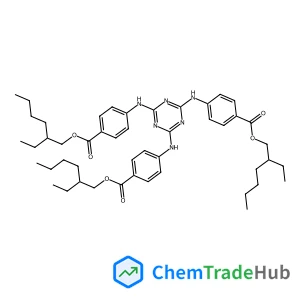
Tris(2-ethylhexyl) 4,4',4''-(1,3,5-triazine-2,4,6-triyltriimino)tribenzoate
CAS番号:
88122-99-0
分子式:
C48H66N6O6
おすすめサプライヤー



免責事項
このページに表示される学術雑誌情報は、参考および研究目的のみを目的としています。当社は雑誌出版社とは提携しておらず、投稿の取り扱いも行っておりません。出版に関するお問い合わせは、各雑誌出版社に直接ご連絡ください。
表示されている情報に誤りがある場合は、support@chemtradehub.com までご連絡ください。迅速に確認し、対応いたします。