


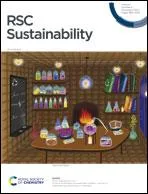
Will the circle be unbroken? The climate mitigation and sustainable development given by a circular economy of carbon, nitrogen, phosphorus and water
文献情報
出版日
2023-04-28
DOI
10.1039/D2SU00121G
インパクトファクター
0
著者
Patrick McKenna, Fiona Zakaria, Barbara Evans, Steven Banwart
原文を見る
要旨
Closing the loop in the flow of C, nutrients and water between agriculture, the human diet and sanitation services offers benefits for humanity across multiple platforms of public health, food security and climate mitigation. This study assesses these benefits by describing the hypothetical scenario of a global, ‘fully functional’ circular economy, in which 100% of C, N and P were recovered from human excreta and returned to agricultural soil. Crop nutrient demand is calculated and compared with that which could be recovered, and greenhouse (GHG) emissions from fertilizer production, fertilizer application and sanitation services are presented, as are freshwater availability and crop irrigation requirements. These are considered to analyse the broader effects of this circular economy that is driven by dietary nutrition demand on climate change, the provision of sanitation services and crop irrigation, in 2022 and with projections to 2030 and 2050. We find the capacity of the circular economy to deliver crop nutrients and mitigate GHG emissions varies by region. Some regions benefit from supplementing conventional mineral fertilizers with excreta-derived fertilizers, others from reducing GHG emissions from sanitation services through improved resource recovery rates. A hypothetical, fully functional circular economy that recovers all excreta nutrient C, N and P would reduce global GHG emissions from N and P mineral fertilizer production and application by 140 Tg CO2 equivalents (CO2 e) per year in 2022 (∼12% of total emissions from mineral fertilizer production and application) and provide a maximum of 104 Tg C per year for sequestration in global cropland (∼12% of estimated annual soil C sequestration potential). A portion of this sequestered C will return to the atmosphere via soil respiration, however, with co-benefits to other soil functions such as crop nutrient fertility. The maximum potential reduction in GHG emissions from sanitation services through these measures would bring reductions of 445 Tg CO2 e per year in 2022, rising to 562 Tg CO2 e in 2050. Our results provide evidence to guide specific regional policy on reducing GHG emissions, offsetting mineral fertilizer use and optimizing municipal water use using the circular economy.
おすすめジャーナル

Russian Journal of Coordination Chemistry

Journal of Peptide Science

Journal of Saudi Chemical Society

Russian Journal of Bioorganic Chemistry

Russian Chemical Bulletin

Current Opinion in Solid State & Materials Science

Saudi Pharmaceutical Journal

Organic Process Research & Development

Chemistry Education Research and Practice

Drug Discovery Today
関連文献
Mechanistic insights into a copper–disulfide interaction in oxidation of imines by disulfides
Jiri Srogl, Jakub Hývl, Ágnes Révész, Detlef Schröder
2009-05-05
Communication
DOI: 10.1039/B904403E
A new bifunctional chelator for copperradiopharmaceuticals: a cage amine ligand with a carboxylate functional group for conjugation to peptides
John A. Karas, Denis Scanlon
2009-04-23
Communication
DOI: 10.1039/B903426A
The exceptional activity of a phosphazenium hydroxide catalyst incorporated onto silica in the transesterification of tributyrin with methanol
Mi-Young Kim, Gon Seo, O Zoon Kwon, Duk Rye Chang
2009-04-17
Communication
DOI: 10.1039/B903969D
Crystal structure determination of the elusive paracetamol Form III
Marc-Antoine Perrin, Marcus A. Neumann, Hagit Elmaleh, Lionel Zaske
2009-04-27
Communication
DOI: 10.1039/B822882E
In situ simultaneous synthesis of WC/graphitic carbon nanocomposite as a highly efficient catalyst support for DMFC
Ruihong Wang, Chungui Tian, Lei Wang, Baoli Wang, Hengbin Zhang, Honggang Fu
2009-04-22
Communication
DOI: 10.1039/B901089K
A general approach to silicatenanoshells: gadolinium silicate and gadolinium silicate:europium nanoshells for dual-modality optical and MR imaging
Chih-Chia Huang, Wileen Huang, Chieh-Ning Feng, Wen-Shuo Kuo, Chen-Sheng Yeh
2009-04-20
Communication
DOI: 10.1039/B904258J
A new route to 3-acyl-2-aminobenzofurans: palladium-catalysed cycloisomerisation of 2-(cyanomethyl)phenyl esters
Masahito Murai, Koji Miki, Kouichi Ohe
2009-05-07
Communication
DOI: 10.1039/B904127C
Fingerprint and inkjet-trace imaging using disulfur dinitride
Paul F. Kelly, Roberto S. P. King, Roger J. Mortimer
2008-10-17
Communication
DOI: 10.1039/B815742A
Internally referenced analysis of charge-transfer reactions in a new ferrocenyl bithiophenic conducting polymer through cyclic voltammetry
Chuang Peng, Xiaohang Zhou, George Z. Chen, Fabrice Moggia, Frédéric Fages, Hugues Brisset, Jean Roncali
2008-11-13
Communication
DOI: 10.1039/B817101G
Tuning the field-induced magnetic transition in a layered cobalt phosphonate by reversible dehydration-hydration process‡
Ting-Hai Yang, Yi Liao, Li-Min Zheng, Robert E. Dinnebier, Yan-Hui Su, Jing Ma
2009-04-09
Communication
DOI: 10.1039/B903324F
こちらもおすすめ
化合物よくある質問
6-苄基-6,7-二氢-5H-吡咯并3,4-b吡啶とは何ですか?
6-苄基-6,7-二氢-5H-吡咯并3,4-b吡啶は、CAS番号109966-30-5の化合物です。これは、6-ベンジル基を持つ6,7-二氢-5H-吡咯並みの化...
109966-30-56-Benzyl-6,7-dihydro...
化合物よくある質問
半硫酸奎宁单水水合物はどのように保存すればよいですか?
半硫酸奎宁单水水合物は、乾燥した涼しい場所に保管し、直射日光や湿気を避ける必要があります。保存温度は常温(15〜25℃)が適切で、湿度は40%以下を維持すること...
6119-70-6Quinine sulfate hydr...
化合物よくある質問
D-核糖-5-リン酸二ナトリウムとは何ですか?
D-核糖-5-リン酸二ナトリウムは、CAS番号18265-46-8を有する化合物で、D-核糖の5位付加部位にリン酸基が結合した化合物です。この化合物は、水溶性で...
18265-46-8Disodium (2R,3R,4R)-...
2257-52-5Isopropylhydrazine
化合物よくある質問
3-乙酰基-4-羟基喹啉-2(1H)-酮はどのように合成されますか?
3-乙酰基-4-羟基喹啉-2(1H)-酮は、ハイドロキノンと酢酸アセトイルアミドのアミド化反応により合成されます。この反応は塩基触媒を用いて行われ、選択性は良好...
26138-64-73-Acetyl-4-hydroxyqu...
2280037-51-44-Amino-1-(3-bipheny...
化合物よくある質問
5-溴-4-甲基-1H-吲唑とは何ですか?
5-溴-4-甲基-1H-吲唑は、CAS番号1082041-34-6の化学物質で、化学式はC10H9BrNです。この化合物は淡黄色の結晶性粉末で、吸湿性があります...
1082041-34-65-Bromo-4-methyl-1H-...
化合物よくある質問
3-(4メトキシフェニル)オキテナン-3カーボイル酸の代替品はありますか?
3-(4メトキシフェニル)オキテナン-3カーボイル酸の代替品は、その用途により異なりますが、例えば4-(メトキシフェニル)オキテナン-3カーボイル酸や、他のオキ...
1416323-25-53-(4-Methoxyphenyl)-...
化合物よくある質問
3-イリドオキシピロロ[2,3-b]ピリジン-5-カルボキシlic酸は安全ですか?
3-イリドオキシピロロ[2,3-b]ピリジン-5-カルボキシlic酸は危険な化合物ではありませんが、適切な手袋や保護眼鏡の使用を推奨します。誤って摂取または接触...
1060816-80-93-Iodo-1H-pyrrolo[2,...
化合物よくある質問
3-氟-4- iodobenolを取り扱う際の実験室安全事項は何ですか?
3-氟-4- iodobenolは可燃性を有し、強力な反応性を持つため、取り扱いには注意が必要です。PPE(個人保護具)の着用、ドラフトチャンバーの使用、漏洩時...
122927-84-83-Fluoro-4-iodopheno...
掲載誌
おすすめ化合物
![5-Bromo-3-isopropyl-1H-pyrrolo[2,3-b]pyridine structure](https://static.chemtradehub.com/structs/125/1256819-54-1-8620.webp "5-Bromo-3-isopropyl-1H-pyrrolo[2,3-b]pyridine structure")
![3-[(3R,4R)-3-[(6-aminopyrimidin-4-yl)-methyl-amino]-4-methyl-1-piperidyl]-3-oxo-propanenitrile structure](https://static.chemtradehub.com/structs/164/1640971-60-3-83a4.webp "3-[(3R,4R)-3-[(6-aminopyrimidin-4-yl)-methyl-amino]-4-methyl-1-piperidyl]-3-oxo-propanenitrile structure")
おすすめサプライヤー





免責事項
このページに表示される学術雑誌情報は、参考および研究目的のみを目的としています。当社は雑誌出版社とは提携しておらず、投稿の取り扱いも行っておりません。出版に関するお問い合わせは、各雑誌出版社に直接ご連絡ください。
表示されている情報に誤りがある場合は、support@chemtradehub.com までご連絡ください。迅速に確認し、対応いたします。