


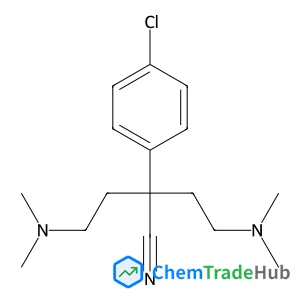
2-(4-Chlorophenyl)-4-(dimethylamino)-2-(2-(dimethylamino)ethyl)butanenitrile
CAS番号:
1246816-57-8
分子式:
C16H24ClN3
Ryan R. Larder, Philippa L. Jacob, Kristoffer Kortsen, Robert Cavanagh, Long Jiang, Claudia Vuotto, Iolanda Francolini, Christopher Tuck, Vincenzo Taresco, Steven M. Howdle
Silver nanoparticles (AgNP) are widely exploited for their effective antimicrobial activity against a range of pathogens. Their high efficacy in this regard has seen the global demand for AgNP in consumer products steadily increase in recent years, necessitating research into novel low environmental impact synthesis approaches. Here we present a new synthetic methodology to produce polymer-AgNP composite microparticles using supercritical carbon dioxide (scCO2) and avoiding use of any petrochemically derived solvents. Poly(methyl methacrylate)-poly(4-vinylpyridine) (PMMA-b-P4VP) block copolymers were synthesised via RAFT-mediated dispersion polymerisation in scCO2, with in situ thermal degradation of various amounts of a CO2-soluble silver complex. Selective interaction of the silver with the pyridinyl moieties of the block copolymer allowed the formation of AgNP, dispersed within the block copolymer microparticles, leading to homogeneous composites. The by-products of the reaction were also removed by extracting with a flow of CO2 to yield a clean dry product in a single process. The composites were found to be non-cytotoxic and proved to have good antimicrobial activity against two bacterial strains. Though no significant activity was seen for at least the first 24 hours, inhibition of bacterial growth afterwards proved to be extremely persistent, with inhibition observed even after 15 days. Finally, the microparticulate nature of the synthesised composites was exploited and tested for compatibility in the Laser Sintering (LS) 3D printing process. Composite microparticles were fused to produce solid objects, without aggregation of the AgNP. With further optimisation, these composites could prove to be an incredibly versatile ‘ink’ that may be used within additive manufacturing and 3D printing to rapidly produce bespoke medical devices with inherent antimicrobial activity.

Organic Process Research & Development

Current Opinion in Colloid & Interface Science

Russian Journal of Organic Chemistry

Journal of Natural Medicines

Russian Journal of Bioorganic Chemistry

Drug Discovery Today

Russian Journal of Applied Chemistry

Chemical Communications

Crystallography Reports

Russian Journal of Coordination Chemistry
Yunyun Huang, Chaoyan Chen, Hongtao Li, Aoxiang Xiao, Tuan Guo, Bai-Ou Guan
DOI: 10.1039/C7CP07915J
Markus Kubin, Jan Kern, Meiyuan Guo, Erik Källman, Rolf Mitzner, Vittal K. Yachandra, Marcus Lundberg, Junko Yano, Philippe Wernet
DOI: 10.1039/C8CP03094D
Yanli Ji, Xiaocha Wang, Wenbo Mi
DOI: 10.1039/C8CP04336A
Guo-Hua Zhong, Dong-Yu Yang, Kai Zhang, Ren-Shu Wang, Chao Zhang, Hai-Qing Lin, Xiao-Jia Chen
DOI: 10.1039/C8CP05184D
Xiangkun Wu, Guoqiang Tang, Hanhui Zhang, Xiaoguo Zhou, Shilin Liu, Fuyi Liu, Liusi Sheng, Bing Yan
DOI: 10.1039/C7CP07502B
S. Yoshioka, K. Tsuruta, T. Yamamoto, K. Yasuda, S. Matsumura, N. Ishikawa, E. Kobayashi
DOI: 10.1039/C7CP07591J
Joonhee Kang, Seung Hyo Noh, Jeemin Hwang, Hoje Chun, Hansung Kim, Byungchan Han
DOI: 10.1039/C8CP03801E
Somnath Biswas, Jakub Husek, Stephen Londo, Elizabeth A. Fugate, L. Robert Baker
DOI: 10.1039/C8CP04502J
L. C. T. Shoute, G. R. Loppnow
DOI: 10.1039/C7CP06058K
Yongjie Wang, M. Głowacki, M. Berkowski, A. Kamińska
DOI: 10.1039/C8CP06154H
2-ヒドロキシ-5-ニトロベンジンブロモイドは特定の化学反応に適しているため、代替品は限られています。しかし、同様の構造を持つ2-ヒドロキシ-4-ニトロベンジン...
N-(2-ブロモフェニル)-1-チロール-3-オキソ-3-(ピペリジニル)プロペン-2-イル)ベンゼンアミドは有毒で、皮膚や粘膜に刺激を与える可能性があります。...
この化合物は、新規治療薬の開発に注目されています。市場では、その有効性と安全性が評価され、研究分野では、分子生物学と医薬化学の新たな発見が期待されています。
Succinimidyl-alanyl-phenylalanyl-prolyl-phenylalanine 4-nitroanilide は主に医薬品開発やポ...
メチル6-アミノ-5-クロロピリジン-2-カーボイル酸(CAS番号: 1256794-05-4)の使用には、GHS( Globally Harmonized S...
取り扱いには、耐薬品性の容器を使用し、通気性の良い場所で操作することを推奨します。漏れ時は、SDS(安全データシート)を参照して適切な措置を取ること。手洗いと洗...
(S)-3-ベンZYルピペリジン塩酸塩は、CAS番号1258940-00-9で表される化合物です。これは、(S)-3-苯基哌啶的盐酸盐であり、主に医薬品の原料と...
3,5-二甲基金剛胺は、主に医薬品の原料として使用され、また抗うつ薬や抗アルツハイマー薬の開発に利用されます。さらに、化粧品や食品添加物の製造でも重要な役割を果...
ビス(4-メチル-2-ペンチル)フェニルカルボン酸エステル (CAS番号: 1398066-13-1) の代替品には、ビス(2-エチルヘキシル)フェノールカルボ...

Polymer Chemistry welcomes submissions in all areas of polymer science that have a strong focus on macromolecular chemistry. Manuscripts may cover a broad range of fields, yet no direct application focus is required.
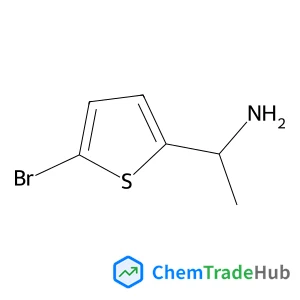
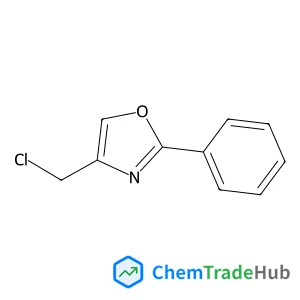
![1-[3-(4-Morpholinylsulfonyl)phenyl]methanamine structure](https://static.chemtradehub.com/structs/933/933989-32-3-51af.webp "1-[3-(4-Morpholinylsulfonyl)phenyl]methanamine structure")
![6-Benzyl-4,5,6,7-tetrahydro-1H-pyrazolo[3,4-c]pyridin-3(2H)-one structure](https://static.chemtradehub.com/structs/909/909187-64-0-f54f.webp "6-Benzyl-4,5,6,7-tetrahydro-1H-pyrazolo[3,4-c]pyridin-3(2H)-one structure")






