












Two-dimensional Cs3Sb2I9/C2N van der Waals type-II heterostructure: a promising photocatalyst for high efficiency water splitting
文献情報
出版日
2022-11-23
DOI
10.1039/D2CP04665B
インパクトファクター
3.676
著者
Hui Wang, Baozeng Zhou, Wei Li
原文を見る
要旨
The development of high-efficiency photocatalysts for photocatalytic hydrolysis using solar energy and water resources is of great significance for alleviating the current energy shortage. Finding rational photocatalysts remains a major challenge and great efforts have already been made. Here we propose a novel two-dimensional perovskite-based vdW heterostructure (Cs3Sb2I9/C2N) and systematically investigate its stability, electronic and optical properties and the effects of applied biaxial strain based on the first-principles approach to investigate its ability as a photocatalyst for water splitting. In order to ensure the significance of the calculation results in guiding experiments, a hybrid functional was used for all the calculations on the electronic structure. The results show that the Cs3Sb2I9/C2N heterostructure has satisfactory dynamic and thermal stability, and exhibits the characteristics of type-II band alignment in the equilibrium configuration. Charge density difference, Bader charge analysis and work function further prove that the photogenerated electrons flow from Cs3Sb2I9 to the C2N monolayer by the influence of the interface dipole, which promotes the separation and transfer of photogenerated charge carriers and inhibits the recombination of the photogenerated charge carriers. Furthermore, the Cs3Sb2I9/C2N heterostructure has a suitable redox potential for photocatalytic water splitting and exhibits enhanced light absorption in the visible light region. In addition, the electronic and optical properties of the Cs3Sb2I9/C2N heterostructure can be tuned by strain, and the Cs3Sb2I9/C2N heterostructure always possesses photocatalytic ability after applying −2% to 6% biaxial strain. These results suggest that the Cs3Sb2I9/C2N heterostructure will be a promising candidate for water splitting photocatalysts.
関連文献
Synthesis of lipo-glycopolymers for cell surface engineering
Qi Liu, Hui Xue, Jinbo Gao, Limin Cao, Hong Chen
2016-11-10
Paper
DOI: 10.1039/C6PY01788F
A CTA-shuttled R-group approach: a versatile synthetic tool towards well-defined functional cylindrical polymer brushes via RAFT polymerization
Yifei Wang, Zhicheng Zheng, Zhengdong Huang, Jun Ling
2017-03-31
Paper
DOI: 10.1039/C7PY00167C
Synthesis and application of a novel poly-l-phenylalanine electroactive macromonomer as matrix for the biosensing of ‘Abused Drug’ model
Z. Pinar Gumus, Huseyin Akbulut, Ebru Aldemir, Hakan Coskunol, Demet Goen Colak, Shuhei Yamada, Takeshi Endo, Yusuf Yagci
2016-11-02
Paper
DOI: 10.1039/C6PY01764A
Well-defined poly(vinylidene fluoride) (PVDF) based-dendrimers synthesized by click chemistry: enhanced crystallinity of PVDF and increased hydrophobicity of PVDF films
Marc Guerre, Vincent Ladmiral, Bruno Ameduri
2016-08-22
Communication
DOI: 10.1039/C6PY01167E
Redox controlled reversible transformation of a supramolecular alternating copolymer to a radical cation containing homo-polymer
Sahnawaz Ahmed, Nilotpal Singha, Bapan Pramanik, Julfikar Hassan Mondal, Debapratim Das
2016-06-06
Paper
DOI: 10.1039/C6PY00809G
Facile synthesis and the properties of novel cardo poly(arylene ether sulfone)s with pendent cycloaminium side chains as anion exchange membranes
Ruiqiang Wang, Xinbing Chen, Pei Chen, Zhongwei An, Suobo Zhang
2017-06-20
Paper
DOI: 10.1039/C7PY00690J
Formation of long sub-chain hyperbranched poly(methyl methacrylate) based on inhibited self-cyclization of seesaw macromonomers
Peng-Yun Li, Wei-Dong He, Sheng-Qi Chen, Xiao-Xia Lu, Jia-Min Li, Hui-Juan Li
2016-06-27
Paper
DOI: 10.1039/C6PY00583G
Body temperature-responsive two-way and moisture-responsive one-way shape memory behaviors of poly(ethylene glycol)-based networks
Xueyang Liu, Alfred Iing Yoong Tok, Vitali Lipik
2017-06-07
Paper
DOI: 10.1039/C7PY00786H
こちらもおすすめ
化合物よくある質問
H-Leu-Ser-Lys-Leu-OH trifluoroacetate saltに適用される法規ガイドラインは何ですか?
CAS番号162559-45-7のH-Leu-Ser-Lys-Leu-OH trifluoroacetate saltは、GHS( Chemicals Clas...
162559-45-7H-Leu-Ser-Lys-Leu-OH...
化合物よくある質問
Trimethyltin Chlorideの物理化学的性質は何ですか?
CAS番号1066-45-1のトリメチルチリドは、白色結晶性粉末で、分子量は297.77です。この化合物は水にわずかに溶けますが、酢酸、エタノール、ジエチルエー...
1066-45-1Trimethyltin Chlorid...
化合物よくある質問
ニコール酸化物水和物の主な用途は何ですか?
ニコール酸化物水和物は、主に金属分離、研磨剤、酸化剤、染料製造の原料として利用されます。また、電気化学製品、触媒、分析化学の分野でも広く使用されています。
7789-49-3Nickel(II) Bromide T...
化合物よくある質問
(2,3-二甲基-2H-吲唑-6-基)boronic acidを取り扱う際の実験室安全事項は何ですか?
(2,3-二甲基-2H-吲唑-6-基)boronic acidを取り扱う際は、PPE(防護服、ゴーグル、マスク、手袋)を使用する必要があります。ドラフトチャンバ...
1253912-00-3(2,3-dimethyl-2H-ind...
化合物よくある質問
4-ブロモ-1-メトキシ-2-(2-メトキシエトオキシ)ベンゼンは安全ですか?
4-ブロモ-1-メトキシ-2-(2-メトキシエトオキシ)ベンゼンは一般的に安全とは言えません。取扱いには注意が必要で、直接的な皮膚接触や吸入は避けてください。
1132672-05-94-Bromo-1-methoxy-2-...
化合物よくある質問
4,4-双(5-甲基-2-苯并噁唑基)二苯乙烯はどの業界で使用されていますか?
4,4-双(5-甲基-2-苯并噁唑基)二苯乙烯は医薬業界、ポリマー業界、センサー業界、半導体業界で使用されています。特に、光触媒や蛍光材料として利用されています...
2397-00-42,2'-(1,2-Ethenediyl...
化合物よくある質問
2,3,5,6-四氯-4-ピリジンスチオールを取り扱う際の実験室安全事項は何ですか?
2,3,5,6-四氯-4-ピリジンスチオールは非常に毒性があり、皮膚や粘膜に刺激を与える可能性があります。取り扱う際には、ゴーグル、ゴム手袋、防塵マスクを着用し...
10351-06-12,3,5,6-Tetrachloro-...
515815-47-1Telmisartan sodium
化合物よくある質問
TG 4-155はどのように合成されますか?
TG 4-155は、2-(2-メチル-1H-インドン-1-イル)エチルアミドと3,4,5-トリメトキシフェノールを反応させ、選択性的に合成できます。一般的には、...
1164462-05-8(2E)-N-[2-(2-Methyl-...
化合物よくある質問
エチルヒドロキシキニリン-6-カルボキシ酸は適用される法規ガイドラインは何ですか?
エチルヒドロキシキニリン-6-カルボキシ酸のCAS番号1261631-01-9は、GHS分類の第2クラスの腐食物質(皮膚に強い腐食性)に分類されます。また、EU...
1261631-01-9Ethyl 7-Hydroxyquino...
掲載誌
Physical Chemistry Chemical Physics

CiteScore:
5.5
自己引用率:
10.3%
年間論文数:
3036
Physical Chemistry Chemical Physics (PCCP) is an international journal co-owned by 19 physical chemistry and physics societies from around the world. This journal publishes original, cutting-edge research in physical chemistry, chemical physics and biophysical chemistry. To be suitable for publication in PCCP, articles must include significant innovation and/or insight into physical chemistry; this is the most important criterion that reviewers and Editors will judge against when evaluating submissions. The journal has a broad scope and welcomes contributions spanning experiment, theory, computation and data science. Topical coverage includes spectroscopy, dynamics, kinetics, statistical mechanics, thermodynamics, electrochemistry, catalysis, surface science, quantum mechanics, quantum computing and machine learning. Interdisciplinary research areas such as polymers and soft matter, materials, nanoscience, energy, surfaces/interfaces, and biophysical chemistry are welcomed if they demonstrate significant innovation and/or insight into physical chemistry. Joined experimental/theoretical studies are particularly appreciated when complementary and based on up-to-date approaches.
おすすめ化合物
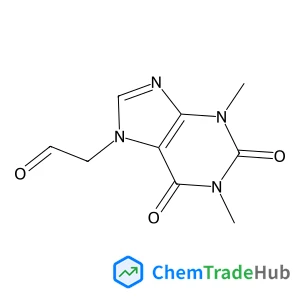
![1-{[5-(4,4,5,5-Tetramethyl-1,3,2-dioxaborolan-2-yl)-2-thienyl]methyl}piperidine structure](https://static.chemtradehub.com/structs/121/1218790-44-3-baef.webp "1-{[5-(4,4,5,5-Tetramethyl-1,3,2-dioxaborolan-2-yl)-2-thienyl]methyl}piperidine structure")
1-{[5-(4,4,5,5-Tetramethyl-1,3,2-dioxaborolan-2-yl)-2-thienyl]methyl}piperidine
CAS番号:
1218790-44-3
分子式:
C16H26BNO2S
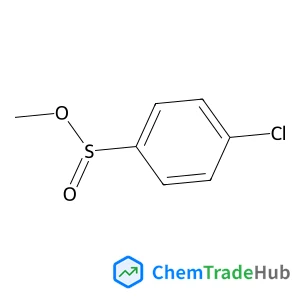
![methyl 6-amino-1H-pyrrolo[2,3-b]pyridine-4-carboxylate structure](https://static.chemtradehub.com/structs/119/1190315-60-6-9d9a.webp "methyl 6-amino-1H-pyrrolo[2,3-b]pyridine-4-carboxylate structure")
おすすめサプライヤー





免責事項
このページに表示される学術雑誌情報は、参考および研究目的のみを目的としています。当社は雑誌出版社とは提携しておらず、投稿の取り扱いも行っておりません。出版に関するお問い合わせは、各雑誌出版社に直接ご連絡ください。
表示されている情報に誤りがある場合は、support@chemtradehub.com までご連絡ください。迅速に確認し、対応いたします。